




Trustee Notification California: What the 60-Day Trust Notice Requires
Trustee notification in California is one of the first legal duties a successor trustee faces after a loved one passes away, and it is also one of the easiest to overlook during a stressful time. When a living trust becomes irrevocable, the law requires the trustee to send a formal notice to beneficiaries and heirs within a short window. That notice does more than share news. It tells people who is in charge, where the trust is administered, and how they can see the trust terms, and it starts an important clock for anyone who may want to challenge the trust. Understanding how this notice works gives you real control over the administration, whether you are the trustee sending it or the beneficiary receiving it.
At Law Offices of Roshni T. Desai, we help trustees and families throughout Orange County and Southern California handle trust administration with clarity, so you can move forward with confidence. This guide explains what the trustee notification actually is, how to prepare and serve it correctly, and the mistakes that most often create problems later in the administration.
What Trustee Notification Actually Is in California
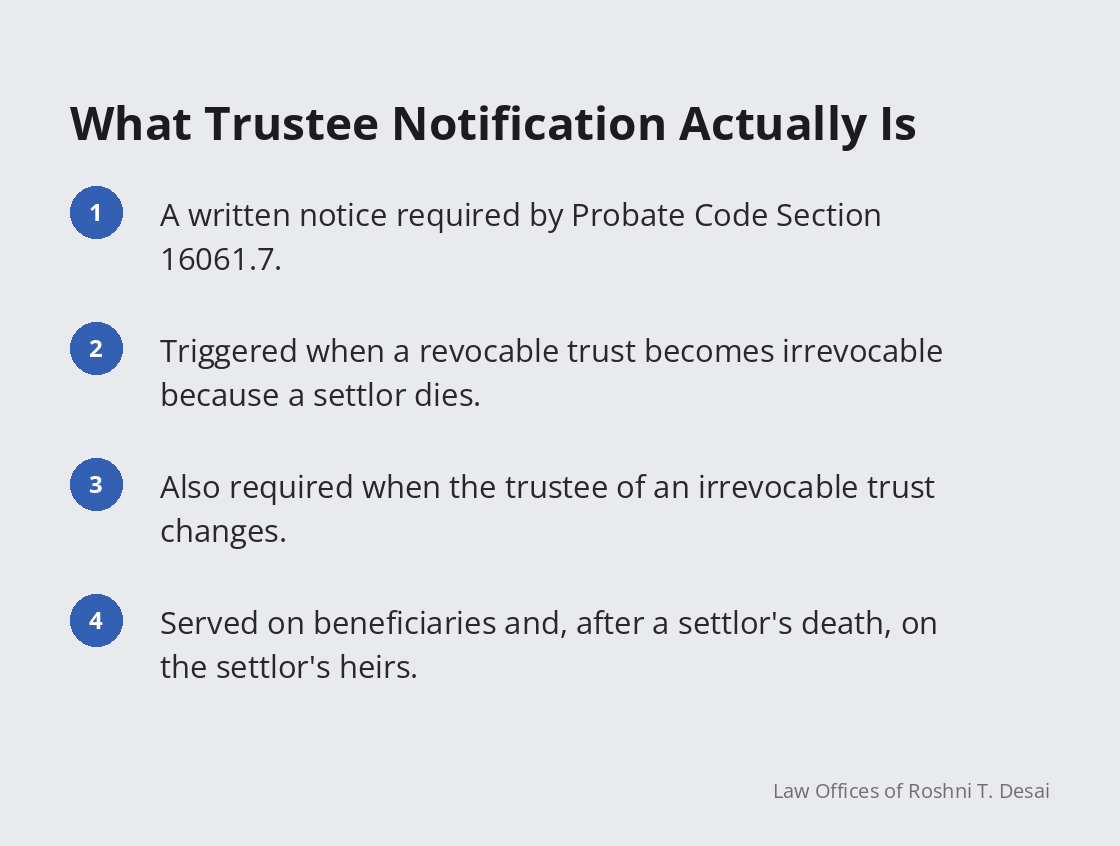
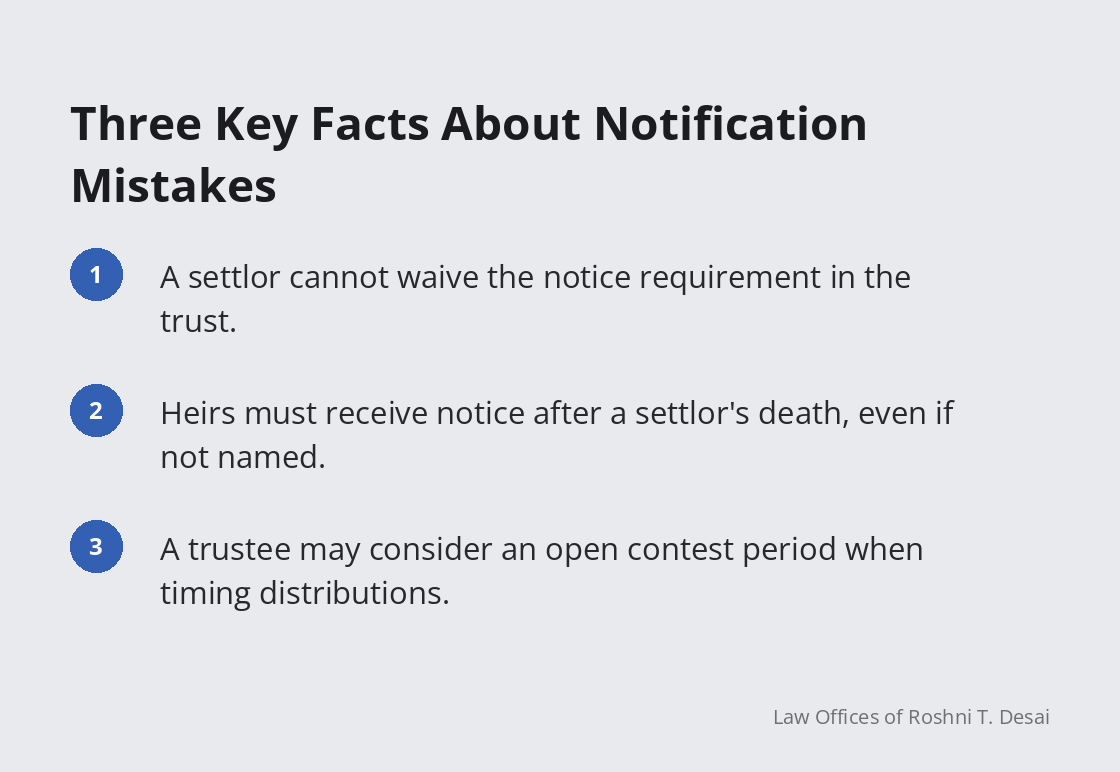
The trustee notification is a written notice required by California Probate Code Section 16061.7. It sits within the part of the Probate Code that describes a trustee’s duty to report information to beneficiaries, alongside the broader rule in Section 16060 that a trustee has a duty to keep the beneficiaries of the trust reasonably informed of the trust and its administration. The notification is the formal starting point for that relationship. It is not optional, and it is not something a settlor can waive in the trust document, because Section 16061.7(i) states that any waiver by a settlor of this requirement is against public policy and void.
The Events That Trigger the Notice
Section 16061.7(a) lists the situations that require a notification. The most common one arises when a revocable trust, or any portion of it, becomes irrevocable because one or more settlors have died. This is the typical living trust situation: a parent creates a revocable trust, serves as their own trustee during life, and the trust becomes irrevocable at death. The statute also covers trusts that, by their express terms, become irrevocable within one year of a settlor’s death because of a contingency related to that death. A notification is also required whenever there is a change of trustee of an irrevocable trust, and in certain situations involving a power of appointment retained by a settlor that takes effect or lapses at the settlor’s death.
Who Has the Duty to Serve It
The law places the duty on the continuing or successor trustee. Under Section 16061.7(a)(4), when there are cotrustees, any one cotrustee may serve the notification. In practice, this means the person stepping into the trustee role after a death is responsible for making sure the notice goes out on time. If you have just learned you are the successor trustee of a parent’s or spouse’s trust, the notification should be near the top of your early task list, together with securing assets and locating the original trust documents.
Who Must Receive the Notice
Section 16061.7(b) identifies the recipients. The notice must be served on each beneficiary of the irrevocable trust or irrevocable portion of the trust, subject to the limitations of Section 15804. When the triggering event is the death of a settlor, the notice must also go to each heir of the deceased settlor, even an heir who receives nothing under the trust. If the trust is a charitable trust subject to the supervision of the Attorney General, the Attorney General must receive the notice as well. Under Section 16061.7(c), the trustee relies on any final court determination of heirship known to the trustee, and otherwise may make a good faith determination of the heirs by any reasonable means.
How to Prepare and Serve the Notice Correctly
Once you know a notice is required and who must receive it, the next step is getting the details right. The statute is specific about timing, content, and the method of delivery. Following those requirements carefully protects the trustee and creates a clear record that the administration started the right way.
The 60-Day Deadline
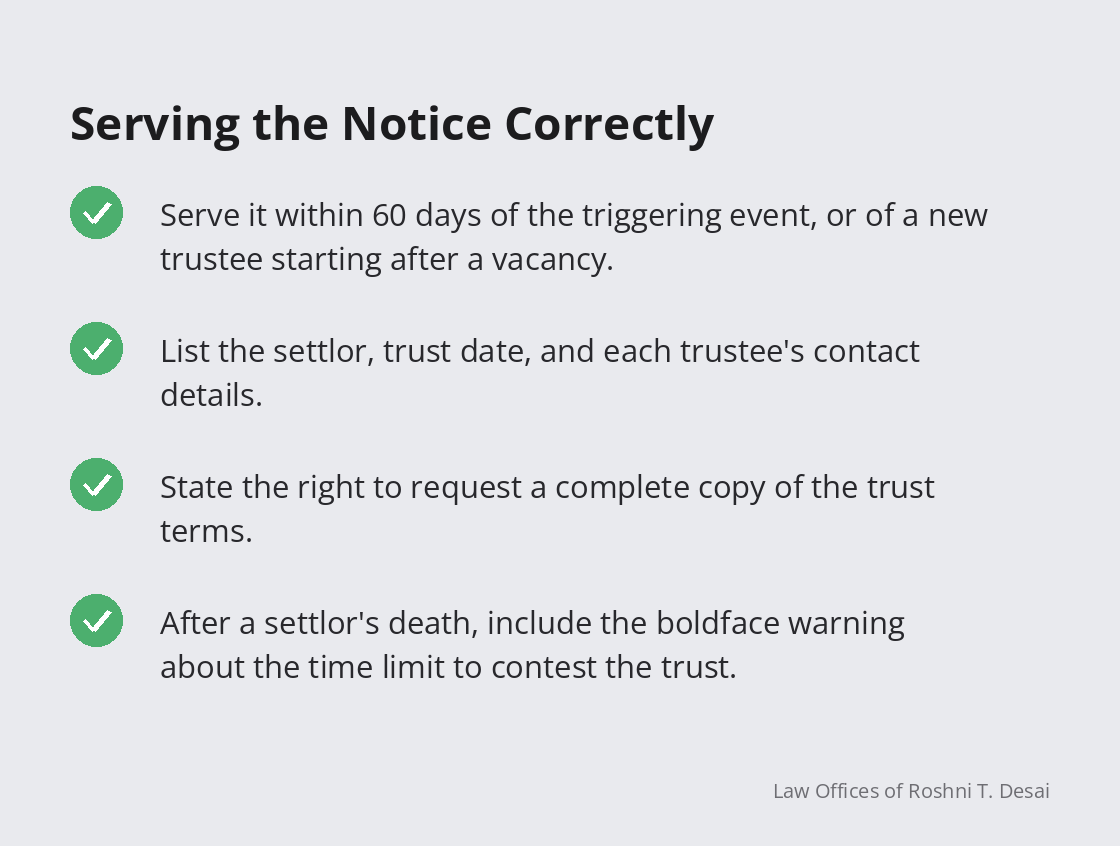
Section 16061.7(f) requires the notification to be served not later than 60 days following the event that requires it. If the trustee later learns about a person who is entitled to notice but was not known when the event occurred, the trustee has 60 days after becoming aware of that person. If there is a vacancy in the office of trustee when the event happens, or if the event itself creates the vacancy, the 60-day period begins on the date the new trustee starts to serve. Because a settlor’s death often creates exactly that kind of transition, successor trustees should note the date they accepted the role and plan backward from there.
What the Notice Must Contain
Section 16061.7(g) lists the required contents. The notice must identify the settlor or settlors and the date the trust instrument was signed. It must give the name, address, and telephone number of each trustee, and the address of the physical location where the principal place of administration of the trust is located. It must include any additional information the trust instrument itself requires. Finally, it must tell the recipient that they are entitled, upon reasonable request to the trustee, to receive a true and complete copy of the terms of the trust. This matches the separate rule in Section 16060.7, which requires a trustee to provide the terms of the trust to a beneficiary on request, unless an exception applies.
The Required Warning About Contests
When the notice is sent because a revocable trust became irrevocable at a settlor’s death, Section 16061.7(h) requires a specific warning set out in a separate paragraph in not less than 10-point boldface type, or a reasonable equivalent. The warning states that the recipient may not bring an action to contest the trust more than 120 days from the date the notification is served, or 60 days from the date a copy of the terms of the trust is delivered during that 120-day period, whichever is later. This language should be copied exactly, because it is the statute’s own wording and it is what gives the notice its practical force.
How the Notice Is Delivered
Under Section 16061.7(e), the notification must be served by one of the methods described in Probate Code Section 1215, sent to the person’s last known address. Trustees should keep a dated copy of every notice, a list of every person served, and proof of how and when each notice was sent. Section 16061.7(d) also provides that the trustee does not need to send a copy to a beneficiary or heir who is known but cannot be located after reasonable diligence, or to one who is unknown to the trustee. Documenting the search for anyone you cannot find is just as important as documenting the notices you do send.
Common Mistakes That Derail Trustee Notification
Most problems with trustee notification come from rushing, guessing, or assuming the notice is a formality. Because the notice affects both the trustee’s protection and the beneficiaries’ rights, small errors can carry consequences long after the paperwork is mailed. These are the issues we see most often in California trust administrations.
Missing the Deadline or Skipping Heirs
A trustee who misses the 60-day window or leaves people off the list takes on real risk. Section 16061.9(a) provides that a trustee who fails to serve the notification on a beneficiary as required is responsible for damages caused by that failure, unless the trustee made a reasonably diligent effort to comply. Section 16061.9(b) applies a similar rule to known heirs who are not beneficiaries, and it explains that a reasonably diligent effort means delivering notice under Section 1215 to the heir’s last address actually known to the trustee. Leaving out an heir because they were not named in the trust is a frequent and avoidable mistake, since heirs must receive notice when the triggering event is a settlor’s death.
Treating the Contest Period Too Casually
Beneficiaries and heirs sometimes set the notice aside while they grieve, only to learn later that the window to contest the trust has passed. Section 16061.8 states that a person served with the notification after a settlor’s death may not bring an action to contest the trust more than 120 days from the date the notice is served, or 60 days from the date a copy of the trust terms is delivered during that 120-day period, whichever is later. The statute makes clear this applies whether the notice was served within or after the trustee’s 60-day deadline. If you receive a notice and have concerns about the trust, requesting a copy of the terms promptly and getting advice early protects your options.
Distributing Assets Too Early
Trustees often feel pressure from family members to make distributions quickly. California law recognizes that timing matters here. Section 16061.9(c) allows a trustee, in exercising discretion over the timing and nature of distributions, to consider the fact that the period in which a beneficiary or heir could bring an action to contest the trust has not yet expired. Waiting until the contest period closes before making significant distributions can prevent difficult situations where assets have already been handed out and a challenge is later filed. Clear communication with beneficiaries about why you are waiting usually eases that pressure, and it reflects the trustee’s broader duty to keep beneficiaries reasonably informed.
Final Thoughts
Trustee notification in California is a short document with long-lasting effects. It confirms who is serving as trustee, tells beneficiaries and heirs where the trust is administered and how to see its terms, and starts the contest period that brings certainty to the administration. Serving it on time, with the required contents and warning, and to every person entitled to receive it, protects the trustee and gives the whole family a clear starting point. If you want more background on the wider responsibilities that follow, our guide to California trustee duties walks through the ongoing obligations of the role.
Whether you are a successor trustee preparing your first notice or a beneficiary trying to understand one you received, you do not have to work through it alone. Careful preparation now prevents disputes and delays later, and it lets you focus on honoring your loved one’s wishes.
If you are serving as a trustee or have received a trustee notification, contact Law Offices of Roshni T. Desai to speak with our trust administration team. We will review your situation, explain your rights and responsibilities under California law, and help you take the next step with confidence.