




Revocable Trust Guidance: Practical Steps for SoCal Residents
A revocable trust is one of the most effective tools Southern California residents can use to protect their assets and avoid probate. Many homeowners in the region overlook this strategy, leaving their families to navigate costly court proceedings.
We at Law Offices of Roshni T. Desai have helped countless SoCal residents implement revocable trust guidance that fits their specific situations. This guide walks you through the process, common pitfalls, and how to take action today.
What a Revocable Trust Actually Does
A revocable trust is a legal document you create during your lifetime that holds title to your assets and directs how they pass to your beneficiaries after you die or if you become unable to manage your finances. Unlike a will, which only takes effect after death and must go through probate court, a revocable trust operates immediately and keeps your estate out of the public record. You remain in complete control as the trustee while alive, meaning you can buy, sell, or transfer assets freely. You can also change or cancel the trust at any time as long as you’re mentally competent. This flexibility is why it’s called revocable. When you pass away or become incapacitated, a successor trustee you’ve named takes over and distributes assets to your beneficiaries without court involvement. This is the core advantage: probate avoidance.
Why Probate Costs SoCal Residents Thousands
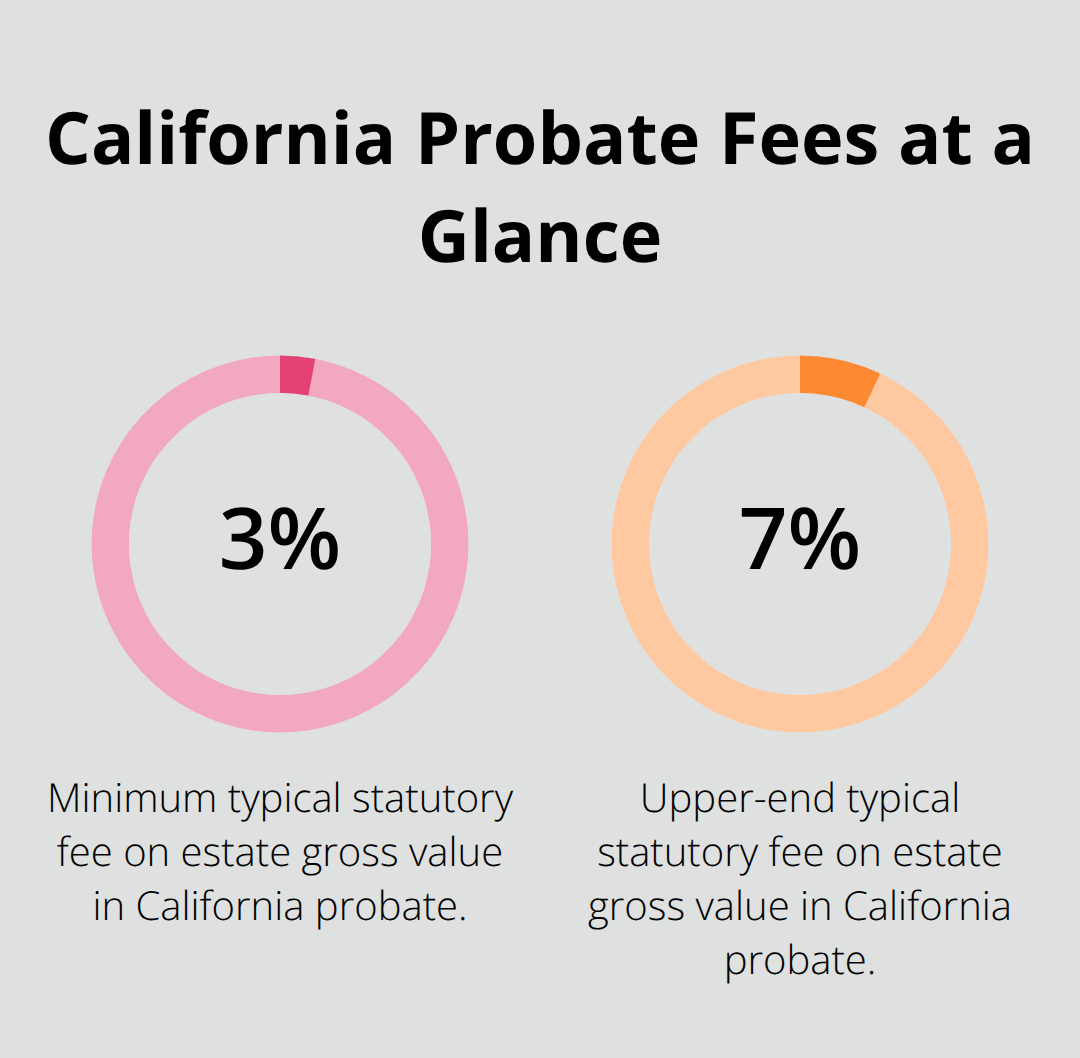
California’s probate process typically takes 12 to 18 months and costs between 3% and 7% of your estate’s gross value. For an $800,000 home in Southern California, statutory probate fees alone can reach $38,000 under the California Probate Code Section 10810 fee schedule. A $1 million estate faces fees exceeding $46,000.
These fees go to the court, attorneys, and executors-money that could pass directly to your family instead. Probate also makes your financial details public record, which many SoCal residents find unacceptable. A funded revocable trust eliminates these costs and keeps your estate private. Your successor trustee can distribute assets within 30 to 60 days rather than waiting through a lengthy court process, giving your family faster access to inheritance funds when they need them most.
Real Estate and Property Tax Planning for Southern California
Southern California homeowners face particular challenges with inheritance planning due to Proposition 19, which can trigger property tax reassessment on inherited residential property. When real estate passes through probate or to heirs outside a trust structure, the county assessor may reassess the property at current market value, potentially increasing property taxes significantly. A revocable trust helps you plan around this risk-transferring property into the trust during your lifetime can preserve the property’s existing assessed value for your beneficiaries. Additionally, because you’re a California resident in a community property state, assets acquired during marriage are typically owned equally by both spouses. A properly structured revocable trust clearly identifies community property versus separate property, preventing confusion and disputes among heirs.
How Your Trust Operates After Death
Once you pass away, your revocable trust becomes irrevocable and your successor trustee takes control. The trustee must notify all beneficiaries within 60 days per California Probate Code Section 16061.7 and then settles any outstanding debts and taxes before distributing remaining assets. This process typically takes months rather than the 12 to 18 months probate requires. Your beneficiaries receive their inheritance faster, and your family avoids the stress and expense of court proceedings. The trust document itself remains private-unlike a will, which becomes public record during probate-so your financial details and distribution plans stay confidential.
The Role of Your Successor Trustee
Your successor trustee is the person or institution you name to manage your trust after you die or if you become incapacitated. This individual (or bank or trust company) does not need to live in California or even in the same state as your property. What matters is that you choose someone you trust completely and who understands your wishes. You should discuss the role with your chosen successor trustee in advance to confirm they’re willing and able to serve. A successor trustee who understands your values and priorities can distribute assets smoothly and handle family dynamics with care. If you become incapacitated before death, your successor trustee can step in immediately to manage your finances without court involvement-avoiding a costly conservatorship process.
Now that you understand how a revocable trust works and the specific advantages it offers SoCal residents, the next step is learning how to actually create one. The process involves gathering your financial information, identifying the right people to serve as trustees and beneficiaries, and then funding the trust with your assets.
Building Your Trust From the Ground Up
Collect Your Financial Records and Property Information
Start by assembling every financial document you own. This means bank statements, investment account statements, property deeds, mortgage documents, insurance policies, and titles to vehicles or other valuable items. Create a systematic tracking system listing each asset with its current value and how it’s currently titled. For Southern California residents, this step matters most because real property makes up a significant portion of most estates here. Don’t estimate values-use actual statements dated within the last three months. If you own a home in Clovis, Madera, Solvang, or anywhere across SoCal, obtain a copy of your most recent property tax assessment to confirm current value. You’ll also need account numbers and the names of financial institutions holding your assets.
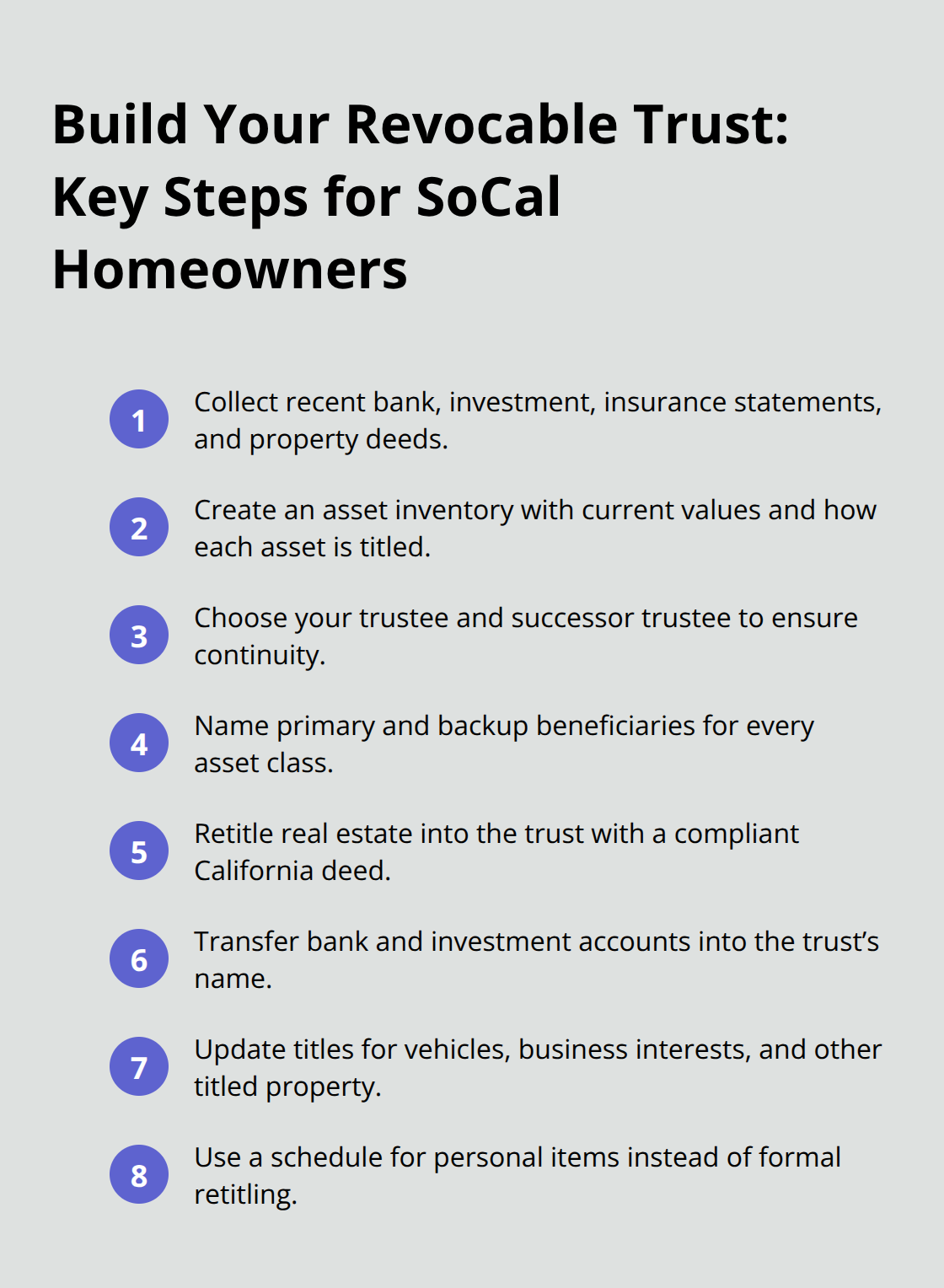
This inventory becomes your roadmap for funding the trust later, so accuracy matters more than speed.
Choose Your Trustees and Name Your Beneficiaries
Decide who will serve as your trustee during your lifetime and who will step in as successor trustee after you die or if you become incapacitated. Most SoCal residents name themselves as initial trustee because you want to maintain control over your assets while alive. Your successor trustee is the critical choice-this person will manage distributions to your beneficiaries and handle the trust’s administration. Choose someone you trust completely, not necessarily a family member. Many people name an adult child, but a professional trustee like a bank or trust company works equally well and removes family conflict from the equation. Discuss the role beforehand; don’t surprise your chosen successor trustee with the responsibility.
Then identify your beneficiaries-the people or organizations who will receive your assets after you pass away. Include backup beneficiaries in case your primary choices predecease you or decline their inheritance. For married couples in California, a joint revocable trust clearly designates which assets are community property (acquired during marriage) and which are separate property (owned before marriage or received as gifts or inheritance), preventing disputes later.
Transfer Ownership of Assets Into the Trust
The final step is funding-transferring ownership of each asset into the trust’s name. This is where most SoCal residents fail. An unfunded trust is worthless for probate avoidance because assets still titled in your individual name will pass through probate regardless of what your trust says. Retitle real estate by preparing a new deed naming the trust as owner; work with a title company or attorney to ensure the deed complies with California requirements and doesn’t trigger unintended property tax reassessment under Proposition 19.
Transfer bank and investment accounts by contacting each institution and requesting they retitle the account in the trust’s name. Assign business interests, vehicles, and other titled property similarly. For personal items of sentimental or moderate value, create a separate schedule listing them and your distribution wishes rather than formally retitling each item. The funding process typically takes 60 to 90 days depending on how many assets you own and how quickly financial institutions process changes.
Why Funding Determines Success
An unfunded trust accomplishes nothing. You can have the most carefully drafted trust document, but if your assets remain in your individual name, probate will still claim them. This single mistake-failing to fund-undermines the entire purpose of creating a trust in the first place. The Law Offices of Roshni T. Desai provides clear funding instructions and coordinates this process with clients, ensuring nothing gets missed and your trust actually protects your estate the way you intend.
Once you’ve funded your trust with all major assets, you’ve completed the structural work. The next phase involves understanding what happens when life changes-and how to keep your trust aligned with your actual wishes as your family and finances evolve.
Where SoCal Residents Go Wrong With Their Trusts
Creating a revocable trust is straightforward, but executing it correctly separates those whose families avoid probate from those who don’t. We at Law Offices of Roshni T. Desai observe the same preventable errors repeatedly, and they cost SoCal residents tens of thousands of dollars.
The Unfunded Trust Trap
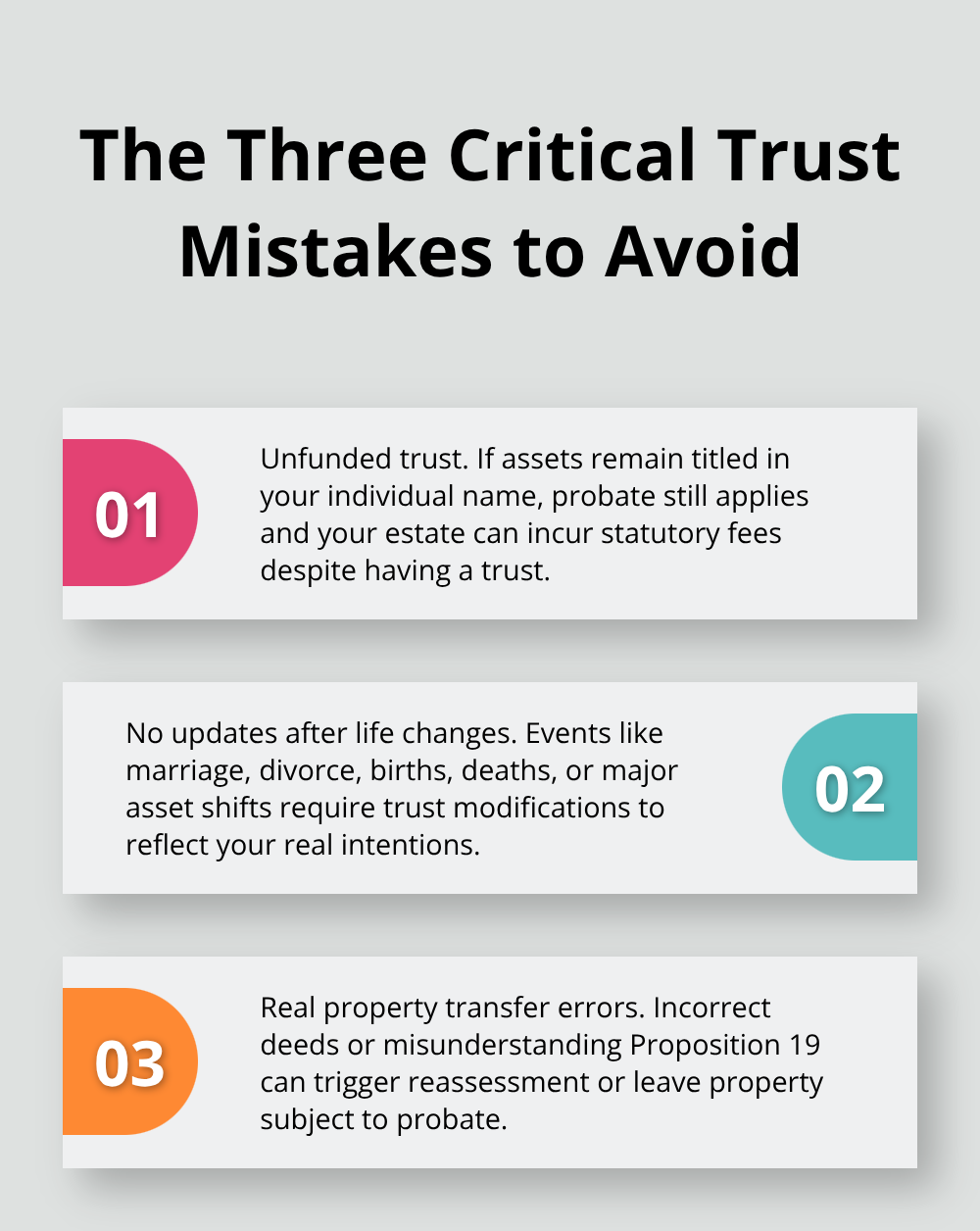
The most damaging mistake is leaving the trust unfunded after spending time and money to draft it. You can have a perfectly written trust document sitting in a drawer, but if your home, bank accounts, investment portfolios, and vehicle titles remain in your individual name, California probate courts will still claim jurisdiction over those assets after you die. Statutory probate fees under California Probate Code Section 10810 will still apply. For a $1 million estate, that means your family faces fees exceeding $46,000 even though you created a trust specifically to avoid this outcome.
Funding requires retitling real estate with a new deed, contacting banks to transfer account ownership into the trust’s name, and updating titles on vehicles and other property. This step takes 60 to 90 days but is non-negotiable. Many SoCal residents delay funding because they underestimate its importance or feel overwhelmed by the administrative work. The consequence is a trust that provides zero protection.
Neglecting Updates After Life Changes
The second critical mistake is failing to update your trust after major life events. Marriage, divorce, birth of children, significant changes in asset value, or the death of a named beneficiary all require trust modifications. If you name your spouse as primary beneficiary and later divorce, that ex-spouse could still receive assets unless you update the trust document. California law does not automatically remove ex-spouses from trusts the way it does with wills in some situations.
Similarly, if your net worth increases substantially-perhaps you sell a rental property in Southern California at a significant profit-your trust’s distribution provisions may no longer reflect your intentions. SoCal residents often create a trust, file it away, and assume it works indefinitely. Life happens. Your chosen successor trustee may become unwilling or unable to serve. Your beneficiaries’ circumstances change. Your priorities shift.
Real Property Transfer Errors
The third major error involves real property transfers. Many SoCal homeowners incorrectly retitle property into their trust or fail to understand how Proposition 19 affects inherited real estate. Improper deed preparation can trigger unintended property tax reassessment, and incomplete transfers mean probate still applies to the property. Working with a professional who understands California’s specific requirements-including community property rules and Proposition 19’s implications-prevents these costly missteps and ensures your trust actually functions as intended when your family needs it most.
Final Thoughts
A revocable trust eliminates probate costs that can exceed $46,000 on a $1 million estate, keeps your financial details private, and allows your family to access their inheritance within 30 to 60 days instead of waiting 12 to 18 months through court proceedings. The three critical mistakes that undermine countless SoCal estates-leaving the trust unfunded, failing to update it after life changes, and mishandling real property transfers-are entirely preventable with proper revocable trust guidance. Your next step is straightforward: collect your financial documents, identify the person you trust to serve as successor trustee, and commit to funding the trust completely.
If you own real estate in Clovis, Madera, Solvang, or anywhere across Southern California, prioritize getting those property deeds properly transferred into the trust to protect against Proposition 19 reassessment and ensure your family avoids probate entirely. We at Law Offices of Roshni T. Desai understand the specific challenges SoCal residents face with estate planning and trust administration. Ms. Desai’s dual licensure as both an attorney and real estate professional means we can streamline property-related transactions and reduce costs and delays for your family.
We offer free consultations with flexible home or office visits across Southern California to discuss your revocable trust and take control of your estate planning. Contact Law Offices of Roshni T. Desai today to begin protecting your assets and your family’s future.