




Trust Administration Litigation Support: Defending and Streamlining Your Trusts
Trust disputes drain time, money, and family relationships. At Law Offices of Roshni T. Desai, we help trustees and beneficiaries navigate these conflicts with trust administration litigation support that protects your interests.
This guide walks you through what causes trust disputes, how to prevent them, and what happens when litigation becomes necessary.
When Trust Disputes Arise
Trustee Misconduct Triggers Most Litigation
Trustee misconduct ranks as the leading cause of trust disputes, with breaches of fiduciary duty accounting for a substantial portion of litigation filings. When a trustee fails to act in beneficiaries’ best interests-whether through self-dealing, improper investments, or withholding financial information-the damage extends beyond lost assets. A trustee who invests trust funds in speculative ventures without diversification, or who uses trust property for personal loans, creates legal exposure that often triggers court intervention.
Ambiguous Language Creates Interpretive Battles
Ambiguous trust language compounds the problem significantly. When a trust document contains conflicting provisions or outdated instructions that no longer reflect the grantor’s actual wishes, beneficiaries and trustees interpret the same words differently, leading to disputes over distributions and asset management. Undue influence and capacity challenges also generate significant litigation. These claims allege that the grantor lacked mental capacity when creating or amending the trust, or that someone exerted improper pressure on the grantor.
Valuation Disputes and Financial Complexity
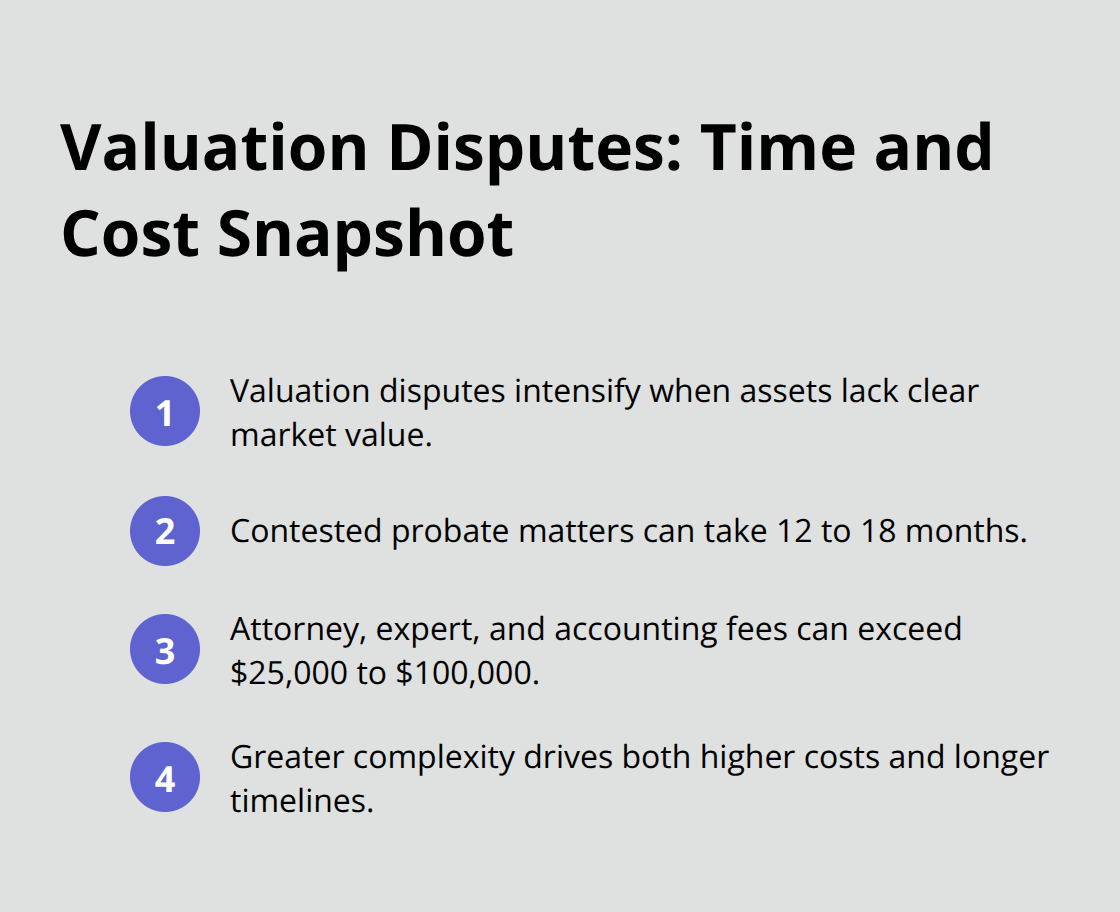
Valuation disputes represent another frequent battleground, particularly when trusts hold real estate, family businesses, or collectibles where fair market value is genuinely difficult to establish. Court proceedings in probate systems can stretch beyond 12 to 18 months for contested matters, accumulating attorney fees, expert witness costs, and accounting expenses that easily exceed $25,000 to $100,000 depending on case complexity.
The Hidden Cost: Family Relationships
The emotional toll cuts deeper than finances. Family members who once shared holidays together become adversaries in court filings. Beneficiaries question whether a trustee truly honored the grantor’s memory. Trustees face personal liability and reputational damage. This deterioration of family bonds often outlasts the litigation itself.
Prevention Through Documentation and Transparency
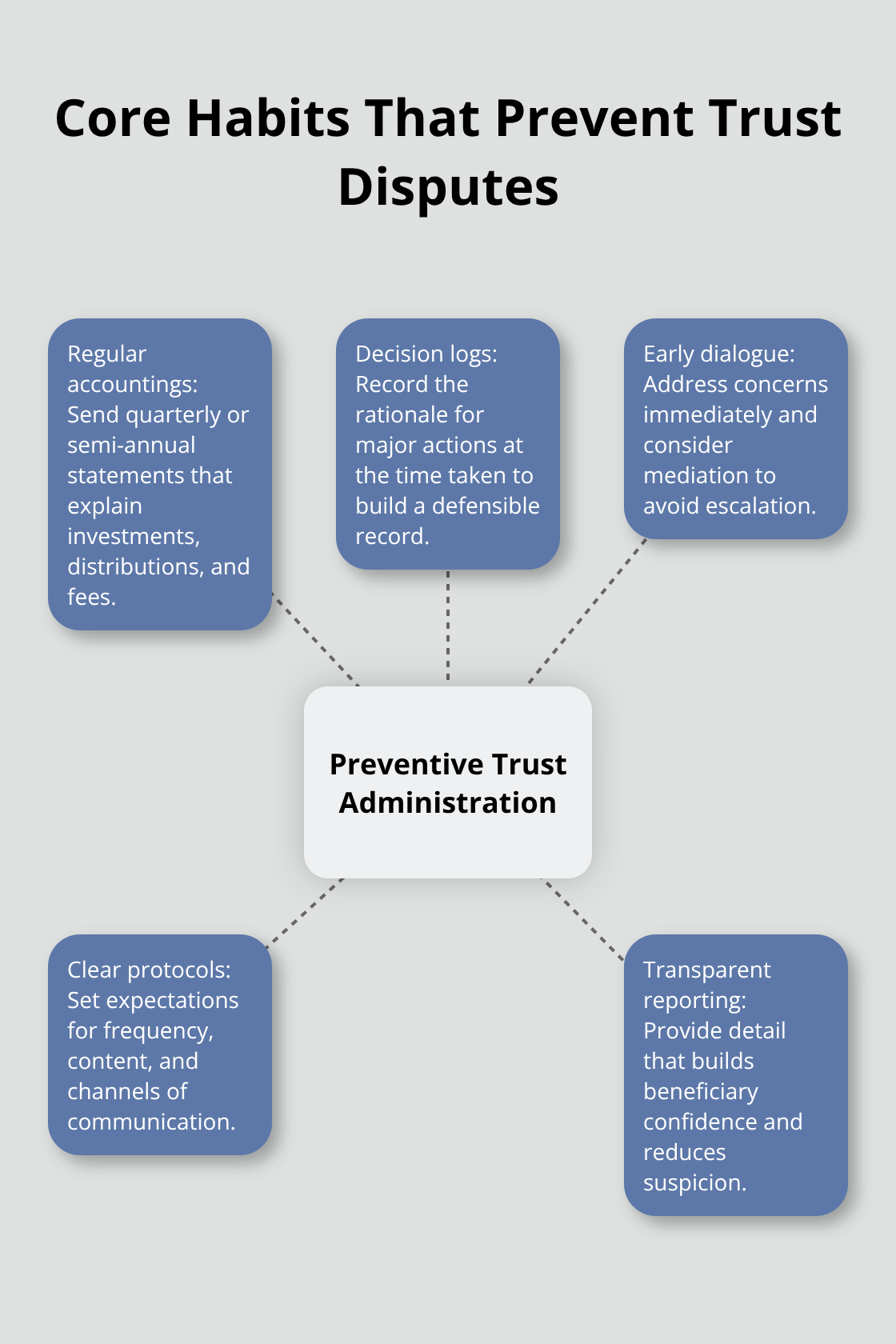
Clear documentation, transparent communication, and defensible decision-making prevent disputes from escalating to court. A thorough review of your trust document, combined with an assessment of potential vulnerabilities-unclear language, missing beneficiaries, outdated provisions-allows you to address problems proactively rather than reactively in court. Regular accountings and transparent reporting to beneficiaries prevent misunderstandings that fuel disputes. When a trustee provides beneficiaries with detailed financial statements quarterly or semi-annually, showing exactly how assets are invested and how distributions were calculated, beneficiaries gain confidence in the process.
Contemporaneous decision logs that document why investment choices were made, how conflicts of interest were managed, and what discussions occurred between trustees and counsel create a defensible record if litigation becomes necessary. Proactive problem-solving through mediation or negotiation resolves many disputes without court involvement, saving months and substantial costs. When disagreements surface early-perhaps a beneficiary questions an investment decision or believes distributions are unfair-addressing the concern directly through structured dialogue often reaches resolution. This approach preserves family relationships while protecting assets from litigation expenses. Understanding what happens when disputes do reach the courtroom helps you prepare for the road ahead.
How to Build a Trust Administration System That Stops Disputes Before They Start
Send Regular Accountings Without Being Asked
Documentation that sits in a drawer does beneficiaries no good. Too many trust disputes could have been prevented with a simple system of regular, detailed communication. The American Bar Association recommends quarterly or semi-annual financial statements to beneficiaries, and this practice works because it removes the mystery from trust management. When a beneficiary receives a statement showing exactly which investments hold trust assets, how much was distributed last quarter, and why certain decisions were made, they stop imagining worst-case scenarios.
A trustee who waits until beneficiaries demand information has already lost credibility. Instead, implement a schedule: send accountings on the same dates each year without waiting for requests. Include not just account balances but also explanations of major transactions, investment performance compared to benchmarks, and any fees charged. This transparency transforms a trustee from a shadowy figure into an accountable steward.
Create Written Records of Every Major Decision
Contemporaneous decision logs are equally vital. When a trustee reallocates investments, refinances property, or denies a beneficiary request, that decision must be documented in writing at the time it happens, not reconstructed months later if litigation looms. The log should explain what options were considered, why one was chosen, and how it aligns with fiduciary duties and the trust’s stated goals.
This creates a defensible record that prevents “he said, she said” disputes and demonstrates that decisions followed a rational process rather than personal preference or hidden agendas. A proactive trust administration approach protects both the trustee and the beneficiaries by showing that someone acted thoughtfully and in accordance with the trust document.
Address Concerns Immediately Through Dialogue
Proactive problem-solving through structured dialogue prevents small disagreements from festering into courtroom battles. When a beneficiary raises a concern about an investment choice or questions whether a distribution was calculated correctly, address it immediately through a conversation or written explanation rather than dismissing it. The American College of Trust and Estate Counsel emphasizes that many disputes resolve through mediation or early negotiation, saving months and tens of thousands in legal fees.
A trustee facing pushback should consider bringing in a neutral third party-a mediator or even counsel-to walk through the concern with all parties present. This approach costs far less than litigation and preserves relationships that litigation would destroy.
Establish Clear Communication Protocols Upfront
Set expectations upfront by including a communication protocol in the trust document or by establishing one in writing with beneficiaries early in the administration process. Specify how often beneficiaries will hear from the trustee, what information they will receive, and how questions should be raised. Clear ground rules prevent misunderstandings about what constitutes reasonable communication and what crosses into harassment or excessive demands.
When beneficiaries know they will receive an accounting every six months without asking, and when they understand the process for challenging decisions, disputes lose their fuel. A trust administration system so transparent and responsive that beneficiaries feel heard and respected-even when they disagree with a particular decision-stops conflicts before they reach the courthouse. The next step is understanding what happens when disputes do escalate despite these preventive measures.
What Happens When Your Trust Enters the Courtroom
The Initial Assessment Phase Sets Your Strategy
Trust litigation follows a predictable path, though the speed and complexity depend heavily on whether parties cooperate or fight at every stage. Most contested cases move through an initial assessment phase where your attorney reviews the trust document, relevant correspondence, account statements, and any prior communications between trustees and beneficiaries. This phase typically takes two to four weeks and costs between $2,000 and $5,000 in legal fees. During this time, your counsel identifies the core legal issues, evaluates the strength of claims or defenses, and determines what documents and expert testimony will matter most.
A forensic accountant often enters at this stage to assess whether trustee conduct actually harmed beneficiaries or whether the numbers tell a different story. The American Bar Association recommends building a cross-disciplinary team early-including a trusts attorney, forensic accountant, investment specialist, and tax advisor-because disputes rarely involve a single issue. A trustee with clear authority to manage assets prevents operational delays, while trustees accused of self-dealing may also face mismanagement claims, valuation disputes, and tax compliance questions simultaneously.
Discovery and Document Organization Shape the Case
Once the legal team is assembled and the initial assessment complete, formal litigation begins with filing or responding to petitions in Surrogate’s Court. This phase introduces structured discovery, where both sides request documents, financial records, investment statements, emails, and written communications. Discovery can stretch three to six months for moderately complex cases and significantly longer for trusts holding family businesses or substantial real estate portfolios. Sloppy document management costs thousands in attorney time and can damage credibility with the judge, so organize documents efficiently and preserve evidence properly from the start.
Settlement Opportunities Emerge Throughout the Process
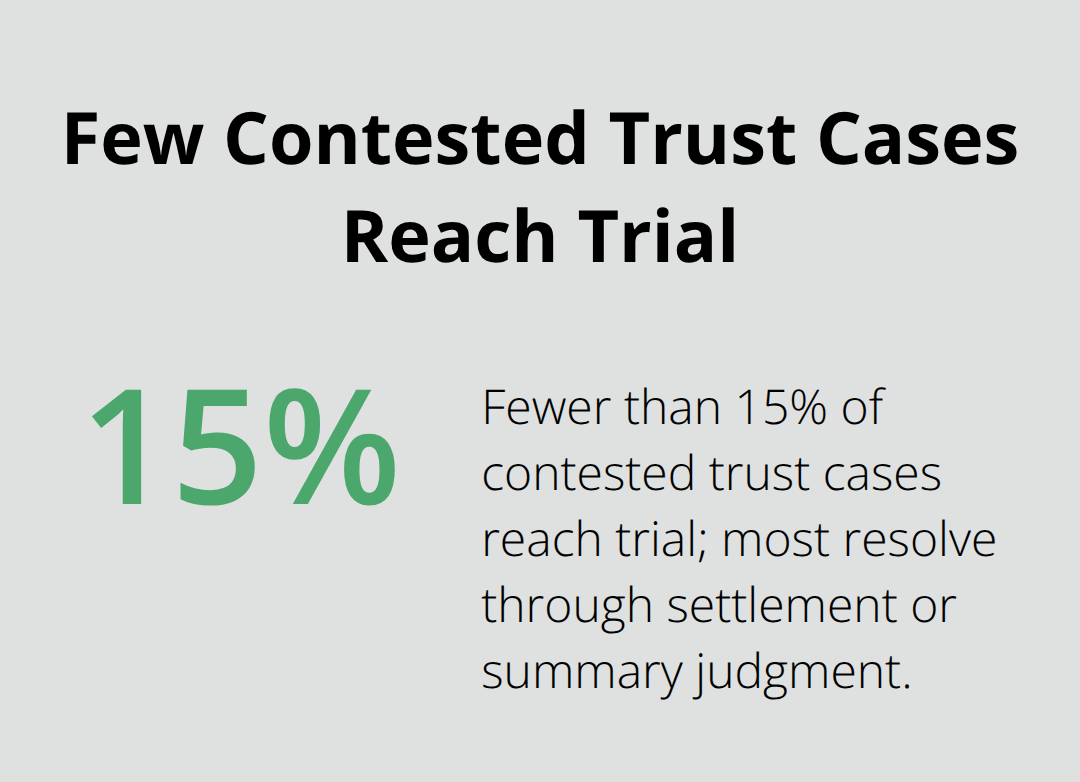
Mediation and negotiation opportunities emerge throughout litigation, and the American College of Trust and Estate Counsel emphasizes that most disputes settle before trial. A skilled mediator walks parties through their positions, identifies common ground, and proposes settlement structures that address competing interests without requiring a winner-take-all verdict. Settlement discussions often occur after discovery reveals the strength or weakness of each side’s case-typically six to nine months into litigation. Full trials in Surrogate’s Court are rare; New York data shows that fewer than 15 percent of contested trust cases reach trial, with most resolving through settlement or summary judgment motions.
Timeline and Cost Vary Dramatically by Case Type
If your case does proceed to trial, expect the process to extend 12 to 18 months from filing to final judgment, with total costs ranging from $50,000 to $150,000 or more depending on the number of expert witnesses, the complexity of asset valuations, and the judge’s pace. Timeline variation is substantial: straightforward disputes over accounting discrepancies might settle in six months, while cases involving undue influence allegations, capacity challenges, or allegations of widespread self-dealing routinely exceed two years. The burden of proof matters strategically-trustees must defend their decisions and show they acted consistently with fiduciary duties, while beneficiaries challenging trustee conduct must prove breach by clear and convincing evidence. This higher standard for beneficiaries means that trustees with contemporaneous decision logs and transparent communication records hold a significant advantage.
Preparing Your Case From Day One
Bring all trust documents, account statements, investment policy statements, and written communications to an initial consultation so your attorney can assess exposure, estimate likely costs, and outline settlement versus defense strategies specific to your situation. An experienced probate attorney identifies which assets require court involvement and which can transfer outside probate, streamlining your case. The strength of your position depends largely on the records you maintained during trust administration-decisions documented in real time carry far more weight than reconstructed explanations offered years later in court.
Final Thoughts
Trust administration litigation support becomes necessary when disputes escalate, but prevention remains your strongest defense. We at Law Offices of Roshni T. Desai have seen firsthand how transparent communication, detailed record-keeping, and proactive problem-solving stop conflicts before they reach the courtroom. Trustees who document decisions contemporaneously, send regular accountings without being asked, and address beneficiary concerns immediately rarely face litigation.
When disputes do arise despite these efforts, having counsel who understands both trust administration and litigation strategy makes the difference between a settlement that preserves family relationships and a protracted court battle that costs tens of thousands of dollars. Gather your trust documents, account statements, and any written communications between trustees and beneficiaries so your attorney can assess your position quickly and identify whether settlement or defense is the stronger path forward. The sooner you bring in legal guidance, the sooner you can stop the dispute from consuming more time and money.
If you’re administering a trust and want to prevent disputes from starting, implement a communication schedule now-send accountings regularly, document major decisions in writing, and establish clear protocols for how beneficiaries can raise concerns. These steps cost almost nothing compared to litigation but deliver enormous protection. Schedule a free consultation with Law Offices of Roshni T. Desai to review your trust, identify vulnerabilities, and develop a strategy that works for your situation.