



Trustee Succession Planning Attorney: Securing the Next Generation
Most families never plan for who takes over as trustee when the current one can’t serve anymore. This gap leaves your trust vulnerable to confusion, delays, and costly mistakes.
A trustee succession planning attorney helps you build a clear roadmap for this transition. We at Law Offices of Roshni T. Desai walk families through identifying the right successor, documenting expectations, and updating legal documents so your trust runs smoothly across generations.
What Happens When You Don’t Plan for Trustee Transitions
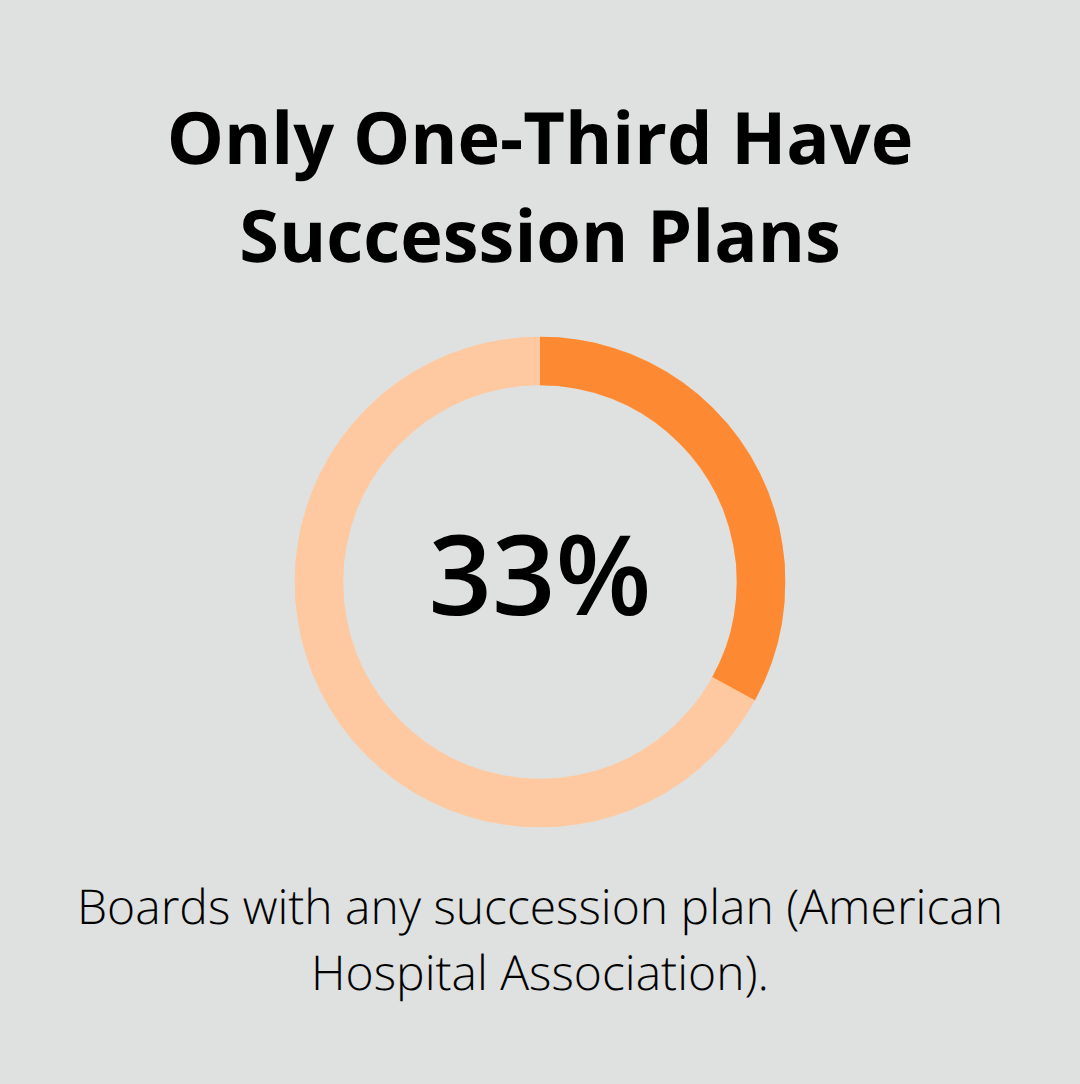
A trustee stepping down without a named successor creates immediate chaos. Banks freeze accounts. Beneficiaries wait months for distributions. Courts intervene. The trust document sits silent because no one prepared for this moment. According to Northern Trust, trustee succession planning is essential because trustees or advisors will inevitably become unable to serve at some point due to age, health, or changing priorities. Yet most families treat this as an afterthought, if they address it at all. The reality is stark: only about one-third of boards have any succession plan at any level, according to the American Hospital Association, highlighting a governance gap that extends to family trusts as well.
Why the Right Successor Matters More Than You Think
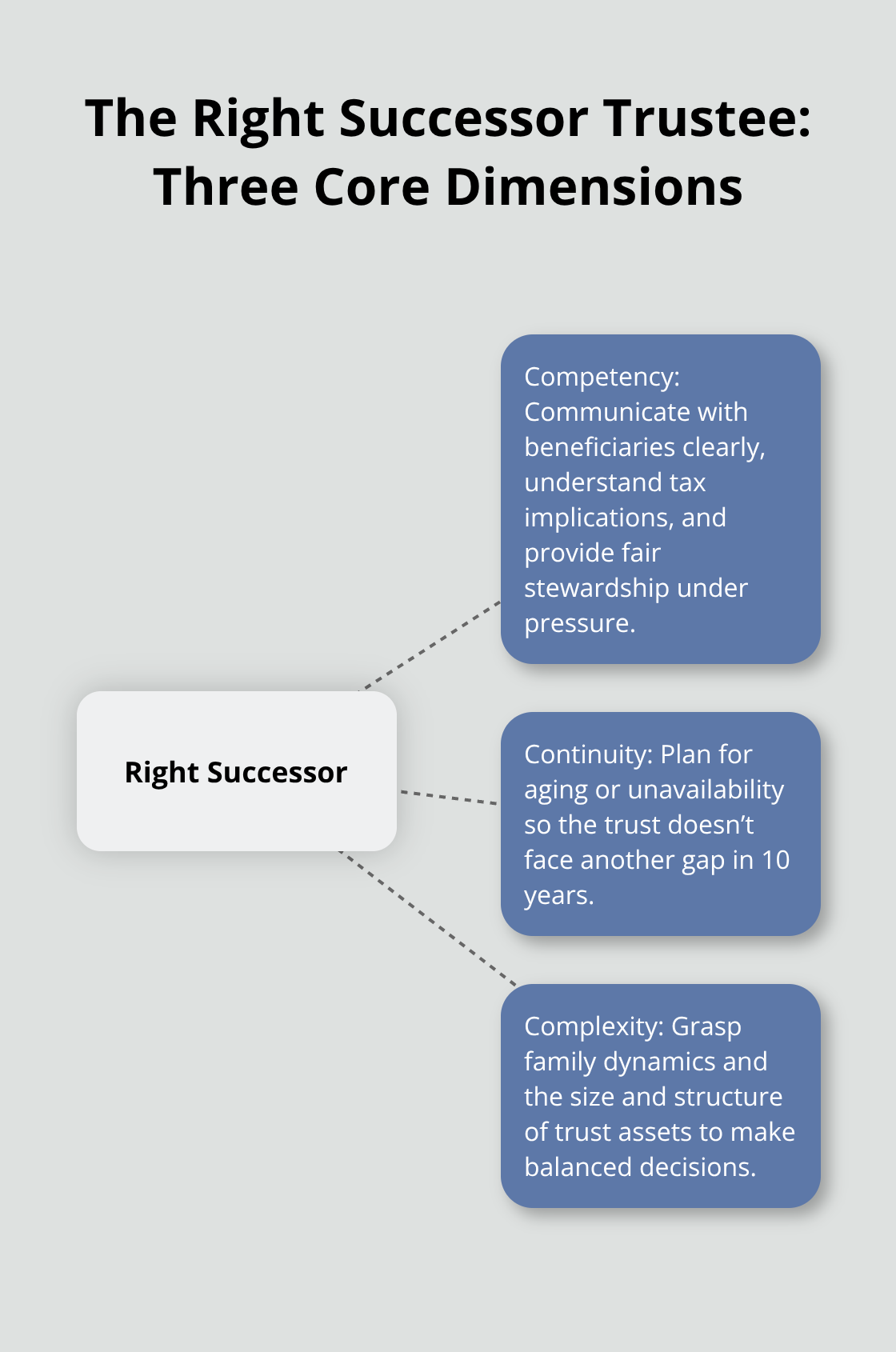
Selecting a successor trustee is not about finding someone you trust personally-it’s about finding someone with the right mix of competency, continuity, and character to handle complex financial decisions under pressure. Northern Trust identifies three critical dimensions: competency means your successor has the ability to communicate with beneficiaries, understand tax implications, and provide fair stewardship. Continuity means planning for when that successor ages or becomes unavailable, so the trust doesn’t collapse again in ten years. Complexity requires understanding both your family dynamics and the actual size and structure of your trust assets.
Many families appoint a well-meaning adult child or close friend without considering whether they have time to manage investments, file tax returns, or navigate disputes between beneficiaries. A corporate trustee or co-trustee arrangement with a professional institution insulates family members from fiduciary liability and brings access to institutional resources and governance structures. This is not weakness-it’s clarity about who can actually do the job.
Document Everything or Lose Control
The moment you identify a successor trustee, your attorney must amend your trust document to name them formally and specify their powers, compensation, and removal conditions. Without this documentation, courts may question whether your successor has legitimate authority. You should also establish powers of attorney that activate if you become incapacitated before death, so business doesn’t stop while waiting for probate. Documenting responsibilities and expectations-in writing-prevents the successor from making assumptions and reduces conflict later. Northern Trust emphasizes that governance should include contingency planning for trustee changes due to age, incapacity, or death, and that effective trustee arrangements balance control and duties by considering a mix of family members, trusted advisors, and institutions. This written plan becomes the roadmap your successor follows.
Coordinate Your Trust With Estate Plans and Beneficiary Interests
Your trustee succession plan cannot stand alone. It must align with your overall estate plan, including your will, powers of attorney, and any beneficiary agreements you’ve established. If your trust names one successor but your will names another, confusion erupts. If your beneficiaries have conflicting interests (one wants growth, another wants income), your successor trustee needs clear written guidance on how to balance those demands. Northern Trust notes that trustees must communicate with beneficiaries to address needs and concerns in a fair, transparent manner. When you coordinate these documents now, your successor trustee inherits clarity instead of conflict. This coordination also prevents disputes that drain trust assets and damage family relationships for years.
Building Your Successor Trustee Team
Assess Your Successor’s Financial Readiness
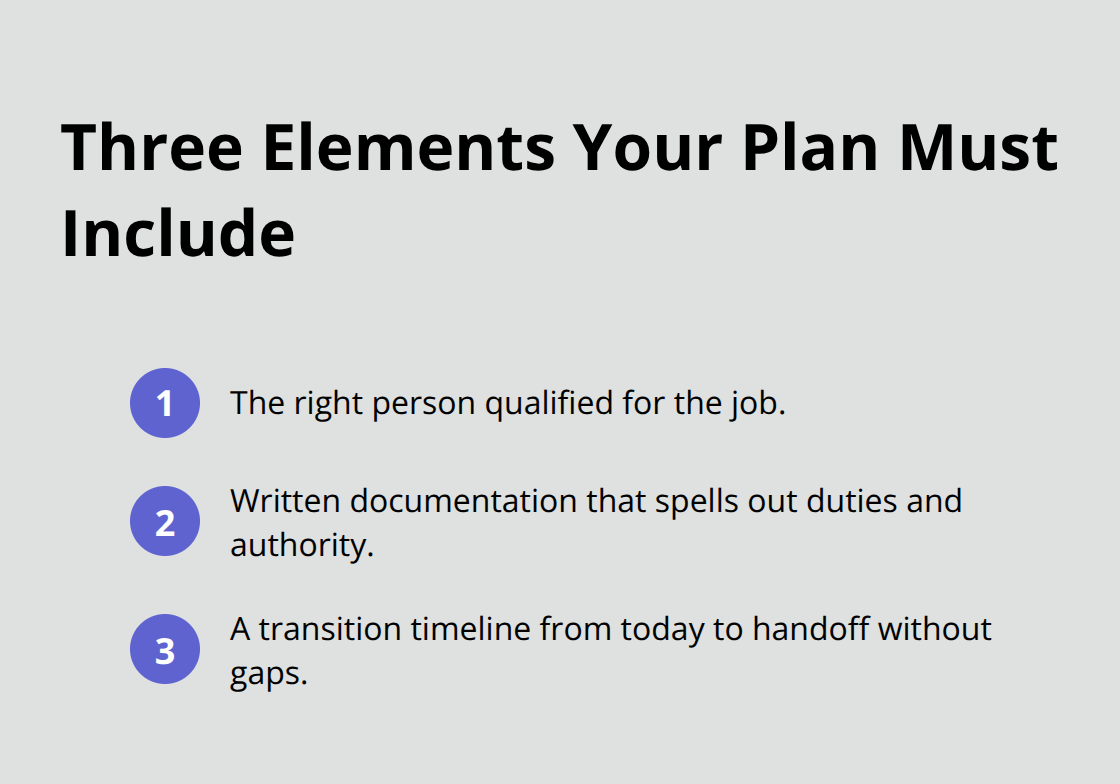
The gap between naming a successor trustee and actually preparing them for the role costs families thousands in legal fees and months of delays. You need three concrete elements in place: the right person qualified for the job, written documentation that spells out what they’ll do, and a transition timeline that moves from today to handoff without gaps. Start by assessing whether your successor has the financial literacy to manage your trust assets. This doesn’t mean they need an MBA, but they should understand basic accounting, tax implications, and how to communicate with beneficiaries about sensitive money decisions.
Competency means your successor can communicate with beneficiaries, understand tax implications, and provide fair stewardship. If your successor is a family member without investment experience, pair them with a corporate trustee or a professional advisor who handles the technical work while your successor maintains family relationships and oversight. This co-trustee model protects family members from fiduciary liability while ensuring someone with institutional resources manages the actual assets.
Document Successor Powers and Compensation in Writing
Next, document everything in writing. Your trust amendment should name the successor by full legal name, specify their compensation (many families pay trustees 1% to 2% of trust assets annually), define their removal conditions, and outline which decisions require court approval versus which they can make independently. A separate letter of instruction-not legally binding but highly persuasive-explains your family values, beneficiary needs, and how you want the trustee to balance competing interests.
Without this documentation, your successor guesses at your intentions, and beneficiaries may challenge their decisions in court. Effective trustee arrangements balance control and duties by mixing family members, trusted advisors, and institutions, and should include contingency planning for trustee changes due to age, incapacity, or death.
Create a Transition Timeline That Starts Now
Finally, create a transition timeline that begins now, not after your death or incapacity. If you’re healthy and able, introduce your successor to your accountant, financial advisor, and the banks holding your accounts. Have them shadow you during a full tax season or annual review so they understand the rhythm of trust management. This advance preparation means your successor steps in with confidence, not panic, when the moment arrives. Your successor also learns which decisions matter most and which ones can wait, reducing costly mistakes during their first months in the role.
Legal Documents That Protect Your Succession Plan
Your successor trustee’s authority means nothing without the right legal documents in place. The moment you name a successor, your trust document must be formally amended to specify their powers, compensation structure, and removal conditions. Courts will question whether your successor has legitimate authority if this amendment does not exist.
Amend Your Trust to Name Your Successor
A vague trust document leaves your successor vulnerable to challenges from beneficiaries who disagree with their decisions. The amendment should name your successor by full legal name, define which decisions they can make independently and which require court approval or beneficiary consent, and establish compensation-typically between 1% and 2% of trust assets annually for institutional trustees, or a flat fee for family members. Northern Trust research shows that effective trustee arrangements include contingency planning for trustee changes due to age, incapacity, or death, which means your amendment should also name a successor to your successor. This two-step designation prevents the trust from collapsing again when your primary choice becomes unavailable.
Use Powers of Attorney to Cover Your Lifetime
Powers of attorney operate separately from your trust succession plan but serve a critical function during your lifetime. A durable power of attorney for financial matters activates immediately if you become incapacitated, allowing your named agent to manage accounts, pay bills, and handle investments without court intervention. A healthcare power of attorney designates who makes medical decisions if you cannot. Without these documents, your family faces a conservatorship petition in court, which costs thousands of dollars and takes months. Your trustee succession plan should coordinate directly with these powers of attorney-often the same person serves as both agent and successor trustee, creating continuity.
Create a Letter of Instruction for Your Successor
A separate letter of instruction-not legally binding but highly persuasive to courts and beneficiaries-explains your family values, specific beneficiary needs, and how you want the trustee to balance competing interests when no clear rule exists. This letter prevents your successor from guessing at your intentions and reduces the likelihood that beneficiaries will challenge their decisions. Your overall estate plan must align across all documents: your will, trust, powers of attorney, and any beneficiary agreements. If your trust names one successor but your will names another, confusion erupts and costs multiply.
Align Documents to Prevent Conflicts
If beneficiaries have conflicting interests, your successor trustee needs written guidance on how to prioritize distributions. Northern Trust emphasizes that trustees must communicate with beneficiaries to address needs and concerns in a fair, transparent manner, and this communication works best when your documents spell out decision-making authority in advance. When your documents align, your successor trustee inherits clarity instead of ambiguity when they step into the role.
Final Thoughts
Trustee succession planning is not something you handle after a crisis hits. It’s something you build now, while you’re healthy and able to think clearly about your family’s future. Without a clear plan, your trust becomes a source of conflict instead of protection, and beneficiaries fight over decisions while successor trustees second-guess themselves.
According to Northern Trust, trustees will inevitably become unable to serve due to age, health, or changing priorities-yet most families treat this as an afterthought. The result is predictable: delays in distributions, thousands in legal fees, and sometimes permanent damage to family relationships. A trustee succession planning attorney walks you through the specific steps that matter for your situation.
We at Law Offices of Roshni T. Desai help you identify the right successor, document their powers and responsibilities, align your trust with your overall estate plan, and create a transition timeline that actually works. Contact us for a free consultation, and we’ll review your current trust documents, identify gaps in your succession plan, and show you exactly what needs to happen next.