




Trustee succession planning tips: Ensuring Continuity and Compliance
A trustee succession plan protects your family from conflict and keeps your trust running smoothly when leadership changes. Without clear planning, beneficiaries face delays, assets remain unprotected, and disputes can drain resources meant for your loved ones.
We at Law Offices of Roshni T. Desai help families create trustee succession planning tips that address state laws and fiduciary responsibilities. This guide walks you through the steps needed to maintain continuity and compliance.
Why Trustee Succession Planning Matters
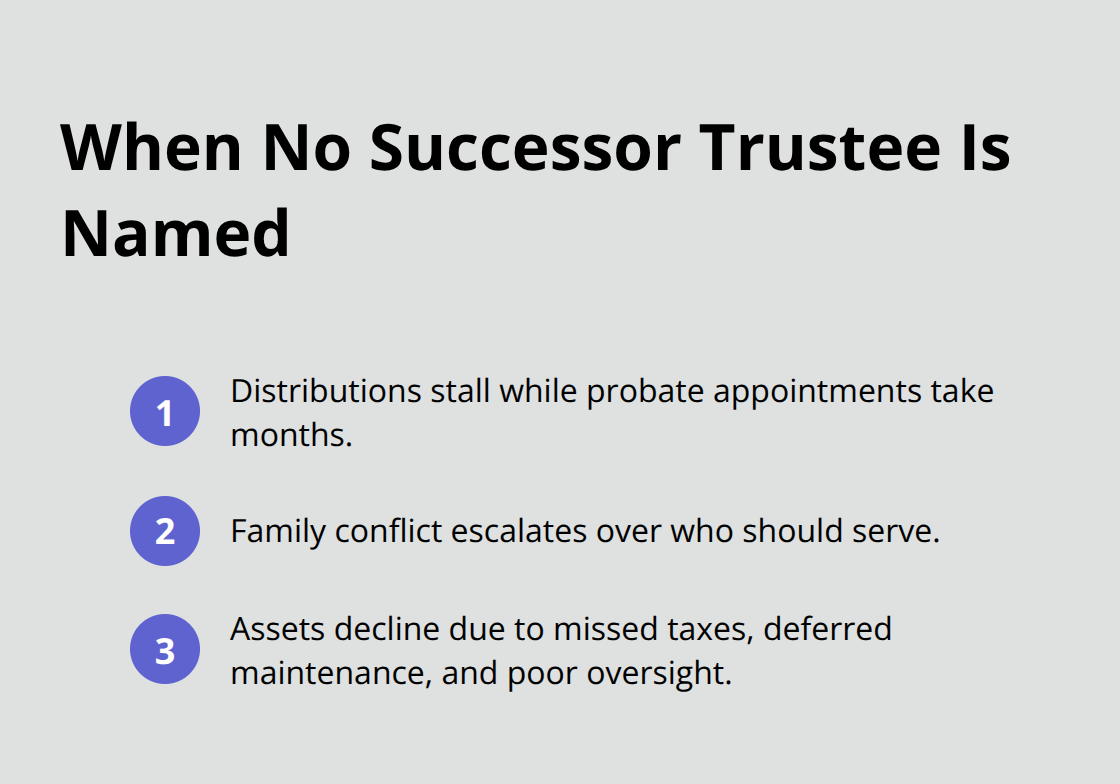
A trustee vacancy creates real problems that cascade through your family. When a trustee dies or becomes incapacitated without a named successor, California probate courts step in to appoint one, which delays distributions and costs money in court fees and legal bills. Beneficiaries face uncertainty about when they’ll receive their inheritance, and during that gap, trust assets sit idle without proper management. Family members often disagree about who should take over, turning grief into conflict. These disputes can stretch for months or years, with siblings fighting over qualifications or accusing each other of self-interest. The longer the vacancy lasts, the more likely trust assets deteriorate through neglect-unpaid property taxes, deferred maintenance on real estate, or underperforming investments nobody monitors.
Court Delays Cost Money and Damage Relationships
Most California trusts include a replacement trustee provision, but many don’t specify a clear order or describe qualifications. When the primary trustee can’t serve and no one is ready to step in, probate courts take months to appoint someone. During that time, beneficiaries stop receiving distributions, property maintenance gets postponed, and tax deadlines slip past. The appointed trustee often lacks knowledge of the family’s values or the trust creator’s intent, leading to decisions that upset beneficiaries. Clear succession planning eliminates this chaos-a named successor assumes duties immediately, distributions continue on schedule, and your family avoids the courthouse entirely. Families that establish multiple backup trustees in writing see smooth transitions where the trust operates as if nothing changed.
Assets Remain Protected When You Plan Ahead
A trustee manages assets, pays expenses, files taxes, and distributes money according to the trust document. If that role sits empty, assets become vulnerable. Real estate falls into disrepair, investment portfolios drift without oversight, and tax obligations go unpaid, triggering penalties. Beneficiaries who depend on trust income face financial hardship while waiting for court appointments. A successor trustee already knows the trust terms, understands which assets need attention, and acts immediately. When you name someone willing and able (whether a family member, professional fiduciary, or trust company), your beneficiaries receive what you intended, on time, and without the stress of courtroom battles.
Understanding these risks shows why succession planning matters-but knowing the problems isn’t enough. The next section walks you through the specific steps that prevent these scenarios from happening to your family.
How to Build Your Trustee Succession Plan
Select a Successor Trustee Who Meets Three Core Requirements
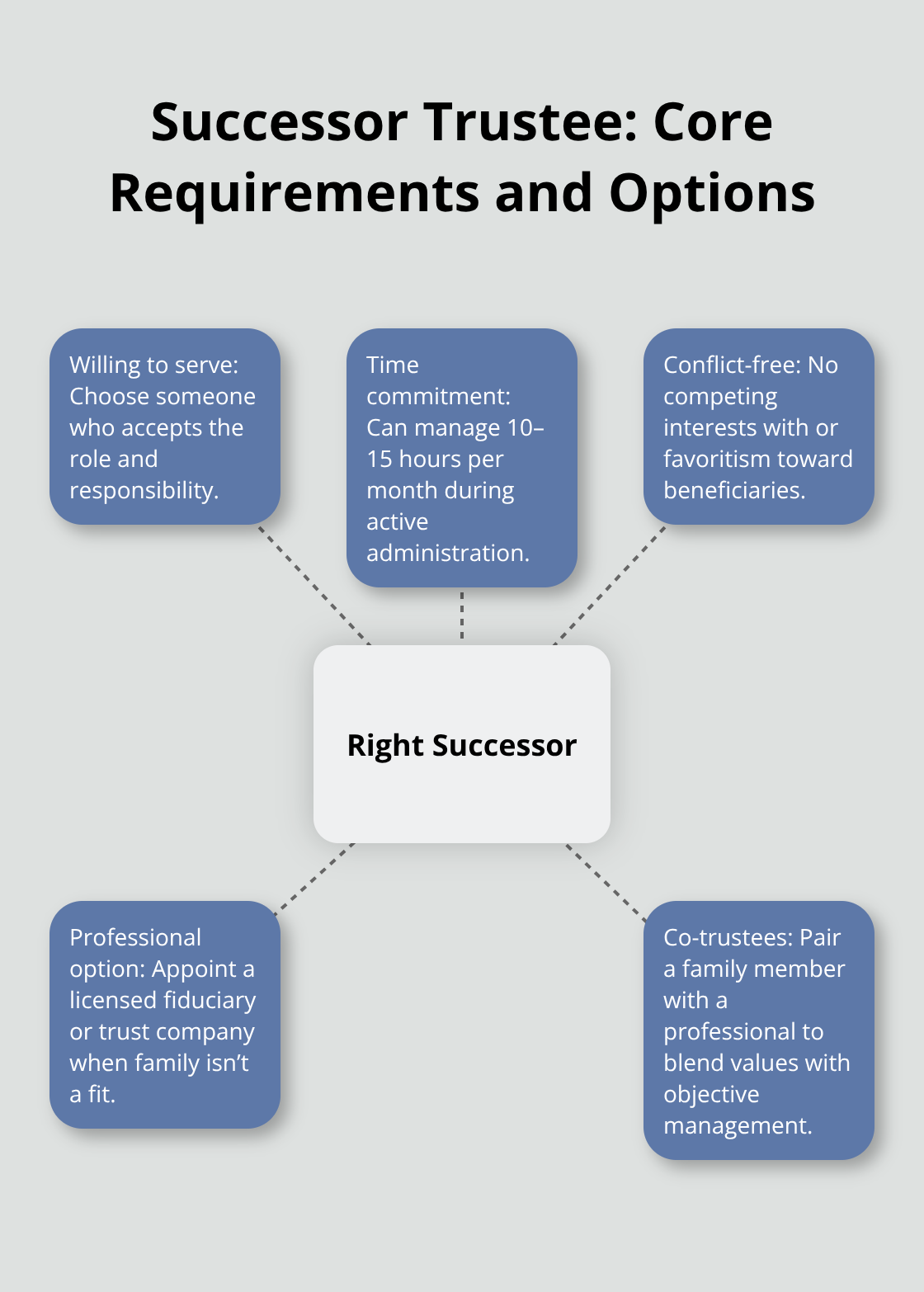
Picking the right successor trustee is where most families stumble. You need someone who understands your values, can manage complex assets, and won’t create conflict among beneficiaries. A family member might seem like the obvious choice, but if they lack financial discipline, lack experience managing investments, or have competing interests with other beneficiaries, the plan fails the moment they take over. Start by listing people who meet three hard criteria: they must be willing to serve, they must have the time to manage trust duties (which average 10-15 hours per month during active administration), and they must be free from conflicts of interest. If no family member fits all three, name a professional fiduciary or trust company instead. California allows co-trustees, so you can pair a family member with a professional to balance personal connection with objective management.
Name Multiple Successors in Clear Order
Once you identify your primary successor, name at least one backup in case that person dies or becomes unable to serve before your trustee does. Most California trusts lack clear backup provisions, which is why courts end up appointing trustees years after the original vacancy occurs. Write down your choice and the reasons behind it in the trust document itself, not in a separate letter. This forces clarity and prevents beneficiaries from second-guessing your judgment later.
Communicate Your Plan Before It Takes Effect
Communication prevents the biggest mistakes. Tell your named successor what you expect before you die or become incapacitated-show them the trust document, walk them through key assets, explain your values for distributions, and answer their questions. Many people named as trustee feel blindsided and unprepared when they suddenly inherit the role. A conversation now costs an hour of your time and prevents months of confusion later. Also inform your current trustee about the succession plan so they can prepare to hand off smoothly.
Share Your Plan With Family Members Strategically
Share the plan with your family members in general terms without creating a free-for-all debate over your choices. You might say we’ve named someone we trust to manage the trust fairly and they understand our wishes, without inviting complaints. If you expect conflict, consider holding a family meeting with a neutral attorney present-we at Law Offices of Roshni T. Desai can facilitate this conversation to set expectations and reduce post-death disputes.
Review and Update Your Plan Regularly
Finally, review your plan every three to five years or after major life changes like a beneficiary’s death, a divorce, or a significant change in a successor’s circumstances. A plan written 15 years ago naming a trustee who now has serious financial problems or a bitter relationship with a beneficiary creates exactly the chaos you tried to prevent. Once your succession plan is solid, the next step involves understanding the legal framework that governs how trustees operate and what compliance obligations they must meet.
What Legal Rules Govern Trustee Succession
California law sets clear expectations for how trustees operate and what happens when they need to be replaced. The California Uniform Trust Code provides the framework for trustee duties, successor appointments, and beneficiary rights, but most families don’t understand these rules until a crisis forces them to learn. A trustee has a fiduciary duty to act in the beneficiaries’ best interests, avoid conflicts of interest, and manage assets responsibly-these duties don’t disappear when a successor takes over, which means your named successor inherits legal obligations the moment they assume the role. If your trust document doesn’t specify a clear succession process, California probate courts will appoint a trustee, but that court-appointed trustee has no obligation to follow your family’s values or preferences.
Bonding Requirements and Fiduciary Obligations
Many trusts require bonding, which means the trustee must post a financial guarantee to protect beneficiaries if funds are mishandled. Bonding costs money and creates delays, but state law often mandates it unless the trust document explicitly waives it.
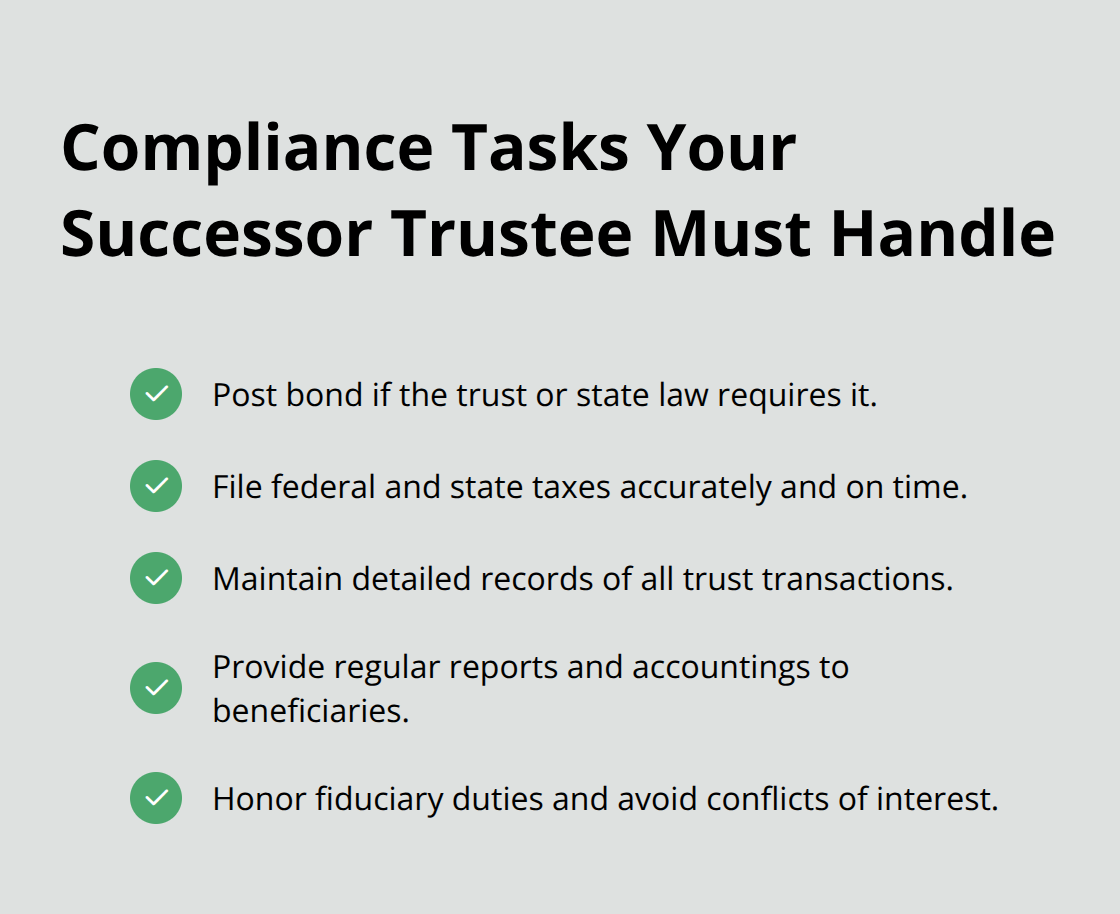
Your successor needs to understand these compliance obligations before they take over, as they will inherit full responsibility for tax filings, detailed record maintenance, and regular reports to beneficiaries.
How State Law Fills Gaps in Your Trust Document
The trust document itself is where these rules either become clear or create confusion. If it lacks specific language about successor duties, bonding requirements, or the succession timeline, California law fills in the gaps, and those default rules may not match your intentions. A trust written without clear succession provisions leaves your family vulnerable to court intervention and delays that could have been prevented.
Why Regular Updates Protect Your Plan
Your trust document must be reviewed and updated regularly to stay compliant with California law and reflect changes in your family or financial situation. State law changes periodically, and a trust written ten years ago may no longer align with current tax strategy or succession rules. If you’ve experienced a major life change-a beneficiary’s death, a significant change in a successor’s financial stability, or a shift in your assets-your succession plan needs adjustment.
The Cost of Waiting Until It’s Too Late
An outdated trust creates real problems: a named successor who is no longer able or willing to serve, bonding requirements that weren’t anticipated, or tax filing obligations that weren’t addressed in the original document. The cost of updating a trust document now is far less than the cost of probate litigation or court-ordered trustee appointments later. Many families wait until after a death to address these issues, which forces beneficiaries into expensive legal battles and delays distributions for months. Proactive updates ensure your succession plan is legally sound and practically workable when it actually matters.
Final Thoughts
Trustee succession planning tips work because they address the real problems families face when leadership changes. A clear plan eliminates court delays, protects your beneficiaries from conflict, and keeps your assets managed according to your wishes. Without one, your family inherits uncertainty, legal bills, and months of waiting for distributions.
Building a solid succession plan requires three concrete actions: identify a successor trustee who meets your standards for integrity, availability, and financial responsibility; name backups in writing; and communicate your plan to your successor and family members so nobody faces surprises when the time comes. You should also review your trust document every few years to ensure it still reflects your values and complies with current California law. These steps take time now but save your family from far greater expense and heartache later.
A trust attorney can review your current documents, identify gaps in your succession plan, explain your state-specific obligations, and help you communicate your wishes to family members. We at Law Offices of Roshni T. Desai offer free consultations to evaluate your situation and walk you through the steps needed to protect your family. Contact us today to discuss your family’s needs and get clear answers about what happens next.