




Probate Asset Listing: Organize Your Estate Inventory
When someone passes away, their assets don’t organize themselves. A thorough probate asset listing prevents costly delays and family conflicts down the road.
At Law Offices of Roshni T. Desai, we’ve seen how a disorganized inventory can turn a straightforward probate process into a months-long headache. This guide walks you through creating a complete asset inventory that protects your family’s interests.
Why a Complete Asset List Matters in Probate
A disorganized asset inventory costs time and money. South Carolina requires executors to file the Inventory and Appraisement Form 350ES within 90 days of appointment, and missing assets force amendments that delay distributions to heirs. When the probate court receives an incomplete inventory, it flags the estate for further review, extending the timeline by weeks or months. Beneficiaries grow frustrated waiting for their inheritance, and tensions rise when they discover assets weren’t accounted for initially. Incomplete inventories create unnecessary complications that could have been avoided with proper planning.
The Financial Reality of Incomplete Inventories
Probate costs in South Carolina typically include court filing fees, publication costs, and attorney fees that depend on the estate’s complexity and duration. A thorough asset list from the start prevents the need to file amended inventories, which require additional court filings and attorney time. Each amendment costs money and signals to beneficiaries that the process wasn’t handled carefully. Executors who compile a complete inventory upfront demonstrate they’ve taken the responsibility seriously and reduce the likelihood that beneficiaries will question the administration or hire their own attorney to review the work. The cost difference between doing it right initially versus fixing mistakes afterward is substantial.
Preventing Family Conflict Through Transparency
Beneficiaries have a legal right to receive a copy of the inventory, and they scrutinize it carefully. When they see that assets were missed or values appear inaccurate, they assume mismanagement or worse. A detailed, well-organized list with clear descriptions and supporting documentation shows that the executor acted with care and honesty. Personal property often causes the most conflict because its value is subjective.
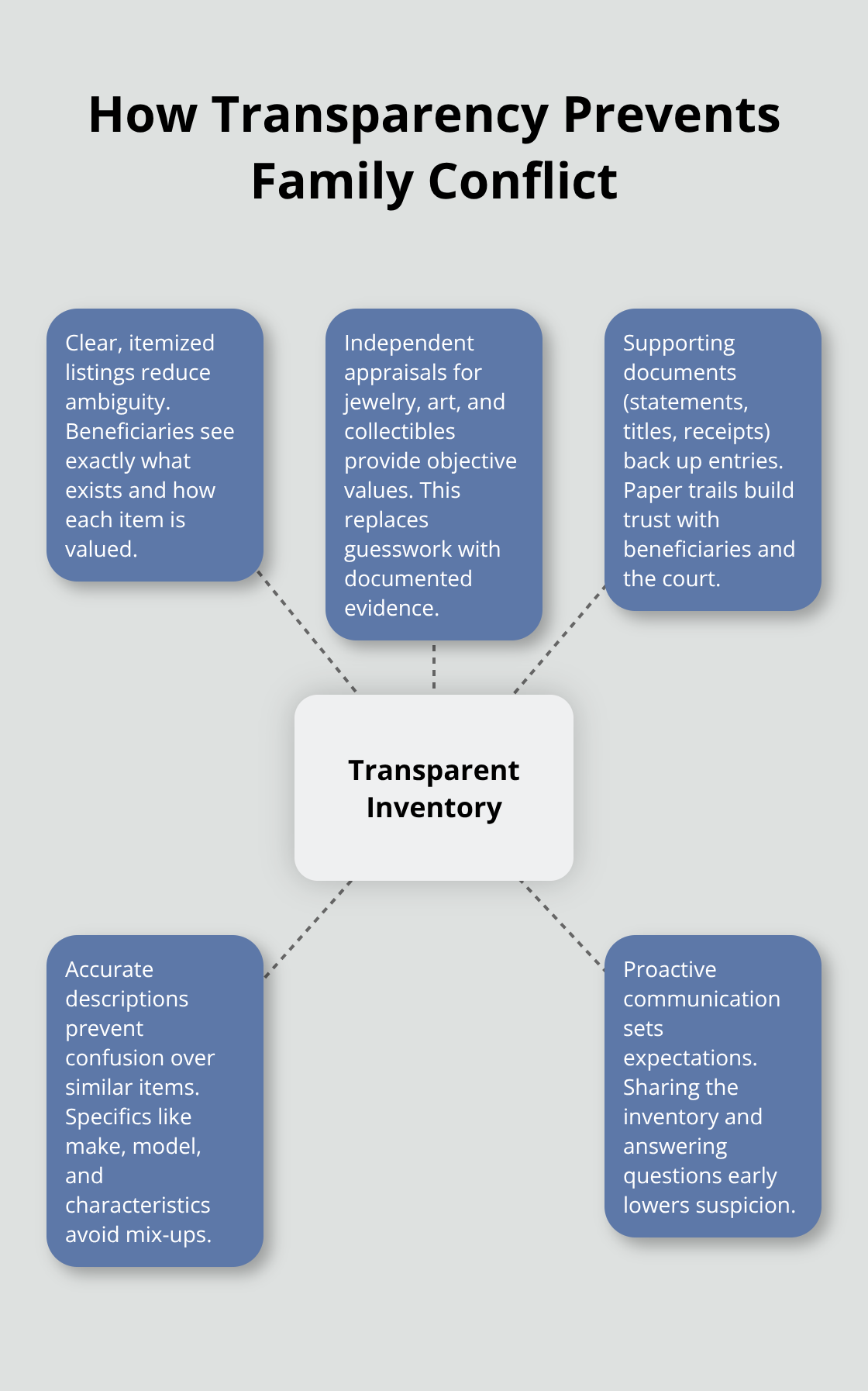
If jewelry, artwork, or collectibles are grouped vaguely as household items without individual descriptions and appraisals, beneficiaries who expected certain pieces may believe they disappeared. Listing each valuable item separately with a description and fair market value as of the date of death prevents these disputes before they start.
Building a Strong Foundation for Your Estate
Executors who gather documents early-bank statements, property deeds, vehicle titles, insurance policies, investment records-and cross-reference them against the decedent’s will and trust documents catch most assets before filing. Checking safety deposit boxes, reviewing email for subscription notices, and talking with family members about less obvious assets like collectibles or business interests fills gaps that a document search alone might miss. The inventory step produces a clear list with descriptions, locations, and estimated values that the probate court can verify and beneficiaries can understand. When you present the court with a comprehensive, well-documented inventory on the first filing, the estate moves forward without interruption, and you’re ready to tackle the next critical step: actually documenting those assets in a way that holds up under scrutiny.
How to Build Your Asset Inventory from the Ground Up
Gather Documents and Set Up Your Tracking System
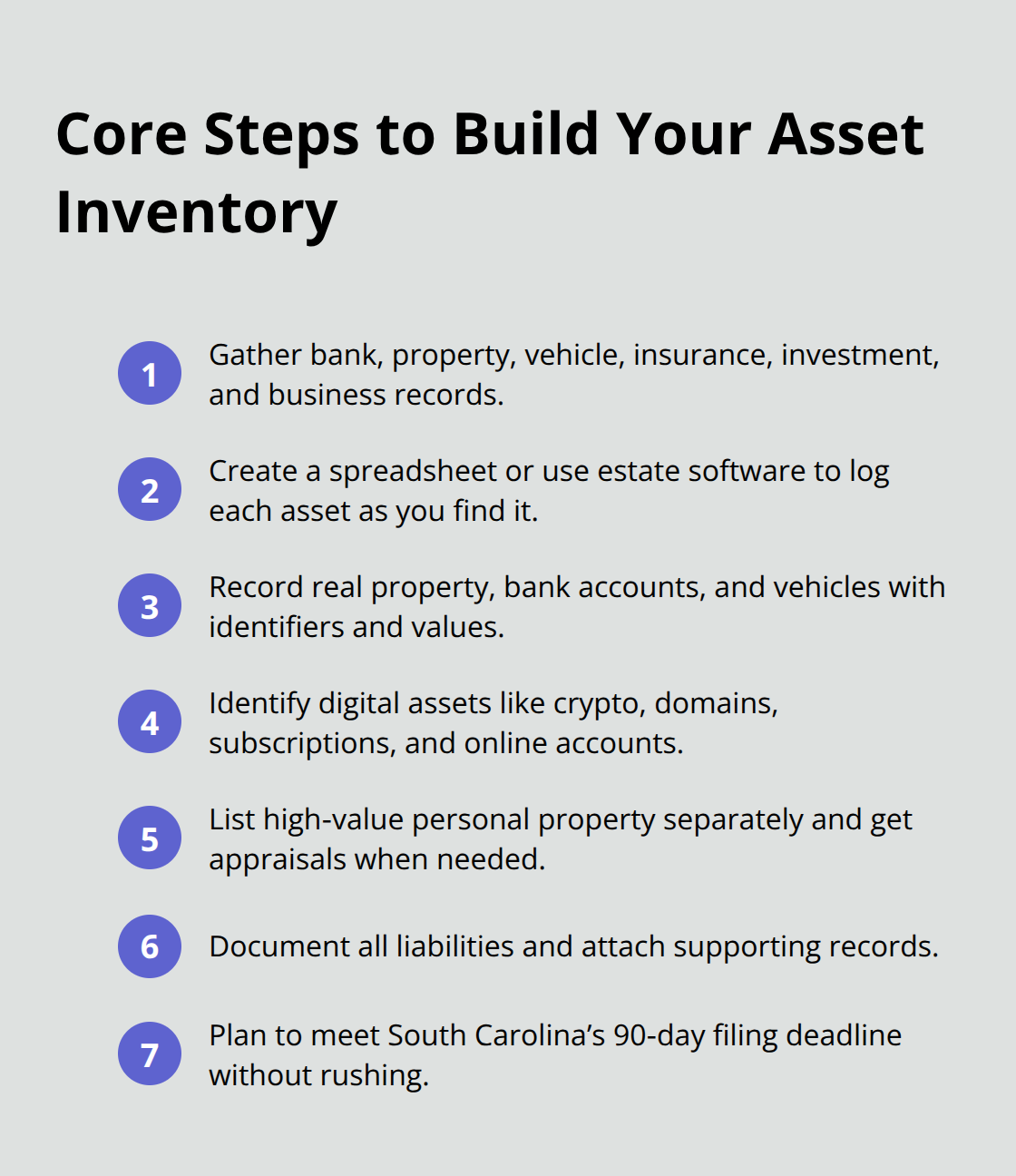
Start by assembling every financial document you own. Bank statements, property deeds, vehicle titles, insurance policies, investment statements, and business records form the foundation of an accurate inventory. Open a spreadsheet or use estate planning software to track each asset as you find it. South Carolina’s Form 350ES requires you to file within 90 days of appointment, so moving quickly matters, but rushing leads to omissions that cost more time later.
Document Real Property, Accounts, and Vehicles
Real property should list the street address, a basic description, and the appraised or estimated value as of the date of death. For bank accounts, record the institution name, account type, the last four digits of the account number, and the balance at death. Vehicles need the year, make, model, VIN or last digits, and market value from sources like Kelley Blue Book or Edmunds. Don’t estimate values casually. Use actual market data or professional appraisals, especially for real estate and high-value items.
Track Digital Assets Before They Disappear
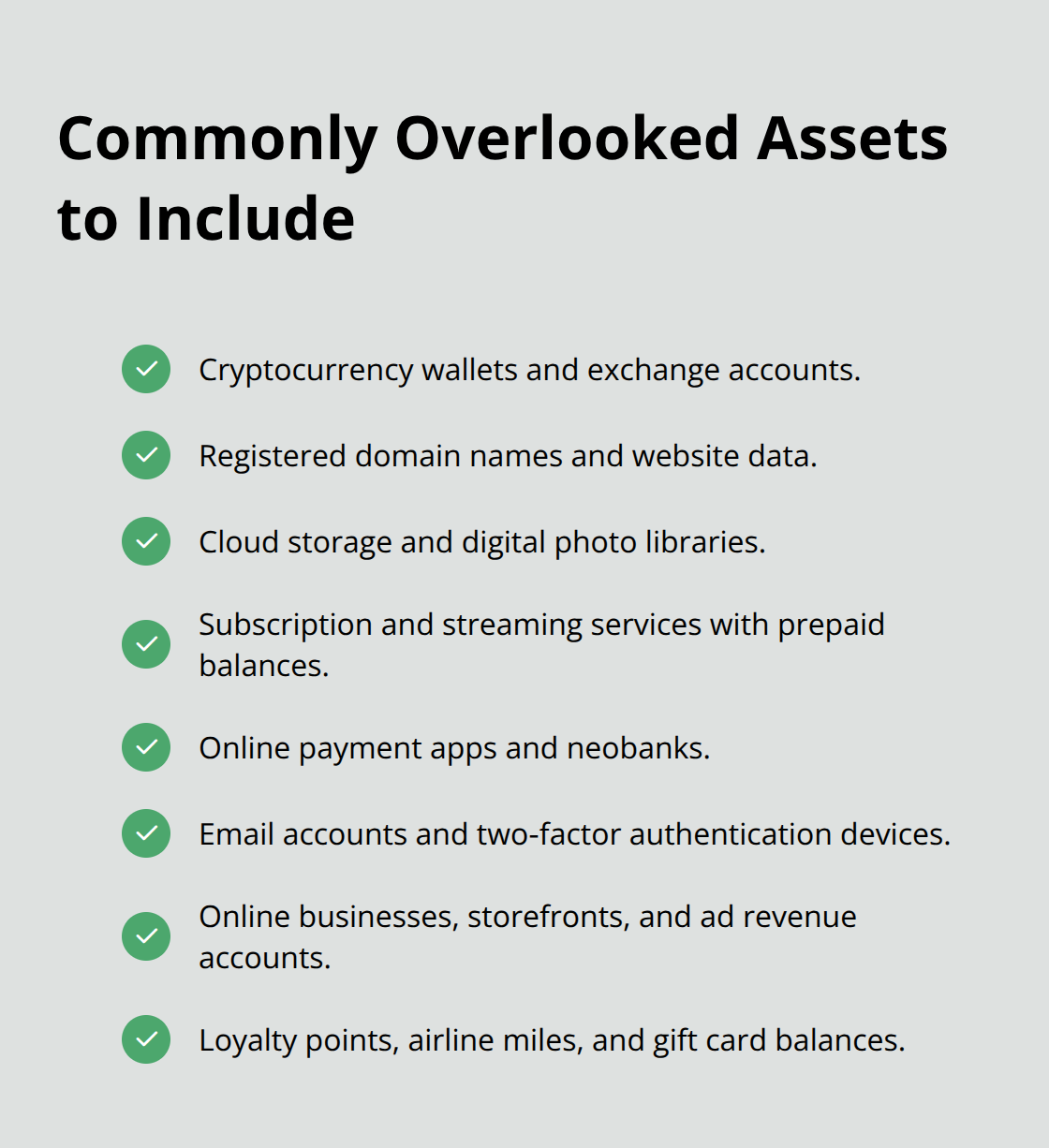
Digital assets often slip through the cracks because they’re invisible until you search for them. Check email for subscription notices, review credit card statements for recurring charges, and search for domain names or cryptocurrency holdings. Ask family members about online banking or investment accounts. Social media accounts, digital photos stored in the cloud, and email accounts themselves have value and should be documented with descriptions and account identifiers. Include cryptocurrency holdings with wallet addresses or exchange account information, domain names with registration details, and any online businesses or digital storefronts with login information stored securely.
Value Personal Property Accurately and Completely
Personal property causes the most conflict because values are subjective and easy to underestimate. Jewelry, artwork, collectibles, and furniture deserve individual attention, not vague groupings. High-value items like engagement rings, paintings, or rare collections should be listed separately with detailed descriptions and professional appraisals. Use online market comparisons when possible, or hire an appraiser for items worth more than a few hundred dollars. Less valuable household items can be grouped by room with an estimated total, but the estimate should reflect actual replacement value, not what you think someone might pay at a garage sale. Take photos or videos of valuable items to support your descriptions and values.
Document Liabilities and Support Your Filings
Debts and liabilities matter just as much as assets. List every loan, credit card balance, mortgage, tax obligation, and other liability with the creditor name, account number or last digits, debt type, and balance at death. South Carolina creditors have 60 days after notice to file claims, so documenting what the estate owes ensures proper payment sequencing and prevents missed obligations. Attach supporting documentation to your inventory filing. Deeds verify real property ownership, bank statements confirm account balances, appraisals justify asset values, and receipts or titles document personal property. The probate court may request these records, and having them organized prevents delays. If new assets surface after you file the initial inventory, amend it promptly using the appropriate form. Amendments signal that you’re managing the estate carefully, not that you made a careless mistake initially. Once your inventory is complete and filed, the next critical step involves understanding which assets pass directly to heirs and which require additional administration through trusts or other mechanisms.
What Most Executors Overlook When Listing Assets
Executors who complete thorough inventories often still miss entire categories of assets because they think linearly-bank accounts, real estate, vehicles-without considering what doesn’t appear on a desk or in a filing cabinet. Digital assets vanish into obscurity because they generate no physical paperwork. A deceased person’s Netflix subscription, cloud storage, cryptocurrency wallet, or domain name sits idle until someone realizes it exists, and by then months have passed.
Digital Assets Slip Through the Cracks
Email inboxes hide recurring charges that signal forgotten accounts. Credit card statements reveal subscriptions the family never knew about. Executors file inventories, only to discover months later that the estate held cryptocurrency, digital photos with significant value, or online businesses generating income. These omissions force amended filings that damage credibility and delay distributions to heirs.
The solution requires systematic searching, not casual document review. Check email for subscription confirmations and recurring charges from the last year. Call banks and financial institutions directly to confirm all accounts in the decedent’s name. Search the Secretary of State website for business registrations or filings. Interview family members specifically about digital assets and online accounts they know about but may not have mentioned.
Personal Property Values Create Conflict
Personal property creates a different problem. Executors underestimate values because they confuse retail price with fair market value, or they group items so vaguely that beneficiaries question whether specific pieces actually existed. A jewelry collection described as household items worth $5,000 total invites suspicion, especially if a beneficiary expected an engagement ring or heirloom bracelet.
Professional appraisals for jewelry above $500, artwork, collectibles, and antiques prevent these disputes and provide documentation that satisfies the probate court. Online comparisons on eBay or specialist sites help estimate values for less precious items, but casual guessing creates liability. Take photos and videos of personal property before listing it to support your descriptions and values.
Amendments Signal Diligence, Not Negligence
Executors often treat the inventory as a one-time task, filing it and moving forward. South Carolina allows amendments if new assets surface, but many executors don’t know this and assume their initial filing was final. A safety deposit box discovered weeks after filing, a forgotten investment account, or a life insurance policy with the estate as beneficiary all require amended filings that signal poor administration if they weren’t discovered upfront.
Set aside time weeks after the initial filing to verify that nothing was missed. Use a checklist that covers real estate, bank accounts, investments, vehicles, digital assets, personal property, life insurance, retirement accounts, and business interests. Amendments filed promptly show diligence, not negligence. Many executors wait until beneficiaries question the inventory before searching harder, which creates the impression that something was hidden. Proactive amendments demonstrate that you manage the estate with care and transparency.
Final Thoughts
A complete probate asset listing protects your family from delays, disputes, and unnecessary costs. The work you invest upfront-gathering documents, tracking digital assets, valuing personal property accurately, and organizing everything systematically-pays dividends when the probate court receives a thorough, well-documented inventory on the first filing. Executors who compile detailed inventories demonstrate responsibility and transparency, which builds trust with beneficiaries and prevents the conflicts that arise when assets appear to be missing or undervalued.
The three most common mistakes-overlooking digital assets, underestimating personal property values, and failing to update the list-are entirely preventable with a methodical approach. Check email for subscriptions, search for cryptocurrency and domain names, interview family members about forgotten accounts, and use professional appraisals for valuable items. File amendments promptly if new assets surface, as this signals that you manage the estate with care, not that you made careless errors initially.
Working with a probate professional streamlines the entire process and ensures your probate asset listing meets South Carolina’s requirements. We at Law Offices of Roshni T. Desai provide personalized estate planning and probate services, helping executors navigate complex inventories and avoid costly mistakes. Contact Law Offices of Roshni T. Desai for a free consultation to discuss your estate’s specific circumstances and next steps.