




How Probate Works 2026: A Practical Overview for Heirs
Probate can feel overwhelming when you’re grieving a loved one. Understanding how probate works in 2026 helps you prepare for what’s ahead, whether you’re an heir waiting for assets or planning your own estate.
We at Law Offices of Roshni T. Desai guide families through this process every day. This guide breaks down the steps, costs, and strategies to protect your interests.
What Happens When Someone Dies Without a Will
State Laws Control Asset Distribution
When someone dies without a will, state intestacy laws take over completely. These laws rank who receives assets in a strict order: surviving spouse first, then children, then parents, then siblings. The specific percentages and priorities vary significantly by state, which means two nearly identical estates in different states distribute very differently. In some states a surviving spouse receives 100% of community property assets, while in others the spouse shares with adult children.
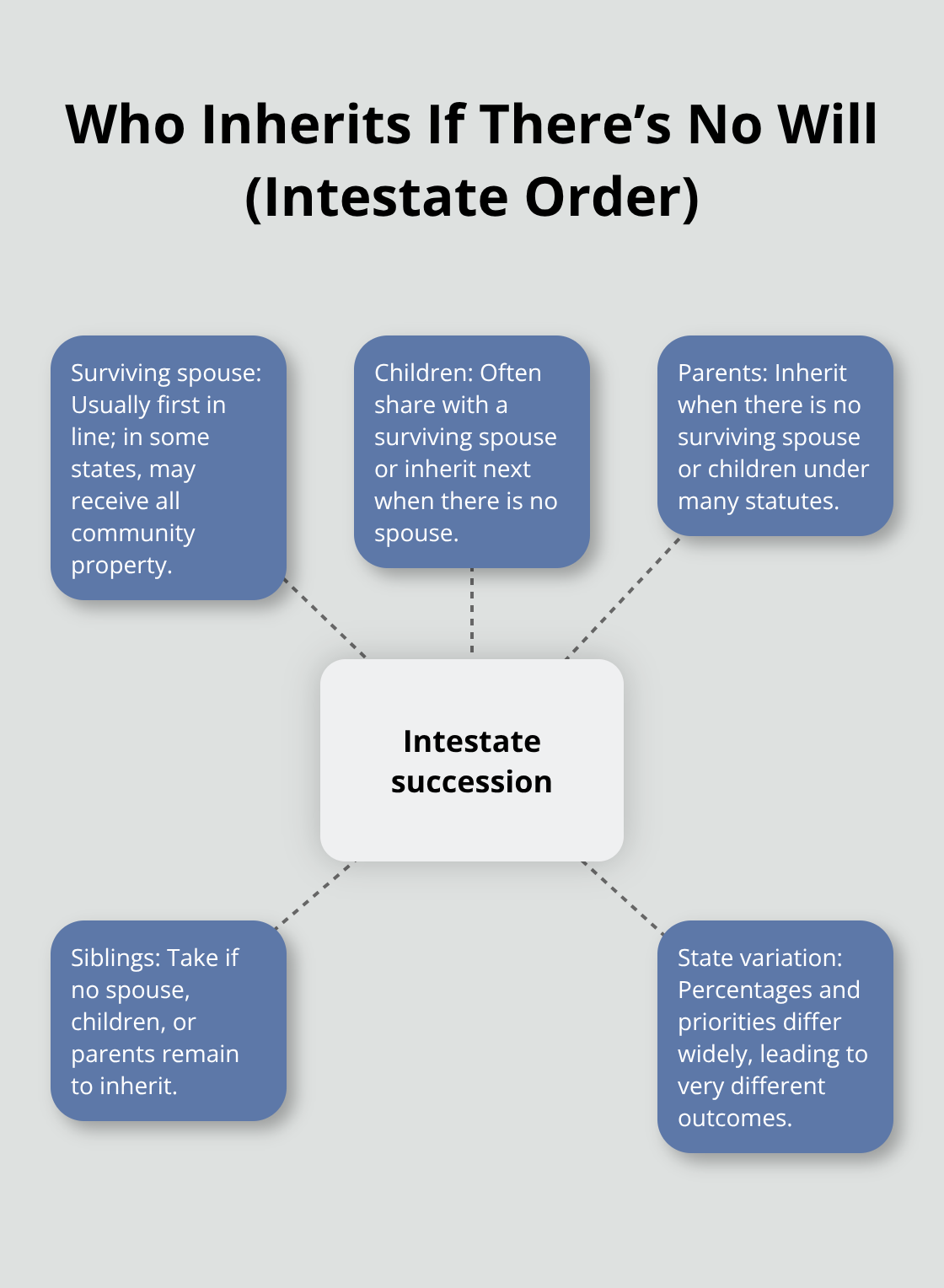
This rigid hierarchy ignores what the deceased person might have actually wanted and often creates conflict between family members who expected different outcomes. No flexibility exists-the court enforces state law exactly as written, regardless of the deceased’s true wishes.
The Court Appoints an Administrator
The probate court appoints an administrator (sometimes called a personal representative) to manage the estate since no executor was named in a will. This administrator inventories assets, notifies creditors, pays debts and taxes, and distributes what remains. The appointment process typically takes 4–6 weeks, and court fees still apply.
Probate costs for estates without wills often run higher because the court process requires more steps and oversight. Schwab’s research shows probate costs generally range from 0.5% to 4% of the estate value, with larger estates often paying toward the higher end. For a $300,000 estate without a will, you could realistically expect $1,500 to $12,000 in combined court costs, attorney fees, and administrator compensation.
Delays and Higher Costs Hit Heirs Hard
The timeline stretches longer for intestate probate-six months to two years is typical, compared to potentially faster resolution with a clear will and named executor. Creditors receive formal notice and a 90-day window to file claims in most states, and that waiting period alone delays distributions significantly.
Many heirs find this process frustrating because they have no say in who manages the estate and must wait while the court enforces state law. The administrator’s lack of flexibility (combined with court oversight requirements) means the estate moves at the court’s pace, not the family’s pace.
Understanding these challenges helps you recognize why planning ahead matters so much. The next section walks through the probate process step by step so you see exactly what happens once the court gets involved.
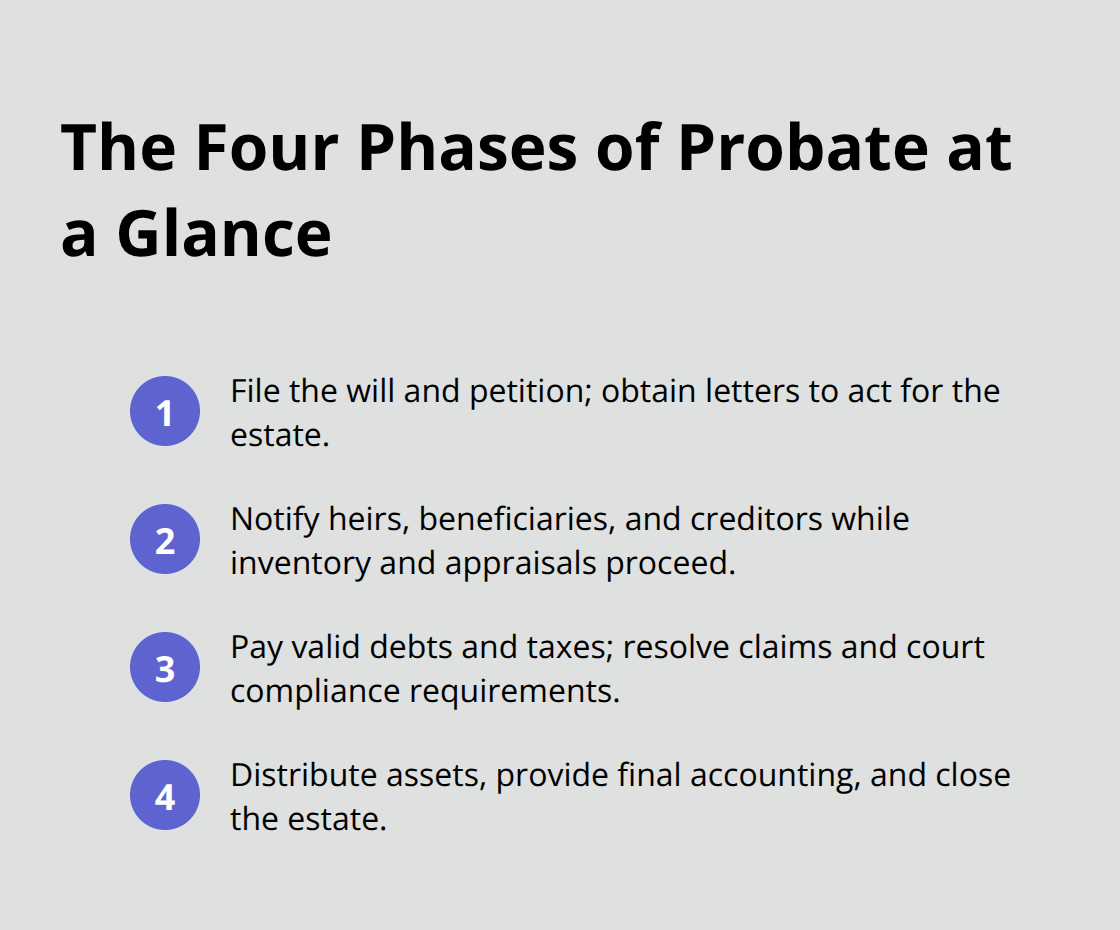
The Probate Process Moves Through Four Strict Phases
Filing the Will and Petition with the Court
The executor or administrator files the original will and a petition for probate with the court to start the process-this step typically takes one to four months depending on how quickly you gather the certified death certificate and other required documents. Once filed, the court issues letters testamentary or letters of administration, which give the executor or administrator legal authority to act on behalf of the estate. Courts enforce these filing deadlines without exception; missing deadlines or submitting incomplete paperwork triggers delays that add months to the timeline.
Washington’s new probate law, effective June 11, 2026, requires supervised testate probates to file a Declaration and Report Confirming Notice to Third Parties within 30 days of appointment. This filing must list all heirs and beneficiaries notified and include the date and manner of notice. If you administer an estate in Washington, you cannot ignore this requirement-the court may impose sanctions or revoke your letters if you miss the deadline.
Notifying Heirs, Beneficiaries, and Creditors
The executor or administrator must notify all known heirs, beneficiaries, and creditors through formal legal notice, typically published in a newspaper. Creditors receive a 90-day window to file claims in most states, though known creditors often get only 30 days. This notification phase runs parallel to asset inventory and creates a critical waiting period that delays distributions significantly.
During this same period, you inventory all assets-real estate, bank accounts, investments, vehicles, personal property-and obtain appraisals for items of significant value. Florida probate law requires opening a dedicated estate bank account within a reasonable timeframe, and Washington now mandates filing a Declaration and Report Regarding Estate Financial Account within 30 days of opening that account. This filing identifies the financial institution and authorized signatories. These requirements prevent commingling of funds and create an audit trail for court oversight.
Paying Debts and Taxes Before Distribution
Once debts and taxes are paid from estate funds, distributions to heirs can finally occur. The timeline from appointment to final distribution typically spans six to twelve months for straightforward estates, though complex cases with disputes, multiple properties, or substantial tax issues stretch toward two years or longer. Courts expect annual status reports for ongoing estates under Washington’s new law, and interested parties can request updates if distributions stall.
Organize all asset documents, account statements, and debt records immediately after death, then work with an attorney to create a filing schedule that meets each court deadline. Missing even one deadline costs you months of additional waiting and frustration.
What Comes Next in the Distribution Phase
The next section explains how assets actually move to heirs and what happens when disputes or complications arise during the final distribution stage.
How to Stop Probate Before It Starts
A Revocable Living Trust Transfers Assets Outside Court
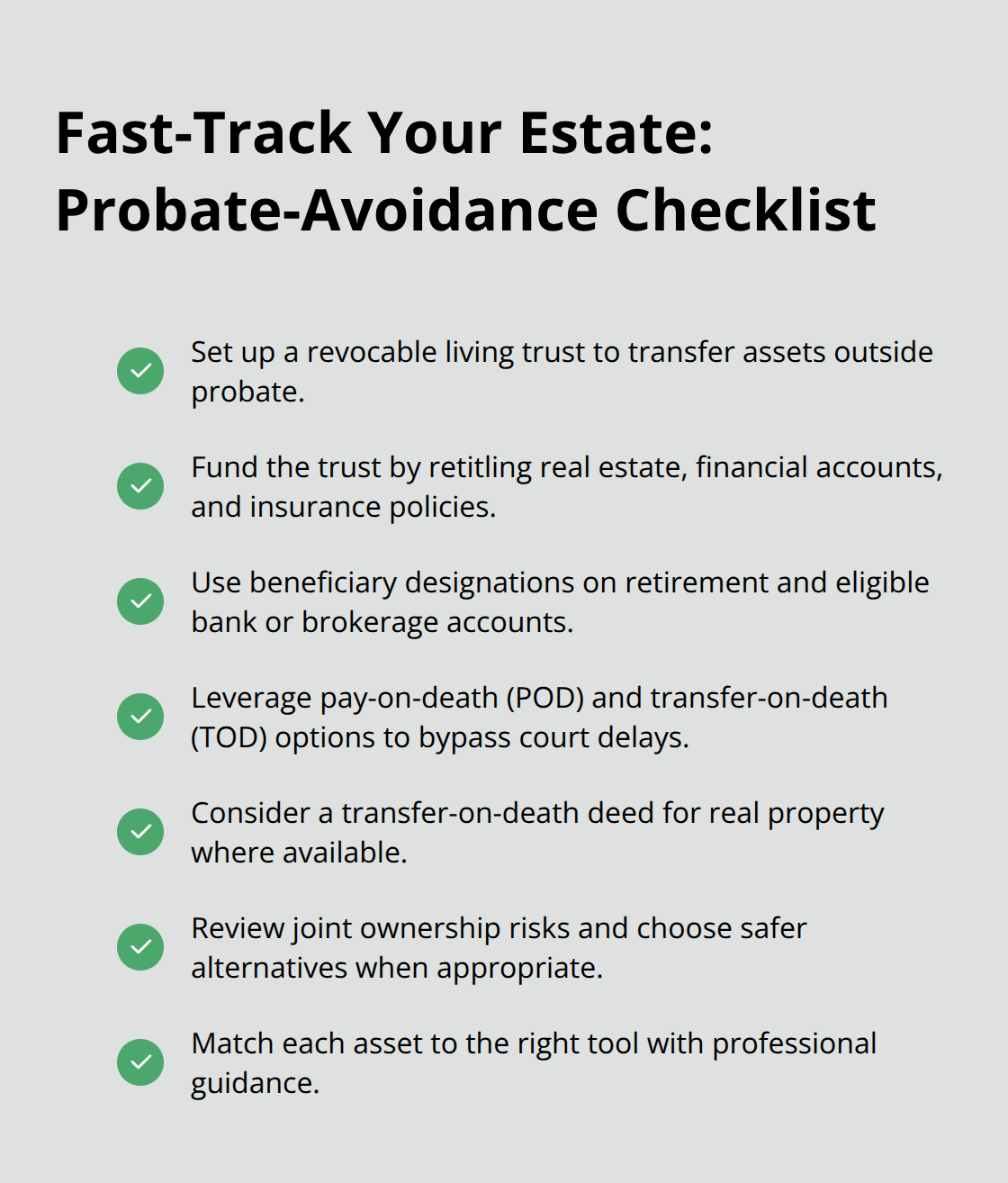
The smartest move is preventing probate altogether rather than navigating it after death. A revocable living trust transfers assets outside probate, keeps your estate private, and allows immediate distributions to beneficiaries without court delays. You establish the trust with an attorney, then retitle qualifying assets-real estate, brokerage accounts, life insurance policies, and personal property-in the trust’s name. When you die, a successor trustee you’ve named handles distributions directly to beneficiaries, typically within weeks rather than months or years.
This approach costs $1,500 to $3,000 upfront but saves far more in probate fees, court costs, and timeline delays. Assets not funded into the trust may still require probate, so the second step is critical: ensure all property titles match your trust documents.
Beneficiary Designations Bypass Probate Automatically
For retirement accounts and certain bank accounts, you cannot place them inside a trust, but you can name a beneficiary directly on the account itself. Pay-on-death bank accounts and transfer-on-death brokerage accounts bypass probate automatically when you die, passing directly to the named beneficiary. Review these designations after major life events like marriage, divorce, or the birth of children-outdated beneficiary designations often go to ex-spouses or deceased relatives, creating unintended probate complications.
Joint Ownership and Transfer-on-Death Deeds Offer Alternatives
Joint tenancy with rights of survivorship transfers property automatically to the surviving co-owner at death, but this strategy carries hidden costs: adding a nonspousal heir to real estate can trigger unexpected tax consequences and expose the property to that person’s creditors. A transfer-on-death deed offers better protection in many states, allowing you to name a beneficiary who inherits the property automatically at death while you retain full control during your lifetime and receive a full step-up in cost basis, which reduces capital gains taxes for your heirs.
Match Your Assets to the Right Strategy
Real estate often calls for different planning than financial accounts, and family situations shape which tools work best. The Law Offices of Roshni T. Desai provides personalized guidance across Southern California, with Ms. Desai’s dual background as both attorney and real estate professional. This combination means she understands how property transfers interact with estate planning, reducing unnecessary complications and costs when assets eventually change hands. A free consultation helps you identify which assets need trust funding, which can use beneficiary designations, and which might benefit from joint ownership or transfer-on-death deeds. The goal is straightforward: put the right assets in the right ownership structure now so your heirs inherit smoothly and your estate avoids court involvement entirely.
Final Thoughts
Probate protects heirs by forcing debts to be paid, taxes to be settled, and assets to reach the right people through court supervision. The cost hits hard: formal probate typically consumes 0.5% to 4% of your estate and stretches six months to two years or longer, meaning a $500,000 estate faces $2,500 to $20,000 in combined fees, court costs, and administrator compensation while your family waits. Understanding how probate works in 2026 reveals why planning ahead matters far more than most people realize.
A revocable living trust, beneficiary designations on retirement accounts, and transfer-on-death deeds move assets outside the court system entirely. These tools cost a few thousand dollars upfront but save multiples of that in probate expenses and compress the timeline from years to weeks. The difference between a family that planned and one that didn’t often comes down to months of waiting and thousands in unnecessary costs.
We at Law Offices of Roshni T. Desai guide families through both probate administration and estate planning. Ms. Desai’s dual background as an attorney and real estate professional means she understands how property transfers interact with your overall plan, reducing complications when assets eventually change hands. Contact us to schedule a free consultation and identify which planning tools fit your family’s needs.