



Probate Property Sale Planning: Real Estate Moves Without Delays
Selling a property during probate feels like navigating a maze of legal requirements and real estate logistics. Most families encounter unexpected delays because attorneys and real estate agents work in separate silos, creating communication gaps that cost time and money.
At Law Offices of Roshni T. Desai, we’ve seen how probate property sale planning becomes dramatically simpler when legal and real estate expertise work together from day one. This guide walks you through the delays you’ll likely face and the concrete strategies that actually accelerate your sale.
What Actually Delays Probate Property Sales
Court Approval Creates the First Bottleneck
Court approval processes create the first major bottleneck. In California, appointing a personal representative typically takes four to eight weeks before anyone has legal authority to sell the property. Texas operates faster under independent administration, which can reduce this timeline, but dependent administration in Texas still requires court approval for each major transaction, including the sale itself. Once you list the property and accept an offer, the court must confirm the sale price before closing can occur. This confirmation step alone adds two to four weeks to your transaction.
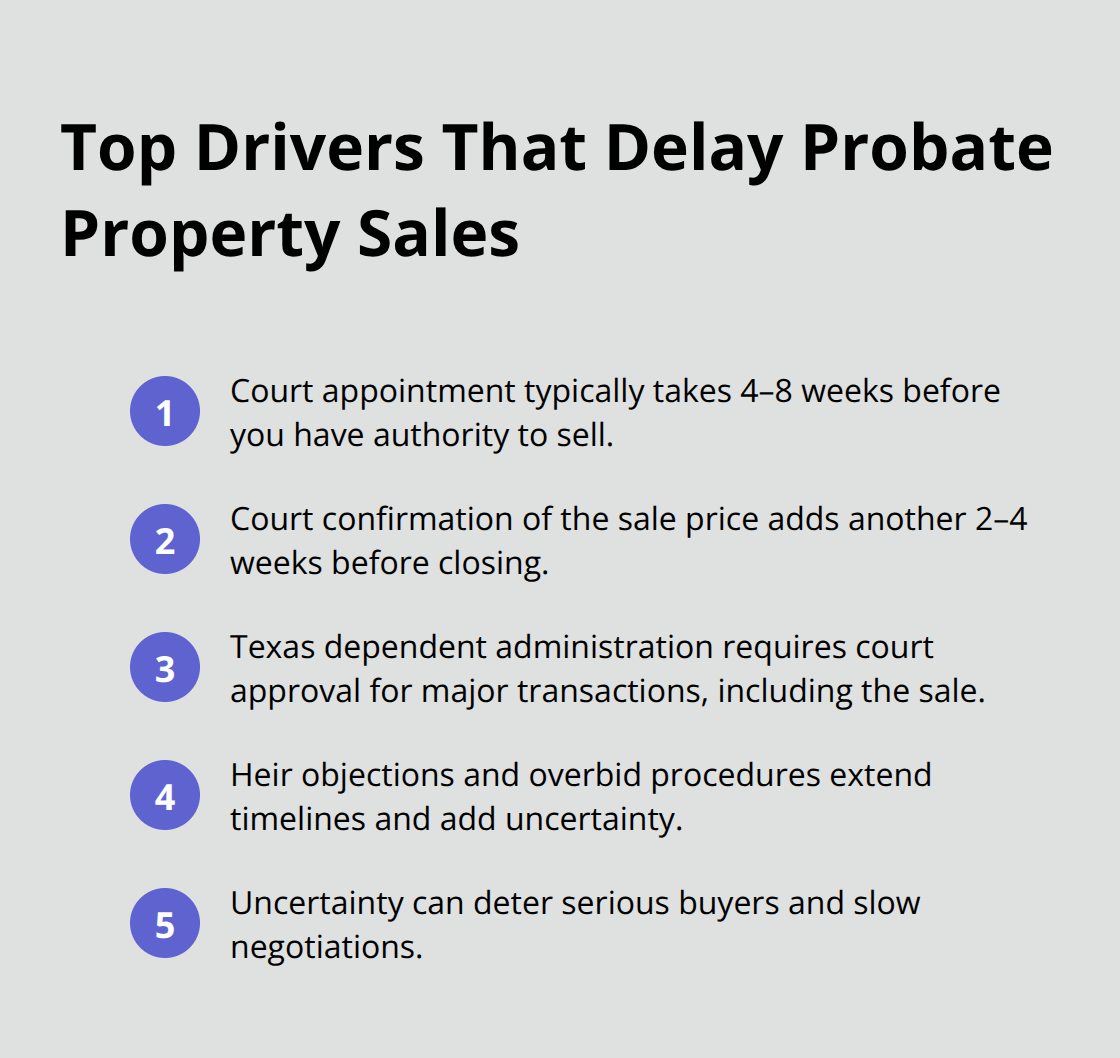
If heirs object to the sale price or contest the sale itself, the timeline extends significantly. Court-confirmation procedures and overbid processes mean the probate court can entertain higher offers after your initial agreement, which sounds good in theory but creates uncertainty that deters serious buyers.
Title Issues Stop Sales Cold
Title issues and property encumbrances derail sales far more often than most families expect. A property with liens, unpaid property taxes, or outstanding mortgage balances cannot transfer cleanly until these debts are resolved from estate assets. Missing or unclear documentation about ownership-especially when property changed hands multiple times or was held in a business entity-forces attorneys to spend weeks researching title history.
Properties held as tenants in common with unclear succession rights create additional complications requiring court intervention. These obstacles compound when nobody coordinates the effort to clear title efficiently.
Coordination Failures Between Professionals Cost Time and Money
The real estate agent and probate attorney often discover title issues separately, leading to redundant research and conflicting information about what must be resolved before closing. One attorney handles probate administration while the real estate agent pursues the sale, each operating independently without sharing what they learn. This separation means the attorney might not know the buyer’s lender requires a title search until weeks into escrow, at which point title defects surface that could have been addressed earlier.
Communication gaps between legal and real estate professionals create the single biggest driver of delays and unnecessary costs that families experience when selling probate property. When these professionals work in isolation, they waste resources and miss opportunities to accelerate the transaction. The solution lies in how you structure your team from the start-something we’ll address in the next section on strategic planning.
How to Prepare Your Probate Property for a Faster Sale
Gather Documentation and Order Critical Reports Early
Complete documentation about the property prevents weeks of scrambling later. Collect the original deed, any title insurance policies, property tax records for the past three years, and full disclosure of any liens, mortgages, or encumbrances. Request a preliminary title report from a title company immediately-not after you’ve accepted an offer. The report costs between $200 and $400 and identifies exactly what must be cleared before closing. Many families skip this step, only to discover during escrow that unpaid property taxes or a forgotten second mortgage will block the sale.
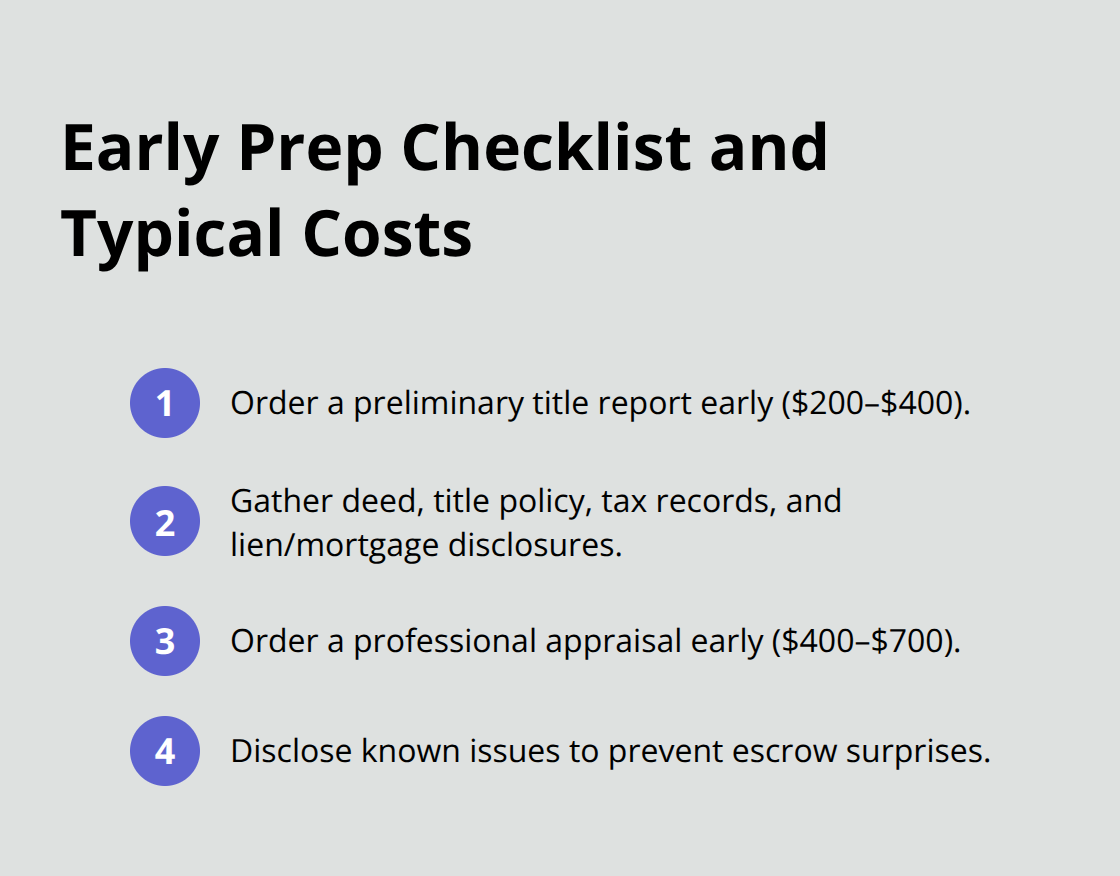
Order a professional property appraisal to establish fair market value for court confirmation purposes. Courts in California and Texas require appraisals to verify the sale price is reasonable, and this typically costs $400 to $700. Order the appraisal early so you have solid valuation before marketing begins. Document the property’s condition honestly, including any needed repairs or updates. Properties in probate typically sell as-is, meaning buyers expect fewer contingencies and less seller assistance with repairs, but transparent disclosure prevents deal collapse during inspection periods.
Select Professionals Who Understand Probate Timelines
An attorney handling your probate administration and a real estate agent experienced with probate transactions must communicate constantly from day one, not work in separate channels. This coordination prevents the communication failures that plague most probate sales. The real estate agent needs to understand that court confirmation deadlines are non-negotiable and that certain buyers’ lender requirements may trigger title searches earlier than expected. The attorney needs to know immediately when an offer arrives so legal review happens simultaneously with escrow opening.
When selecting your team, ask potential agents directly how many probate sales they’ve completed in the past two years and request references from families who’ve worked with them. Ask your probate attorney whether they regularly communicate with real estate agents and whether they understand independent administration timelines in Texas or California’s probate confirmation procedures.
Market the Property With Transparency and Competitive Pricing
Marketing a probate property requires honesty about the probate process while highlighting what makes the home valuable. Disclose upfront that court approval is required before closing, which actually filters out buyers uncomfortable with extended timelines and attracts those willing to wait for a legitimate transaction. Price competitively based on your appraisal and comparable sales in the neighborhood, not on what you hope to receive. Overpriced probate properties languish on the market because serious buyers understand the delays and won’t overpay for added risk.
Professional photography and virtual tours matter even more in probate sales because fewer buyers will visit in person before committing. Stage the property neutrally to help buyers envision their own use of the space. These practical steps compress timelines by addressing obstacles before they surface during escrow. The coordination between your legal team and real estate professional determines whether your sale moves forward smoothly or encounters preventable delays-which is why the next section focuses on how integrated legal and real estate support transforms the entire transaction.
How Integrated Legal and Real Estate Support Eliminates Delays
One Professional Handles Both Legal and Real Estate Requirements
We at Law Offices of Roshni T. Desai operate differently from the fragmented approach most families encounter. Our dual licensure as both attorney and real estate professional means the person handling your probate administration also understands real estate transaction mechanics, financing contingencies, and buyer expectations. This eliminates the communication gaps that typically add four to eight weeks to probate sales.
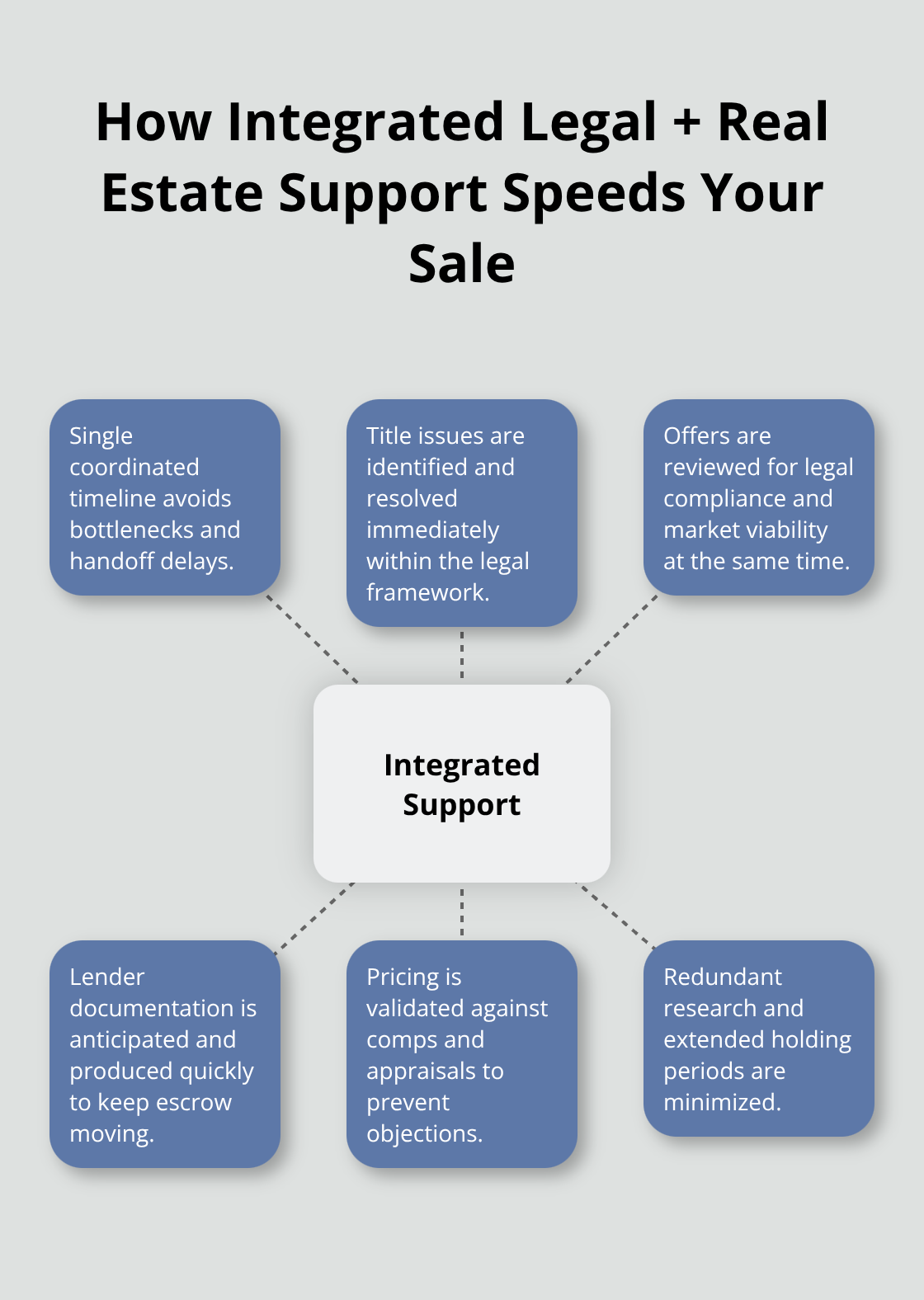
When title issues surface, we address them immediately within the legal framework rather than waiting for separate professionals to discover problems independently. When an offer arrives, we review it for legal compliance and market viability simultaneously, not sequentially. The appraisal timing, preliminary title report, court confirmation deadlines, and buyer’s lender requirements move forward on a single coordinated timeline instead of creating bottlenecks where one professional waits for another’s work to complete.
Simultaneous Legal and Real Estate Action Compresses Timelines
This integrated approach reduces unnecessary costs that plague typical probate sales. Families working with separate attorneys and agents often pay for redundant title research, conflicting advice about pricing strategy, and extended holding periods while professionals coordinate externally. We manage legal tasks and real estate moves simultaneously, which compresses timelines and eliminates the miscommunications that force families to relist properties or renegotiate terms.
When the personal representative needs court confirmation of the sale price, we’ve already validated the price against comparable sales and appraisal values, preventing objections from heirs or court concerns about fairness. When buyers’ lenders require title searches or specific documentation, we provide these materials immediately because we anticipated these requirements from the transaction’s start.
Coordination Happens Within One Professional
The coordination doesn’t require additional meetings or conference calls between separate professionals-it happens within a single professional who understands both the probate court’s requirements and what real estate buyers need to close confidently. This approach particularly benefits families in California where court confirmation procedures add inherent delays, and families managing probate sales where attorney involvement in sale decisions directly impacts closing speed.
Final Thoughts
Probate property sale planning succeeds when legal and real estate coordination happens from your first conversation, not after problems surface. The delays you’ve read about-court approval bottlenecks, title complications, and communication failures between professionals-are preventable with the right structure. Families who gather documentation early, order preliminary title reports immediately, and select professionals who understand probate timelines compress their sales by four to eight weeks compared to those who discover obstacles during escrow.
The integrated approach eliminates the fragmentation that costs families time and money. When one professional handles both legal requirements and real estate mechanics, the appraisal timing aligns with court confirmation deadlines, title issues get resolved before marketing begins, and buyer lender requirements don’t create surprise delays in the final weeks. This coordination prevents the redundant research, conflicting advice, and extended holding periods that plague typical probate sales.
Contact Law Offices of Roshni T. Desai for a free consultation to discuss your specific situation. We offer flexible home or office visits across Southern California, so you can explore your options without the pressure of a formal office setting. The sooner you align your legal and real estate strategy, the sooner your family can move forward with confidence.