



California Trust Administration Services: Local Expertise for California Estates
Trust administration in California involves specific legal duties and timelines that many people find overwhelming. At Law Offices of Roshni T. Desai, we help families navigate California trust administration services with clarity and efficiency.
This guide walks you through what trust administration actually means, the tasks involved, and why having local support makes a real difference in settling an estate smoothly.
What Trust Administration Actually Means in California
Trust administration is the process of managing and distributing a deceased person’s assets held in a trust according to the terms they set out. When someone passes away, their successor trustee becomes responsible for locating all trust assets, paying debts and taxes, and distributing what remains to beneficiaries. In California, the Probate Code sections 16000 through 16012 govern this process and require trustees to act loyally, impartially, and prudently while preserving trust property. The successor trustee cannot delegate core duties like investment decisions, distributions, or resolving beneficiary disputes, even when hiring professionals to handle routine tasks. California law requires successor trustees to notify beneficiaries within 60 days of the trustor’s death under Probate Code Section 16061.7, and beneficiaries have the right to receive copies of the trust document. Missing this deadline creates liability for the trustee and can spark beneficiary disputes that turn a straightforward administration into a courtroom battle.
The Timeline Reality for California Trust Administration
Most California trust administrations take between 6 and 12 months for straightforward estates, though complex situations with multiple properties, business interests, or family conflict stretch much longer. The initial phase typically spans 30 to 60 days, during which the successor trustee must locate the original trust and amendments, secure assets, obtain multiple certified copies of the death certificate, and open a separate trust bank account. The administration phase follows, lasting 3 to 12 months depending on asset complexity and how quickly debts are resolved. Real estate held in trust demands particular attention-the trustee must maintain the property, pay mortgages and property taxes, and handle any necessary repairs before distribution or sale. California’s Proposition 19 (effective February 2021) altered transfer exclusions for parent-child and grandparent-grandchild relationships, which significantly affects property tax planning during asset distribution. Professional services for trust administration typically cost between $2,500 and $8,000 depending on estate complexity, asset mix, and whether real estate sales are involved. The successor trustee must also file federal and state tax returns, obtain an EIN for the trust, and handle creditor claims properly-California creditor procedures still allow creditors to seek payment from trust assets even though the estate avoided probate.
Asset Separation and Valuation Mistakes
The most common mistake trustees make is failing to maintain separate trust accounts, which blurs the line between personal and trust assets and invites beneficiary challenges. Another costly error occurs when trustees do not obtain professional appraisals for assets at the date of death, which creates tax basis problems and can lead to unexpected capital gains taxes for beneficiaries. Many successor trustees also underestimate the complexity of California community property rules-assets acquired during marriage may be treated differently than separate property, affecting both tax basis calculations and distribution fairness.
Notification, Accounting, and Compliance Failures
Missing the 60-day beneficiary notification deadline or failing to provide accountings creates personal liability for the trustee and gives beneficiaries grounds to remove them. Trustees who attempt to handle everything alone without accounting guidance often miss tax filing deadlines or make errors that trigger IRS penalties. These compliance failures compound quickly and transform what should be a straightforward administration into a prolonged, contentious process.
Getting the Right Support from the Start
Successor trustees benefit from professional guidance that manages asset inventory, coordinates with appraisers and accountants, handles notices and tax filings, and maintains organized records from day one. Law Offices of Roshni T. Desai offers personalized trust and probate administration services across Southern California, with over 25 years of experience. The firm’s dual background in law and real estate streamlines property transactions, reducing the delays and communication breakdowns that typically plague estate settlements. With this foundation in place, you’re ready to understand the specific tasks that make up the administration process.
What Happens During the Core Administration Phase
The core administration phase demands action across three core actions simultaneously: identifying what the trust owns, handling what it owes, and distributing what remains. Success requires organization, attention to detail, and coordination with professionals who understand California’s specific rules.
Locating and Valuing Trust Assets
Create a comprehensive inventory of all trust assets within the first 30 days. This means locating bank statements, investment account records, property deeds, vehicle titles, and insurance policies. For real estate, obtain a current appraisal at the date of death to establish the tax basis for beneficiaries. California community property rules complicate this step significantly-assets acquired during marriage often receive a stepped-up basis at death, which can save beneficiaries thousands in capital gains taxes.
Professional appraisals matter far more than many successor trustees realize. The IRS accepts qualified appraisals as evidence of fair market value, and undervalued assets create tax exposure later. Many successor trustees mistakenly assume they can estimate values themselves, then face IRS challenges months into the process. Don’t skip this step.
Separating Trust Funds from Personal Assets
Open a dedicated trust bank account immediately and transfer all liquid assets into it. This separation prevents personal spending from mixing with trust funds and gives you a clear audit trail for beneficiaries and tax authorities. California Probate Code Section 16047 requires trustees to invest and reinvest trust assets prudently, meaning you cannot leave $50,000 sitting in a non-interest-bearing checking account for six months while waiting for real estate to sell.
Managing Debt and Tax Obligations
Debt and tax work runs parallel to asset inventory and cannot wait. Obtain an EIN from the IRS within 60 days, then file the trustor’s final personal income tax return and any applicable estate tax return. Trust income generated after death requires filing Form 1041 annually until the trust closes.
California allows creditors to file claims against trust assets even though the estate avoided probate, so you must handle valid creditor claims before distributing to beneficiaries. Many successor trustees underestimate California’s tax complexity-the state’s 1% to 13.3% income tax bracket combined with federal rates means beneficiaries care deeply about how assets are distributed and taxed. Coordinate with an accountant familiar with California trust administration; professional guidance typically costs $1,500 to $3,500 but prevents far costlier mistakes.
Distributing Assets and Closing the Trust
Once debts are paid and taxes are filed, distributions follow the trust document precisely. If the trust names specific gifts to individuals, fulfill those first. Then distribute the remainder according to the trustor’s instructions, whether that means equal shares to children or staggered distributions over time.
Create a written accounting showing all receipts, disbursements, and distributions, then obtain written acknowledgments from beneficiaries confirming they received their distributions. This documentation protects you from future liability claims. With distributions complete and beneficiary acknowledgments in hand, you’re positioned to address the final steps that close the trust and resolve any remaining obligations.
Why Local Knowledge Matters in Trust Administration
Trust administration in California demands familiarity with specific laws, local court systems, and property procedures that vary significantly from other states. A successor trustee managing assets across multiple counties or handling real estate sales faces procedural delays and costly mistakes when guidance comes from someone unfamiliar with California’s requirements. California Probate Code Section 16061.7 mandates beneficiary notification within 60 days, but the practical execution varies-some counties require notarized affidavits while others accept certified mail with return receipts. Missing these procedural nuances costs time and creates exposure for personal liability.
How California Courts Handle Trust Accountings Differently
Each California county operates its probate courts with distinct procedures and expectations. Santa Clara County probate courts handle trustee accountings differently than San Diego County courts, and knowing which title companies expedite property transfers in your region matters enormously. Local knowledge also means understanding how Proposition 19 affects your specific property transaction, recognizing when community property characterization saves or costs beneficiaries thousands in taxes, and knowing which appraisers the IRS accepts without challenge in particular regions.
The Real Cost of Out-of-State Guidance
Out-of-state handlers often face three-month delays on estate sales that local professionals complete in half that time. When a trust holds rental property or a family home, coordinating between appraisers, title companies, and attorneys usually involves three separate vendors working in isolation, each with different timelines and information needs. This fragmented approach inflates costs and extends timelines unnecessarily.
Streamlined Property Transactions Through Integrated Services
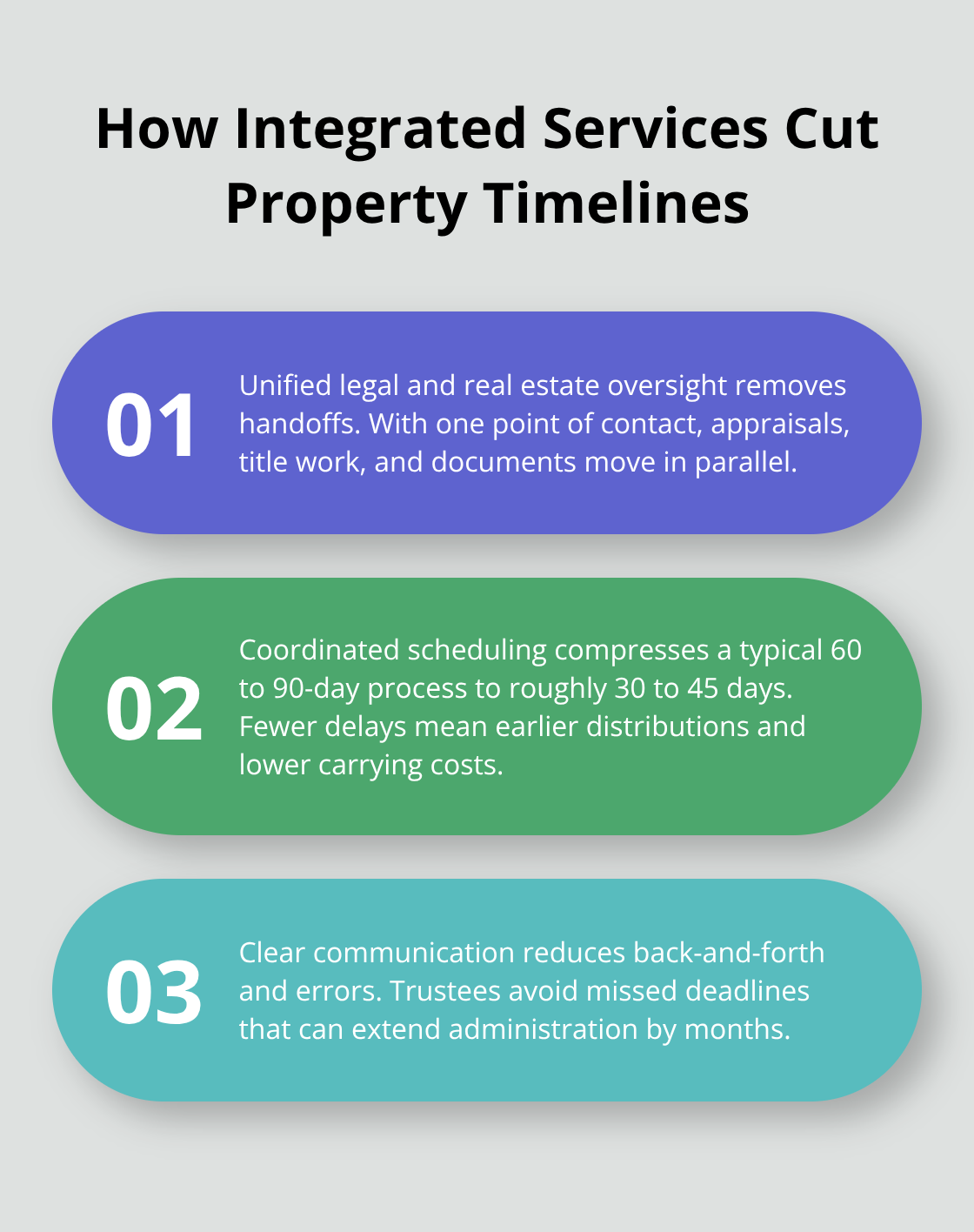
We at Law Offices of Roshni T. Desai offer dual licensure as both an attorney and real estate professional, which eliminates the communication gaps that plague estate settlements. This integrated approach reduces the typical 60 to 90-day property transaction timeline to 30 to 45 days by streamlining appraisals, title work, and legal documentation simultaneously. Successor trustees who attempt to coordinate these professionals independently often face months of back-and-forth communication, missed deadlines, and inflated costs.
Accessible Consultation When You Need It Most
Free consultations with flexible scheduling-whether in your home, our office, or by video call-mean you can discuss your specific situation without pressure or formal appointments that add weeks to the process. This accessibility matters most when you’re grieving and managing trust duties simultaneously, and it allows us to identify problems early rather than discovering them months into administration when corrections become expensive.
Final Thoughts
Trust administration in California demands attention to specific deadlines, tax obligations, and procedural rules that vary across counties. The 60-day beneficiary notification requirement, proper asset valuation, separate trust accounting, and timely tax filings form the foundation of successful administration. Missing any of these steps creates personal liability for the trustee and transforms a straightforward settlement into months of costly corrections and family conflict.
Most successor trustees underestimate the complexity involved. California community property rules, Proposition 19’s property tax implications, and the state’s income tax brackets all affect how assets should be distributed and taxed. Professional California trust administration services during the initial 30 to 60 days prevent the mistakes that typically extend administration timelines from 6 to 12 months into 18 months or longer.
We at Law Offices of Roshni T. Desai understand that you’re managing grief alongside legal and financial responsibilities. Our dual background in law and real estate means we streamline property transactions, reduce communication delays, and handle the administrative burden so you can focus on what matters. Contact us for a free consultation to discuss your specific situation and get your administration on track.