




Wills And Trusts For SoCal: The Local Guide To Estate Peace Of Mind
Most Southern California residents don’t realize that California probate laws work differently than the rest of the country. This means your estate plan needs to be tailored to local rules, tax situations, and property considerations.
At Law Offices of Roshni T. Desai, we’ve helped countless families in SoCal build wills and trusts that actually protect what matters most. This guide walks you through what you need to know to create real estate peace of mind.
Why Wills and Trusts Matter in Southern California
California Probate Costs More Than You Think
California probate typically takes 24 to 36 months, and that timeline assumes no complications. Court fees, attorney fees, and administrative costs are set by California law and calculated on the full property value, not just your equity. A homeowner with a $2 million house pays probate fees on that full $2 million amount, even if they only have $500,000 in equity. This means families lose tens of thousands of dollars to probate costs alone.
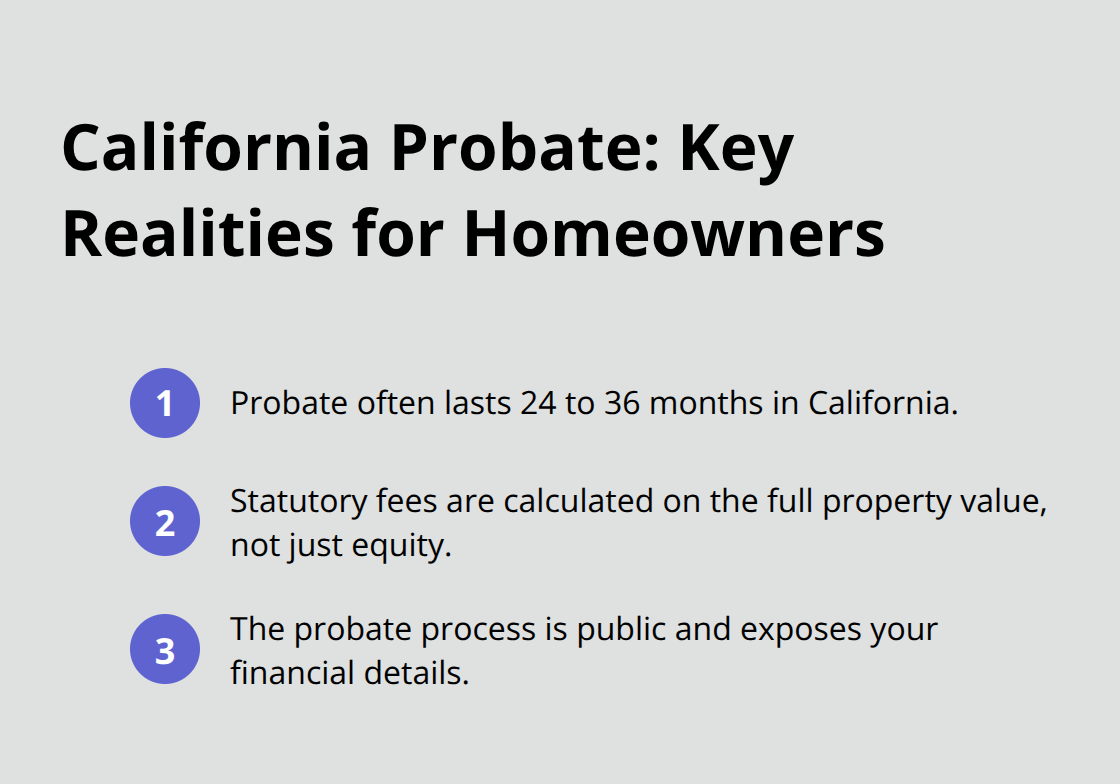
The process is also completely public. Anyone can walk into a courthouse and review your financial details, asset values, and who inherits what. Trusts eliminate this entirely-assets held in a trust bypass probate completely, which means your beneficiaries receive their inheritances in weeks or months instead of years, with zero court involvement and complete privacy.
What Happens Without a Plan
California intestacy laws are strict about who gets what if you die without a will or trust. Your assets don’t go to the people you’d choose-they follow a legal formula that may leave your spouse with far less than you intended or completely bypass adult children. If you have minor children and no guardianship designations in place, the court decides who raises them, which can mean foster care or placement with relatives you wouldn’t have chosen.
Probate disputes are common when families disagree about the process or feel left out, and litigation costs multiply quickly. A trust prevents this by making your wishes crystal clear and removing the court from every decision. Assets transfer directly to your named beneficiaries without anyone having the legal standing to challenge the plan.
Control That Lasts Your Lifetime
You maintain full control during your lifetime with a trust-you can amend the trust, sell assets titled in it, or change beneficiaries whenever circumstances shift. This flexibility is something a will simply cannot offer. Your situation changes, and your estate plan should change with it.
Understanding these differences sets the stage for the real question: which tool fits your specific situation?
Wills Work for Simple Estates, Trusts Work for Everything Else
Why Wills Fall Short in California
A will is straightforward: you list who gets what, name a guardian for minor children, and designate an executor to handle the process. The problem is that wills must pass through probate in California, which means a court supervises every distribution, every fee payment, and every decision. For a simple estate with minimal assets and no real property, a will might suffice. But most SoCal families own homes worth hundreds of thousands or millions of dollars, maintain retirement accounts with named beneficiaries, hold investment portfolios, and have digital assets scattered across multiple platforms. In these situations, a will becomes a liability rather than a solution.
Your executor still pays probate fees based on gross property value, your financial details become public record, and your beneficiaries wait two to three years for distributions. California law bases probate fees on the full home value regardless of equity owed, so a homeowner with a $1.8 million house pays fees on that entire amount even with a mortgage balance of $800,000. This outdated system drains estates unnecessarily.
How Trusts Provide Superior Control and Privacy
Trusts flip this dynamic completely. A revocable living trust holds title to your assets during your lifetime, giving you full control to buy, sell, or modify holdings. When you pass, assets transfer directly to your named beneficiaries without probate, court approval, or public disclosure. Distributions happen in weeks rather than years. Your successor trustee manages the process privately, following your exact instructions without judicial oversight.
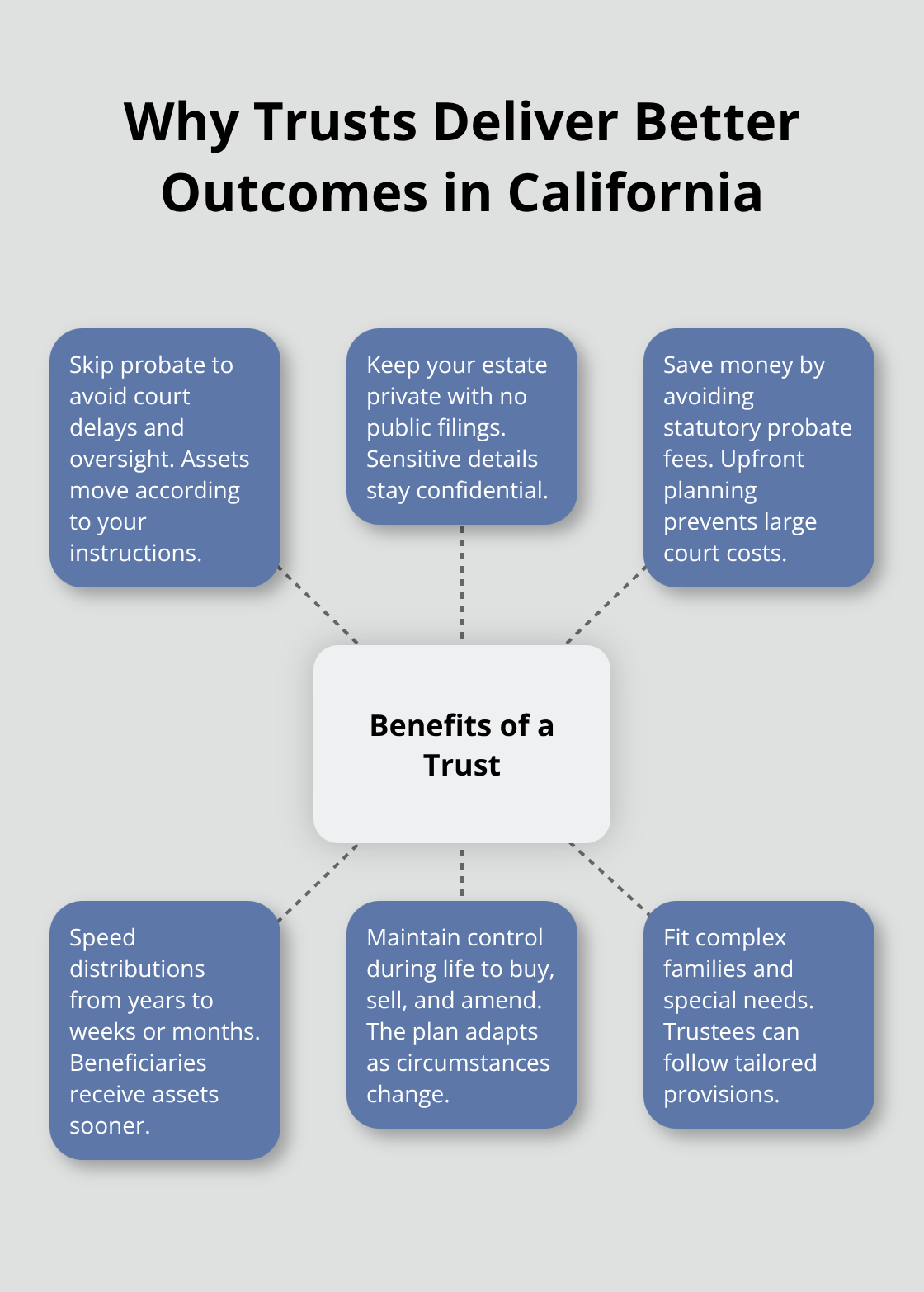
The upfront cost of creating a comprehensive trust typically ranges from $1,500 to $3,500 depending on complexity, but this investment pays for itself many times over by eliminating tens of thousands in probate fees and court costs. For blended families, disabled beneficiaries, or anyone with substantial assets, a trust provides control that a will cannot match.
Customizing Distributions for Your Family’s Needs
You can stagger distributions to young beneficiaries, establish ongoing support for a disabled family member, or instruct your trustee to hold assets in trust rather than distributing them outright. This level of customization prevents poor financial decisions by beneficiaries and protects inheritances from creditors or failed marriages. You maintain flexibility throughout your lifetime-you can amend the trust, sell assets titled in it, or change beneficiaries whenever circumstances shift.
The Power of Using Both Documents Together
Most SoCal families benefit from both documents working together: the trust handles your major assets and avoids probate entirely, while a pour-over will catches any assets accidentally left out of the trust and channels them into the trust at your death rather than triggering separate probate proceedings. This combination creates a complete safety net for your estate.
The choice between wills and trusts isn’t really a choice at all for most Southern California families. The real question becomes how to structure your trust to match your specific family situation and financial goals. Whether you’re considering a revocable living trust or exploring permanent estate planning options, working with an experienced attorney ensures your plan protects what matters most.
Common Estate Planning Mistakes SoCal Residents Make
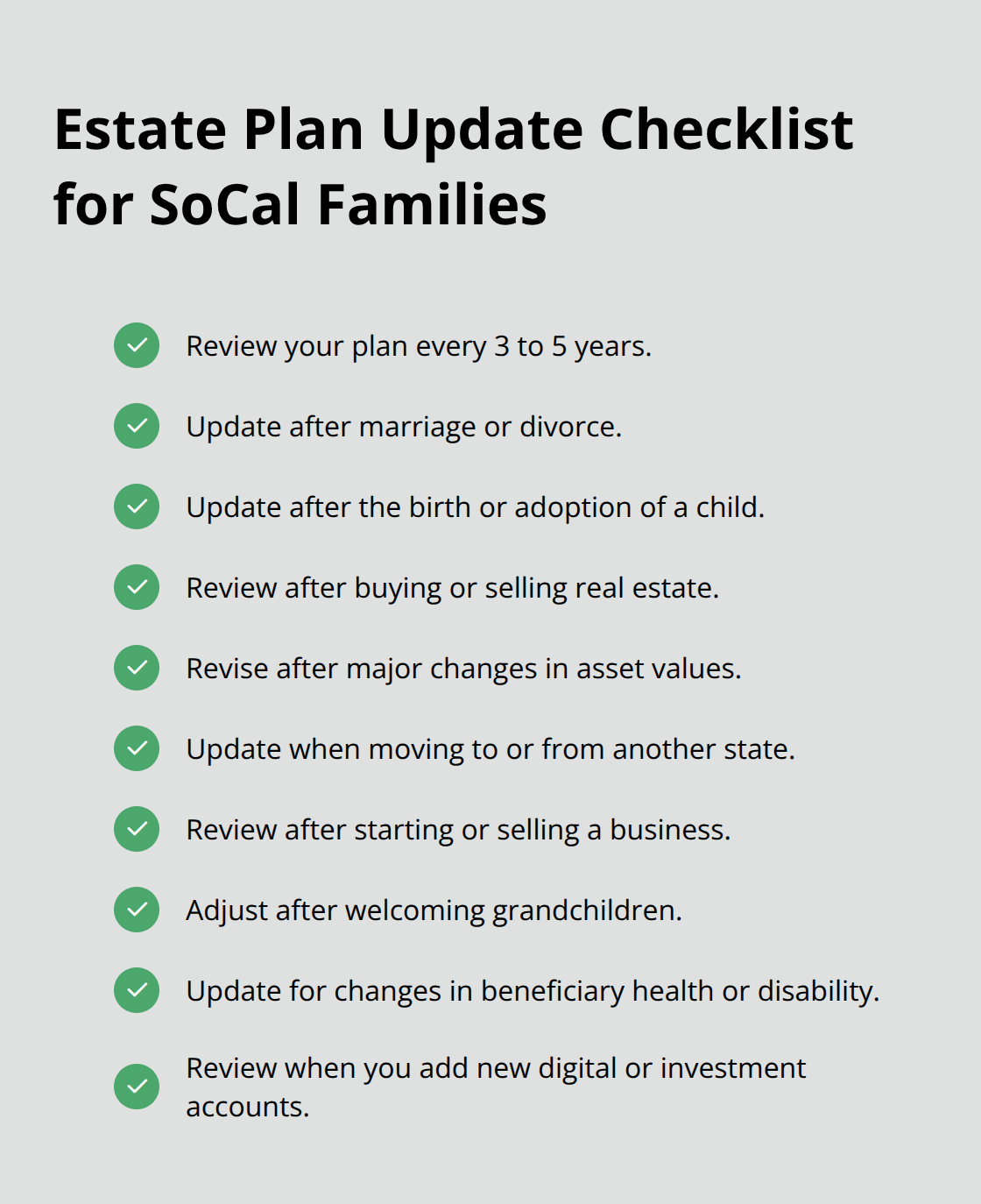
Most SoCal families create their estate plan and then forget about it for a decade. Life shifts dramatically-you buy a second property, get divorced, have grandchildren, sell a business, or move to a different state-but your documents stay frozen in time. California law requires you to update your plan every 3 to 5 years or immediately after major life events like marriage, divorce, birth of children, significant changes in asset value, or substantial property purchases.
Outdated Documents Cost Your Family Thousands
Failing to update means your trust may direct assets to an ex-spouse you no longer want as beneficiary, miss new properties that should transfer outside probate, or name guardians for children who are now adults. One family kept the same beneficiary designations for 15 years after divorce, which meant the ex-husband would have inherited the entire retirement account had the spouse died. Another family purchased a $1.2 million investment property and never funded it into their trust, triggering full probate on that single asset alone.
Schedule a review appointment with a California attorney every few years and immediately after any major life change. Bring documentation of new properties, updated financial statements, and records of any family changes. A quick review costs far less than fixing the damage later.
California Property Taxes and the Stepped-Up Basis
California property taxes add another layer of complexity that most families overlook entirely. When you inherit real estate, you receive a stepped-up basis that resets the property value for capital gains purposes, potentially saving tens of thousands in taxes if you sell the property after inheriting it. This benefit only applies if the property passes through your estate correctly-either through probate or through a properly funded trust.
Properties titled incorrectly or held in joint tenancy with the wrong co-owners may lose this stepped-up basis entirely. Additionally, California’s Proposition 19 changed reassessment rules for inherited properties, meaning some inherited real estate now triggers higher property taxes when it transfers to heirs. These rules vary based on whether you’re inheriting a primary residence versus investment property and whether heirs plan to occupy or sell the property.
Digital Assets Vanish Without an Inventory
Digital assets create a final blind spot that catches most families off guard. Your cryptocurrency wallets, online banking passwords, social media accounts, email accounts containing valuable information, and digital photos stored in cloud services have real value and real importance, but they vanish into inaccessibility when you die if no one knows they exist or how to access them.
Create a comprehensive digital asset inventory listing every online account, password manager access, cryptocurrency holdings, and digital valuables. Store this list securely and provide your successor trustee with access instructions. Without this inventory, your family may lose thousands in cryptocurrency, miss important digital photos and documents, or spend months trying to shut down accounts.
Final Thoughts
Creating a solid estate plan requires action, and that action starts with a single conversation about your specific situation. Every family in Southern California faces different challenges-blended families, multiple properties, business interests, or aging parents who need support. Your wills and trusts for SoCal need to reflect your actual life, not a generic template that ignores local property values and California tax rules.
Schedule a free consultation to talk through your goals and concerns. Bring whatever information you have-property deeds, recent tax returns, a list of bank accounts, insurance policies, and details about any digital assets (you don’t need everything organized perfectly; that’s what the planning process is for). This conversation costs nothing and gives you clarity on what documents you actually need.
We at Law Offices of Roshni T. Desai help families build estate plans that actually work in Southern California. Contact us today to begin building your plan and gain the peace of mind that comes from knowing your family is protected and your wishes will be followed.