




Elder Law Trust Planning: Smart Strategies for Seniors in Southern California
Many seniors in Southern California put off elder law trust planning, thinking they have more time. The reality is that healthcare costs keep rising, and without a solid plan, your family could face probate delays and unexpected expenses.
At Law Offices of Roshni T. Desai, we’ve seen how the right trust strategy protects your assets and gives you control over your medical and financial decisions. This guide walks you through the trusts that work best for California seniors and the mistakes to avoid.
Why Trust Planning Can’t Wait in Southern California
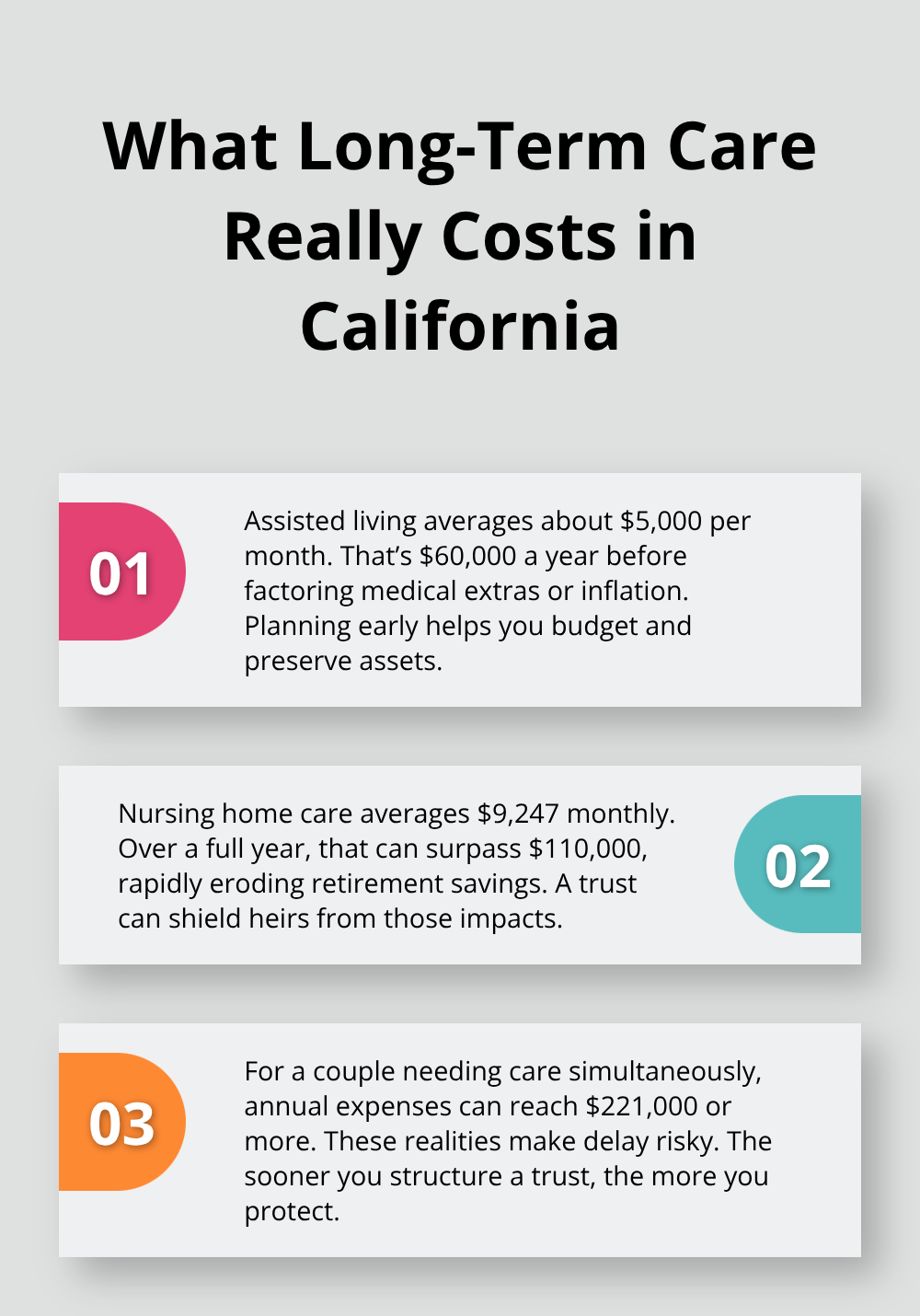
Healthcare costs in California are outpacing national averages, and the numbers demand immediate attention. According to the 2020 Genworth Cost of Care Survey, assisted living runs about $5,000 per month while nursing home care averages $9,247 monthly. For a couple needing care simultaneously, annual expenses can reach $221,000 or more. Without a trust-based strategy, seniors watch retirement savings disappear within a few years, leaving nothing for heirs and forces families into crisis-mode decisions.
How Trusts Protect Your Assets from Probate
A revocable living trust protects your assets and keeps them out of probate court entirely. In California, probate typically consumes 1–2 years and drains thousands in court fees and attorney costs. When your assets sit in probate, courts freeze them while supervising the process, which delays distributions to your family and exposes everything to public record. A properly funded trust transfers assets directly to beneficiaries upon your death, bypassing courts entirely and maintaining privacy. The privacy advantage matters more than most people realize-probate records become public documents that anyone can access, revealing your net worth, property locations, and who inherited what.
Control During Your Lifetime
Many seniors mistakenly believe trusts mean giving up control. A revocable living trust works the opposite way: you remain the trustee, manage your assets freely, and make all decisions during your lifetime. You can modify or revoke the trust whenever circumstances change, whether that’s a move to a new home, a change in family relationships, or shifts in your financial situation.
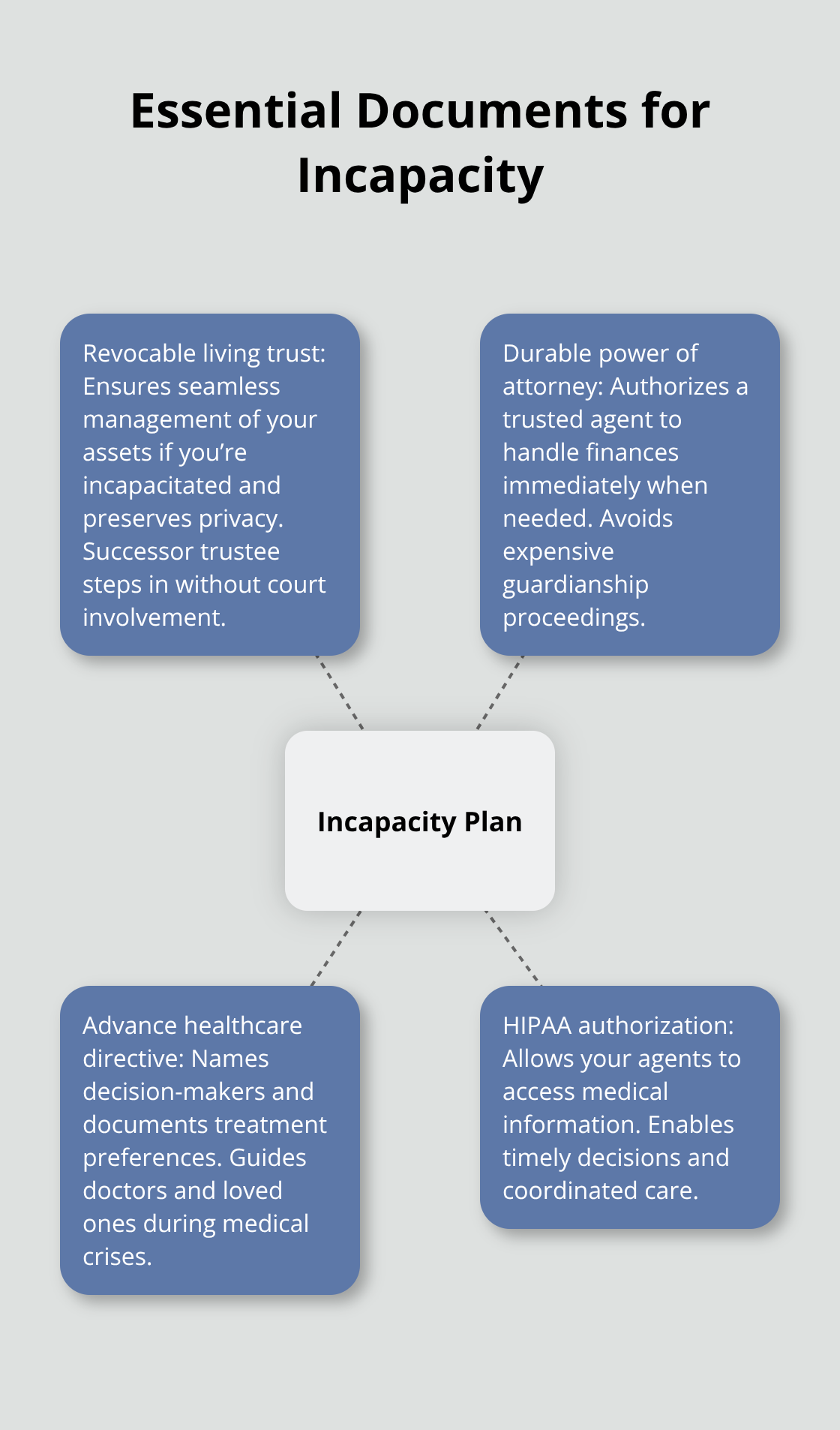
If incapacity strikes-illness, accident, or cognitive decline-the real power emerges. Without a durable power of attorney and advance healthcare directive alongside your trust, your family faces guardianship proceedings. California courts must appoint a guardian to make medical and financial decisions, a process that costs $3,000–$5,000 in initial legal fees plus ongoing court monitoring expenses. With proper documents in place, your chosen agents step in immediately and avoid court involvement entirely.
Asset Protection Through Irrevocable Trusts
Irrevocable trusts serve a different purpose than revocable ones. Once funded, an irrevocable trust removes assets from your personal ownership and creates a genuine barrier against future creditors while reducing your taxable estate. For high-net-worth seniors, this strategy proves invaluable for multi-generational wealth transfer.
California recognizes various trust types beyond the basics-asset protection trusts, generation-skipping trusts, and special needs trusts each address specific situations. The key is starting early. Medi-Cal planning requires a 30-month look-back period, meaning transfers made too close to an application trigger penalties that reduce eligibility by one month for every $6,840 transferred. Waiting until long-term care becomes imminent forces rushed decisions and eliminates planning flexibility.
Why Timing Matters for Your Family
Comprehensive planning coordinates trusts, powers of attorney, and healthcare directives into one integrated strategy. The sooner you act, the more options remain available to protect your wealth and your family’s future. Understanding which trust types work best for your situation requires a conversation with someone who knows California’s specific rules and your personal circumstances.
Which Trust Type Fits Your Situation
Revocable Living Trusts: Control Without Compromise
Revocable living trusts dominate California senior planning because they solve the immediate problem: keeping assets out of probate while you retain complete control during life. You act as trustee and manage all your property without restriction. The moment you become incapacitated or pass away, your successor trustee steps in without court involvement and distributes assets exactly as you specified.
This matters because California probate court takes 1–2 years, and families often discover that the public nature of probate exposes everything-your property, your bank balances, who inherited what-to anyone willing to look at court records. A funded revocable trust keeps those details completely private. The cost difference is significant: probate typically runs thousands in court fees and attorney time, while a properly drafted and funded trust costs far less upfront and eliminates probate costs entirely.
California law allows you to modify or revoke your revocable trust anytime through a written instrument signed by you, giving you flexibility as circumstances change. The real trap seniors fall into is creating the trust but failing to fund it. If you don’t transfer your home deed, bank accounts, and investment accounts into the trust’s name, probate still happens for unfunded assets, which defeats the entire purpose of the trust.
Irrevocable Trusts: Permanent Protection and Tax Efficiency
Irrevocable trusts serve a fundamentally different goal: permanent asset protection and tax efficiency for high-net-worth seniors. Once you fund an irrevocable trust, you cannot modify it without beneficiary consent or a court order, which sounds restrictive but creates genuine legal protection. Assets inside an irrevocable trust no longer belong to you personally, so they shield against future creditors and reduce your taxable estate for federal tax purposes.
For seniors with substantial wealth or those pursuing Medi-Cal benefits, this strategy proves invaluable. Medi-Cal’s 30-month look-back period means you must plan years in advance-every $6,840 transferred during that window reduces your eligibility by one month, so timing matters enormously. Starting early gives you the flexibility to structure transfers strategically rather than rushing decisions when long-term care becomes imminent.
Special Needs Trusts: Protecting Disabled Family Members
Special needs trusts represent another critical tool for families with disabled members. A third-party special needs trust, funded by parents or grandparents, provides supplemental support while preserving the beneficiary’s access to government benefits like Supplemental Security Income and Medicaid. A first-party special needs trust, funded with the disabled person’s own assets, accomplishes the same goal but follows stricter rules under California Probate Code sections 3604–3605.
Without this structure, a large inheritance or personal injury settlement disqualifies your disabled family member from benefits immediately, leaving them without government healthcare and support. The trust must be drafted carefully to comply with state and federal rules to ensure your disabled loved one’s long-term security without jeopardizing their benefits. This is where working with someone who understands both trust law and benefit rules becomes essential-the details matter, and mistakes can have permanent consequences for your family member’s future.
Estate Planning Mistakes That Cost Seniors Thousands
Most seniors make critical errors that sabotage their entire estate plan, and the damage compounds over time. The first mistake is procrastination disguised as careful planning. Seniors tell themselves they’ll handle trust documents next year, then next year arrives and life gets busier. Meanwhile, California’s 30-month Medi-Cal look-back period ticks away silently. Every month you delay is a month you cannot recover if long-term care becomes necessary. The 2020 Genworth Cost of Care Survey showed nursing home care at $9,247 monthly in California-that’s over $110,000 annually-so waiting even two years can mean the difference between protecting your home and losing it to care costs. Seniors arrive in crisis mode because they waited until a stroke or diagnosis forced their hand. At that point, planning options vanish. You cannot structure irrevocable trusts for asset protection if you’re already applying for Medi-Cal. You cannot transfer assets strategically if the look-back window has already started. Starting at age 60 or 65 gives you flexibility; starting at 75 or 80 leaves you scrambling.
The Unfunded Trust Trap
The second catastrophic mistake is creating a trust but failing to fund it properly. A trust on paper without assets inside it is worthless. Seniors draft trust documents that name beneficiaries and specify how assets should transfer, then never change the deed on their home or retitle their bank accounts into the trust’s name. When they pass away, unfunded assets still go through probate anyway, which means court delays, public records exposure, and attorney fees that could have been avoided entirely. The trust sits there like an unused insurance policy.
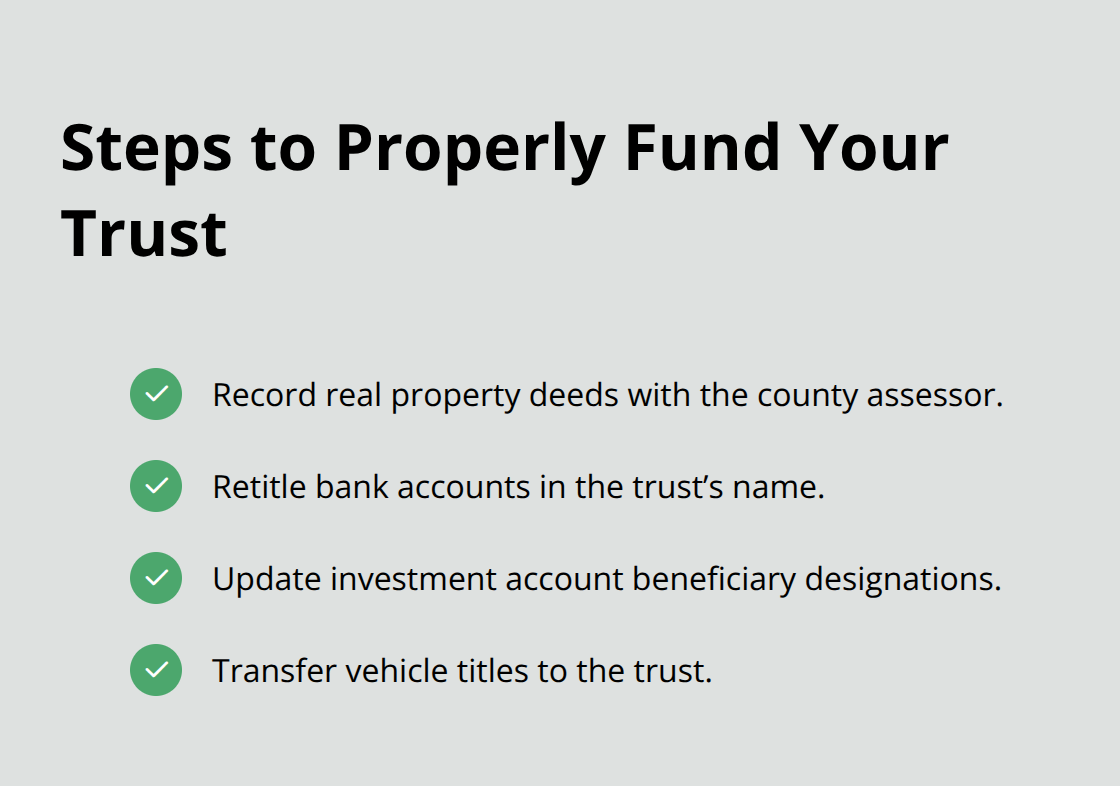
Funding requires specific steps: real property deeds must be recorded with the county assessor, bank accounts need new titling, investment accounts require beneficiary designation changes, and vehicles need title transfers. This is tedious work, which is exactly why seniors skip it.
The consequences are severe-your family faces the exact probate nightmare you tried to prevent.
Overlooking Incapacity Planning
The third error compounds the damage: ignoring incapacity planning. Seniors focus exclusively on what happens after death and completely overlook what happens if they become unable to make decisions while alive. A durable power of attorney for finances and a healthcare power of attorney are not optional add-ons-they’re essential components that work alongside your trust. Without them, your family faces a guardianship petition that costs $3,000 to $5,000 in initial legal fees plus ongoing court supervision expenses. California courts will appoint a stranger to manage your affairs if you haven’t named someone yourself.
A HIPAA authorization form must accompany your healthcare documents so doctors can actually discuss your condition with your designated agents. These documents take hours to prepare correctly, which is why many seniors skip them entirely, betting that incapacity won’t happen to them. That bet often fails, and the cost to your family is substantial.
Final Thoughts
The gap between knowing you need a plan and actually building one costs seniors thousands of dollars and causes immense family stress. Stop delaying and take action this month by gathering your important documents in one place-pull together your current will, any existing trust documents, bank statements, property deeds, investment account statements, and insurance policies. Make a list of your assets and their approximate values, then identify who you want to make medical and financial decisions if you become unable to do so yourself.
Schedule a consultation to discuss your specific situation with us at Law Offices of Roshni T. Desai, where we offer free consultations with flexible home or office visits across Southern California. During that conversation, we’ll review your current situation, identify gaps in your elder law trust planning, and explain which trust structures make sense for your assets and goals. We handle wills, living and irrevocable trusts, powers of attorney, and trust administration to build your custom plan.
The cost of acting now is far less than the cost of probate, guardianship proceedings, or crisis-mode decisions later. Contact Law Offices of Roshni T. Desai to schedule your free consultation and take control of your family’s future.