




Mastering Probate Closing Steps to Finalize an Estate Smoothly
Closing an estate requires precision and attention to detail. The probate closing steps can feel overwhelming without proper guidance, but understanding the process makes it manageable.
We at Law Offices of Roshni T. Desai help families navigate this final phase of probate. This guide walks you through each step needed to finalize an estate smoothly and avoid costly mistakes.
What Probate Closing Actually Involves
Probate closing marks the final administrative stage where the court officially releases the personal representative from fiduciary duty and transfers remaining assets to beneficiaries. This phase begins only after debts, taxes, and creditor claims have been satisfied-typically four months minimum after the initial creditor notice publication. The timeline varies significantly by state and estate complexity. In Washington, estates close within months if all beneficiaries sign required documents, while New Jersey estates often require federal and state tax closing letters before the surrogate’s office approves final distribution, sometimes extending the process to a year or longer. The personal representative’s liability generally ends once the Declaration of Completion becomes final, though exceptions exist for fraud or failure to provide required notice.
State-Specific Closing Pathways
Different states impose different closing requirements. Washington allows streamlined closing through a Declaration of Completion if heirs cooperate, while Florida requires different pathways depending on estate size-Summary Administration for estates under $150,000 or Formal Administration for larger estates. Oklahoma follows a six-stage process that typically takes several months depending on local court dockets and asset complexity.
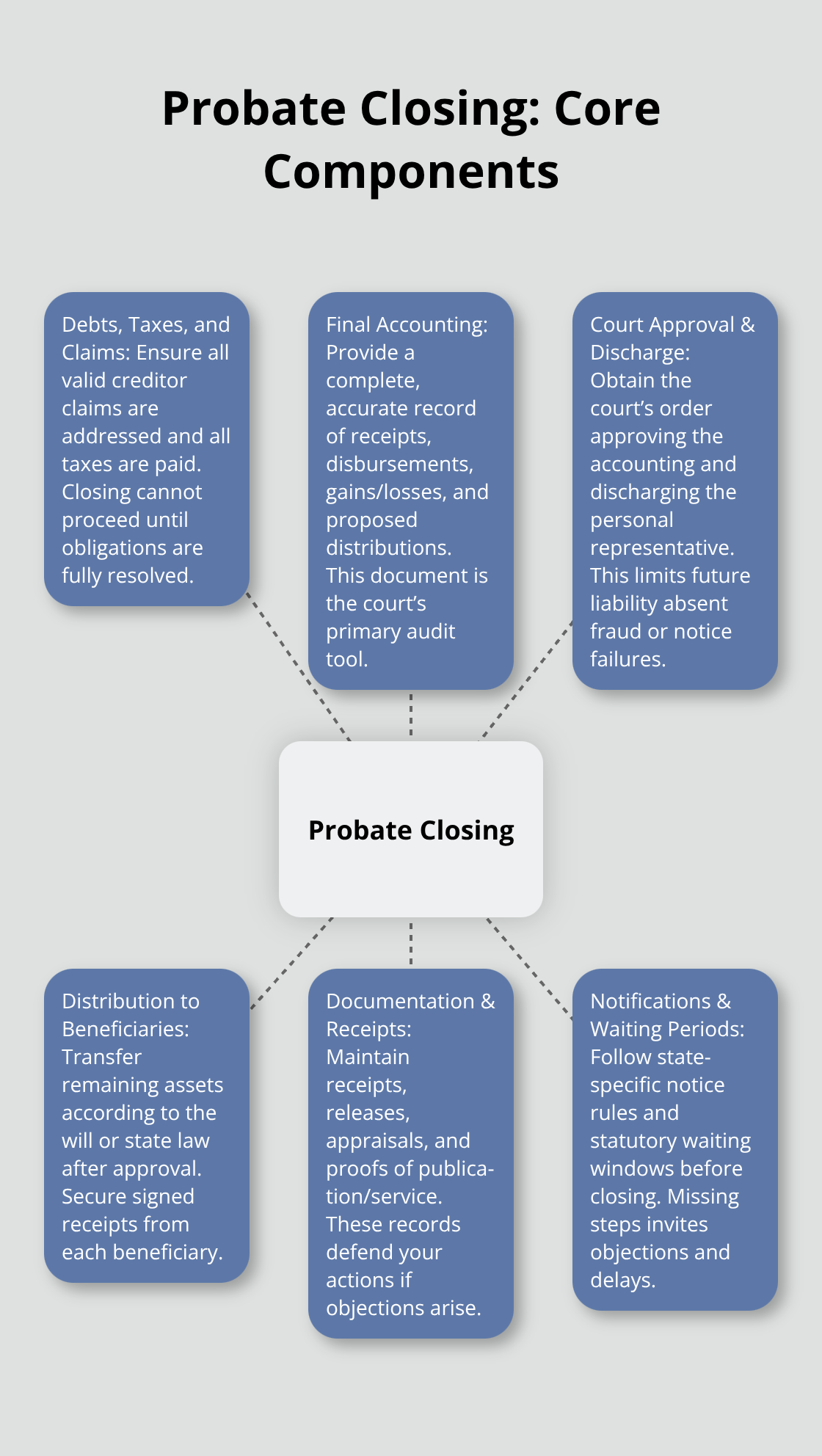
Understanding your state’s specific rules prevents unnecessary delays and protects the personal representative from liability.
Gathering Final Documentation
The closing process demands meticulous documentation. You’ll need a complete inventory of all estate assets valued at the date of death, all receipts for paid debts and taxes, proof of creditor claim payments, final income tax returns (Form 1040 for the decedent and Form 1041 for the estate if applicable), and federal estate tax returns (Form 706) if the estate exceeded $13.61 million in 2024. Courts also require signed Receipts and Releases from each beneficiary confirming they received their distribution. If any beneficiary is incapacitated, obtain signed receipts anyway and file them with the court to document distribution.
Creating a Distribution Plan
A detailed distribution plan shows exactly what property each beneficiary receives and when. In states like Washington, the streamlined closing path lets beneficiaries sign Receipts and Waivers, then you file a Declaration of Completion with those receipts-the estate closes upon filing without lengthy court proceedings. If even one heir refuses to sign, you must use the two-step method: file a Declaration of Completion and then mail Notice of Filing to every listed heir within five days, triggering a 30-day objection period. This distinction between streamlined and two-step closing methods shapes how quickly you can finalize the estate and move toward distributing assets.
How to File Your Final Accounting and Secure Court Approval
The Final Accounting: Your Complete Financial Record
The final accounting stands as the single most important document in closing probate. This record shows what you received, what you paid out, and what you distribute to beneficiaries. Courts require this accounting to verify you followed fiduciary duties and did not mishandle estate funds. In New Jersey, the surrogate’s office audits your accounting, and you must provide a complete record covering corpus, income, gains and losses, all disbursements, distributions, and reserves. The burden falls on you to prove accuracy-if beneficiaries object, they challenge specific items, and you defend your numbers.
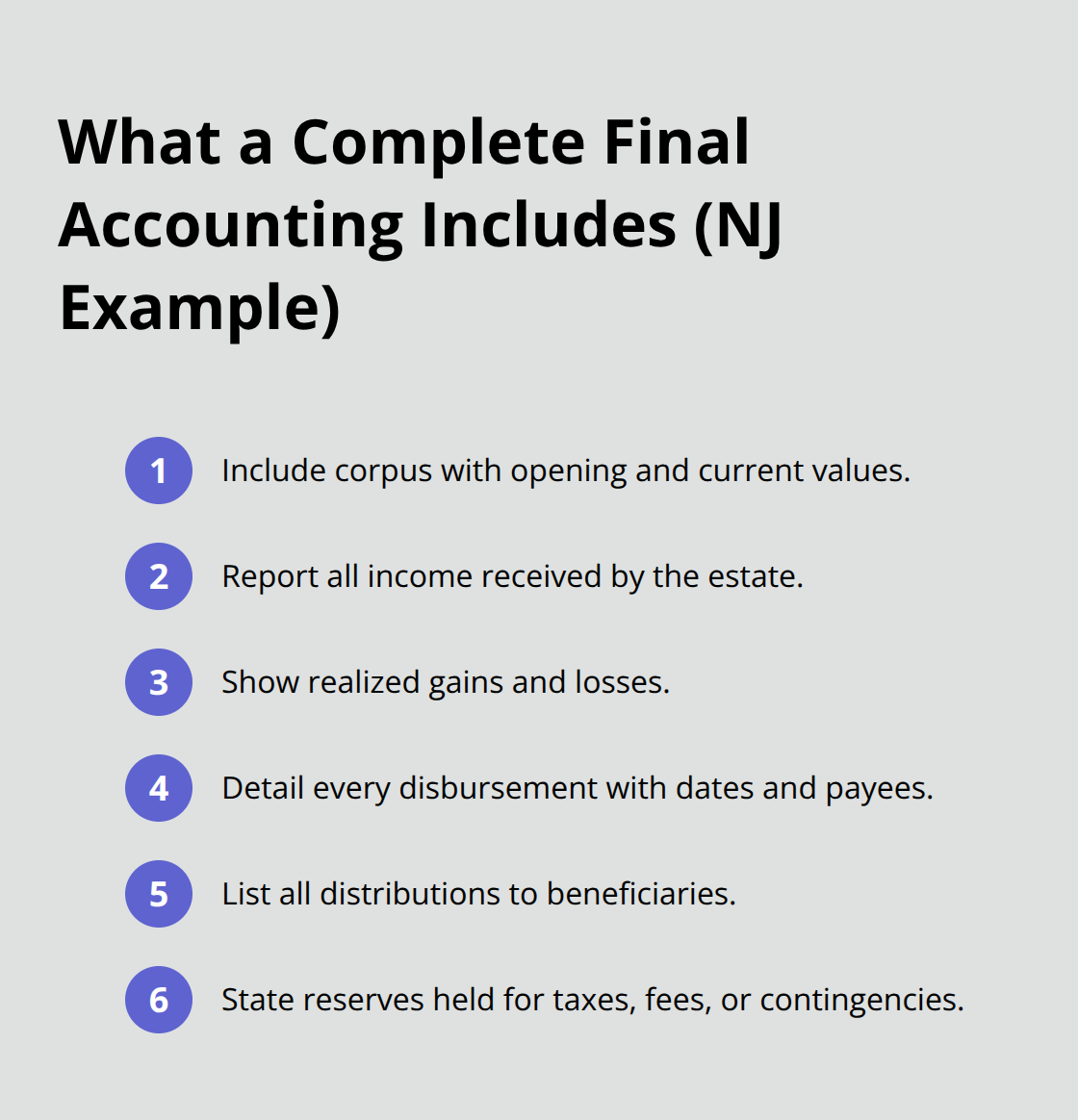
In formal New Jersey accountings, the court may order notices and hold hearings if disputes arise.
Choosing Between Informal and Formal Accounting
Informal accountings work for simpler estates and cost less, but formal accountings become necessary when charities are beneficiaries, when significant assets are involved, or when beneficiaries disagree about distributions. Oklahoma courts require a final accounting showing all receipts and disbursements before approving distribution, while Florida’s summary administration bypasses full accounting for estates under $150,000, dramatically reducing paperwork and court time. If you hold the estate open longer than expected, file a status report explaining the delay rather than letting the court wonder why closing has not happened.
Obtaining the Discharge Order
The discharge order marks the moment the court officially releases you from liability. In Washington, once your Declaration of Completion becomes final, you are protected from most claims unless fraud occurred or you failed to provide required notice. New Jersey requires the surrogate to audit your accounting and issue an order approving it before you distribute remaining assets. Florida formal administration requires court approval of your final accounting and an order discharging you as personal representative. Oklahoma courts issue a final order once all debts, taxes, and creditor claims are paid and your accounting is approved.
Protecting Yourself Through Documentation
Do not distribute assets to beneficiaries until you have written court approval in hand. Beneficiaries may pressure you to distribute quickly, but premature distribution exposes you personally if undisclosed debts surface later. Keep receipts from every beneficiary confirming what they received-these signed documents protect you if disputes arise after closing. If a beneficiary is incapacitated, obtain their guardian’s signature on receipts and file them with the court to document proper distribution. The timeline for discharge varies by state and court docket, but expect at least 30 to 60 days after filing your final accounting for the court to review, audit if required, and issue the discharge order.
With your discharge order in hand, you have cleared the final legal hurdle. The next step involves understanding what happens after the court releases you and how to handle any remaining estate matters that may surface.
Common Mistakes That Derail Probate Closing
Incomplete Documentation Stops Courts Cold
Incomplete documentation stands as the single largest reason probate closing stalls or fails. Personal representatives often assume that paying bills and obtaining beneficiary signatures suffices, then discover mid-closing that the court requires specific forms they never filed, tax returns they overlooked, or appraisals for assets that were never formally valued. In Washington, courts reject Declarations of Completion outright if you fail to properly publish the Notice to Creditors or skip the required four-month waiting period before closing, forcing you to restart the timeline entirely. Florida courts regularly reject closings because personal representatives never obtained certified appraisals for real property or failed to file proof of publication for creditor notices in a newspaper of general circulation in the correct county.
The solution demands precision: create a closing checklist specific to your state before you file anything. In New Jersey, the surrogate’s office publishes discharge checklists that spell out exactly what documentation must accompany your final accounting. Oklahoma courts post their required closing documents on county court websites. Call the probate clerk’s office and request their closing requirements in writing, then check off each item as you gather it.
Notification Failures Invite Objections and Delays
Notification failures create disputes that destroy otherwise smooth closings. Many personal representatives notify beneficiaries but skip creditors, or publish the creditor notice once and assume that satisfies the requirement when state law actually demands both publication and mailing to known creditors. In Washington, you must mail the Notice to Creditors to every creditor listed in the estate’s records within 30 days of first publication, and you must wait four months from publication before closing-skipping either step invites objections and delays. New Jersey requires notice to the Charitable Trust Section of the Attorney General’s Office if any charity is a beneficiary, and failure to provide this notice can result in the court refusing to discharge you.
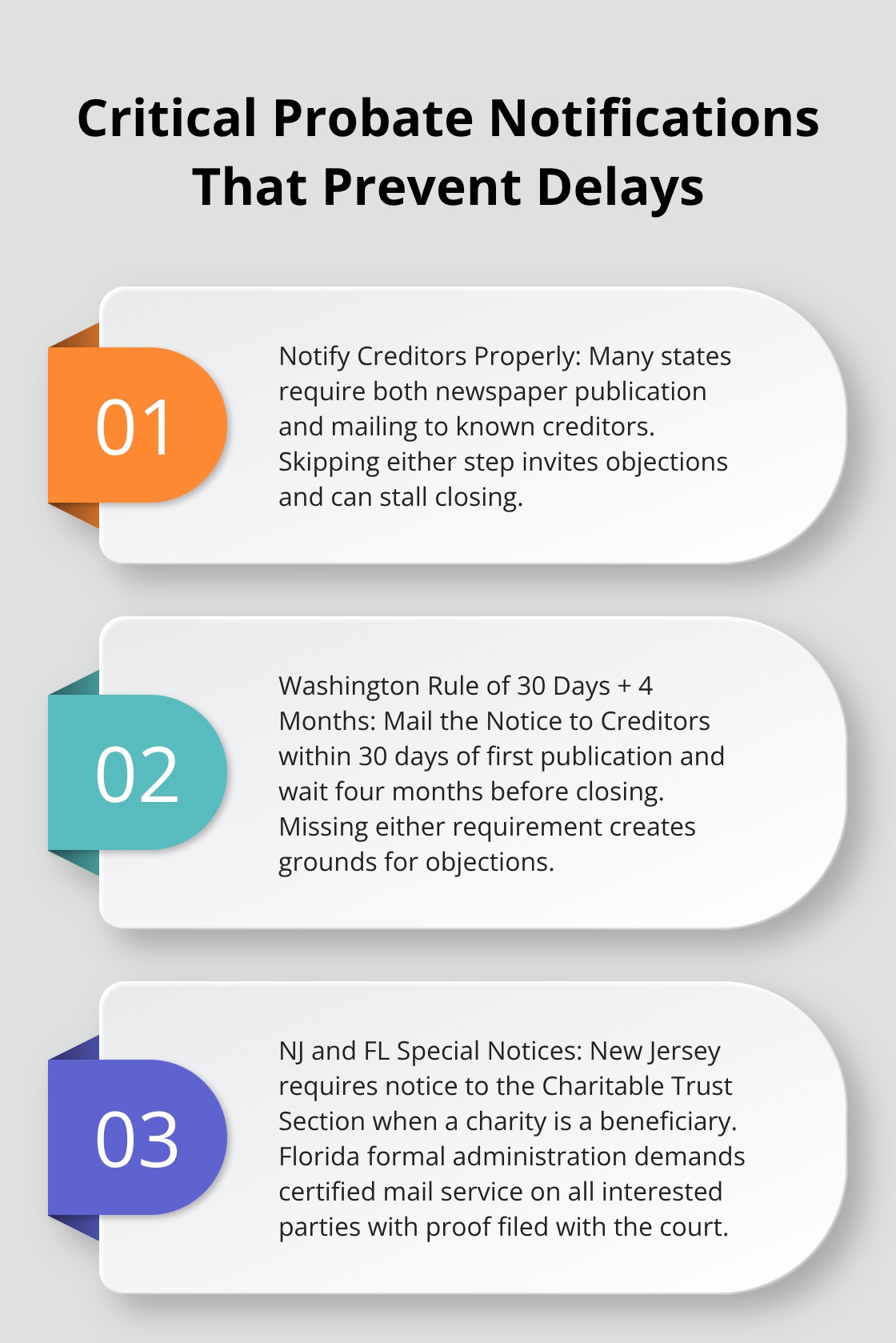
Florida’s formal administration requires notices served on all interested parties through certified mail with proof of service filed with the court.
Sloppy notification creates leverage for unhappy beneficiaries or unknown creditors to object during the closing window, and objections mean court hearings, attorney fees, and months of additional delay. Document every notification you send-keep copies of the notices themselves, proof of publication from the newspaper, certified mail receipts showing delivery dates, and a detailed log of every person and entity you notified and when. This documentation protects you if someone later claims they were never told about the closing.
Rushing Without Professional Guidance Creates Costly Mistakes
Rushing without proper guidance transforms manageable closings into nightmares that cost thousands in extra legal fees and months of preventable delay. Personal representatives who attempt to close probate without an attorney or without consulting one soon enough often make irreversible mistakes like distributing assets before obtaining the discharge order, paying beneficiaries from personal funds instead of the estate account, or filing final tax returns without understanding how estate income affects beneficiary tax liability. These mistakes expose the personal representative to personal liability that surviving the probate closing does not protect against.
Consult with an attorney at least three months before you plan to close, not one week before. At that point, your attorney can review your documentation, identify missing pieces while there is still time to obtain them, and coordinate the timing of final tax returns with the court’s closing schedule. Procedural mistakes can stretch probate timelines significantly-in busy counties, obtaining a discharge order can take 60 to 90 days even after you file perfect paperwork. Starting the process early prevents the panic that leads to filing errors and incomplete documentation that courts reject.
Final Thoughts
Probate closing steps demand careful execution across multiple stages: filing final accounting, securing court approval, distributing assets correctly, and obtaining your discharge order. Each step builds on the previous one, and skipping or rushing any phase creates delays that compound throughout the closing process. The documentation you gather, the notifications you send, and the timing you maintain determine whether your estate closes smoothly in months or gets tangled in objections and court hearings that stretch into years. Professional guidance matters because probate closing rules vary dramatically by state and county.
What works in Washington does not work in Florida or Oklahoma, and what satisfies one probate court may draw rejection from another. An attorney familiar with your local court’s specific requirements prevents the filing errors and incomplete documentation that derail closings. We at Law Offices of Roshni T. Desai help families navigate estate administration across Southern California, and our understanding of both legal requirements and property-related closing issues streamlines final distributions that often complicate the process.
After the court issues your discharge order, your fiduciary liability largely ends, though you should maintain estate records securely for several years in case questions surface later. If you are managing an estate and approaching the closing phase, contact Law Offices of Roshni T. Desai for a free consultation to review your specific situation and identify what steps remain.