



Probate Real Estate Closing: Steps to a Smooth Transfer
Selling property through probate involves navigating court requirements, creditor claims, and strict timelines. The probate real estate closing process demands coordination between multiple parties and careful attention to legal details.
We at Law Offices of Roshni T. Desai help families move through this process without unnecessary delays or complications.
What Happens to Property During Probate
When someone passes away, their property does not automatically transfer to heirs or beneficiaries. Instead, it becomes part of the estate and enters a court-supervised process that can take months or even years. In South Carolina, probate is the legal mechanism for administering a decedent’s estate and distributing assets to those entitled to receive them. The probate property includes assets titled solely in the decedent’s name-real estate, bank accounts, tangible personal property, and closely-held business interests-but excludes assets with valid beneficiary designations or joint ownership with survivorship rights. Understanding what happens during this period is critical because it directly affects your timeline for selling the property and when you can actually close the transaction.
The Court Must Appoint a Personal Representative
Before any property can be sold, the probate court must appoint a Personal Representative (also called an executor) to manage the estate. The court follows a priority system for appointment: the surviving spouse or domestic partner comes first, followed by a child, grandchild, parent, or sibling if there is no surviving spouse. Once appointed, the Personal Representative collects all assets, inventories them with approximate values, and files this inventory with the court-typically within 90 days of the estate opening. The probate court then validates any will presented and establishes the legal framework for asset distribution. This validation period exists to prevent fraud after someone dies and to protect the interests of all heirs and creditors.
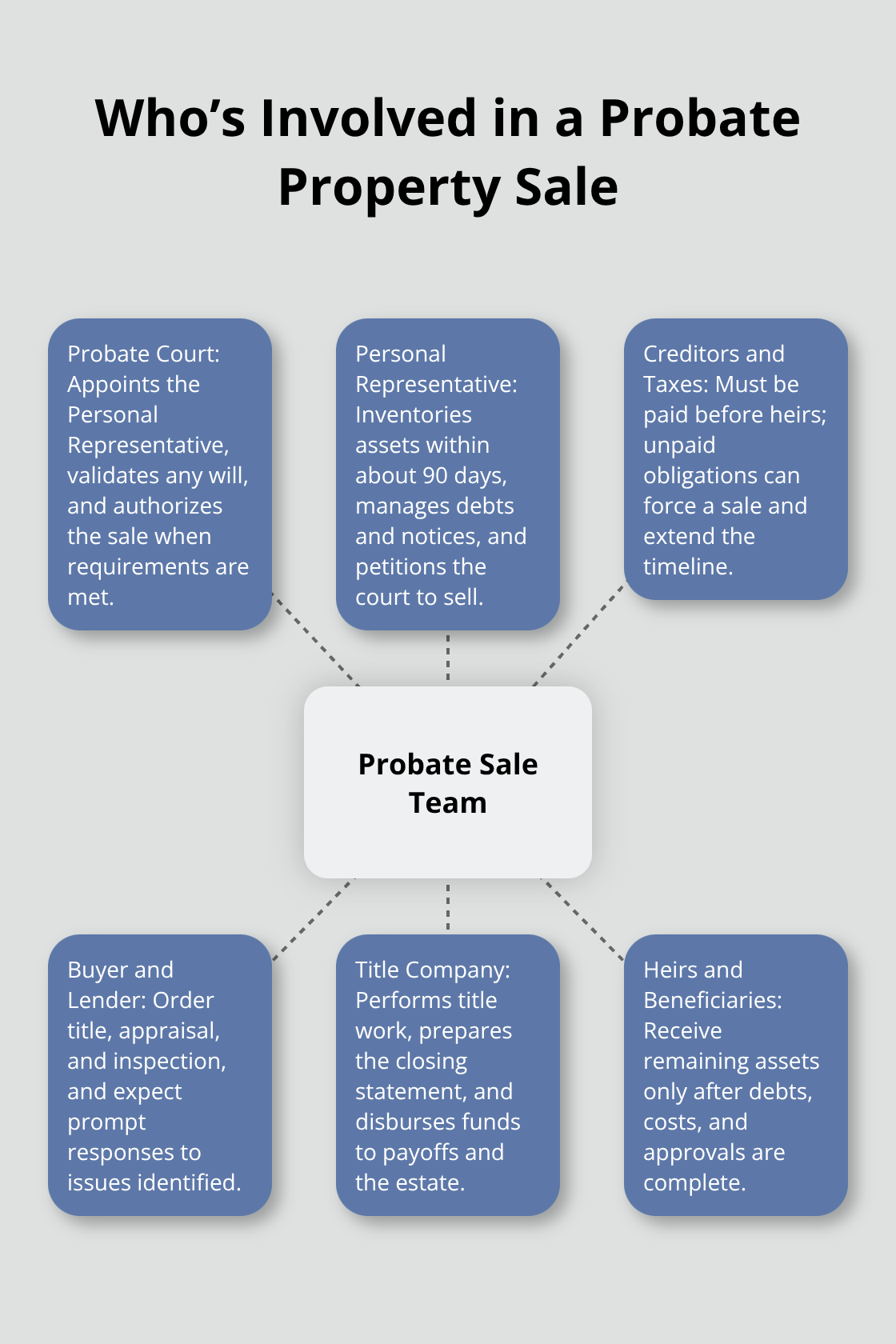
You cannot sell the property and you do not own it until the Personal Representative receives court authorization to do so. Real estate that is probate property transfers through probate according to the will or intestacy laws, which means court approval is mandatory before listing or closing any sale.
Creditors and Taxes Receive Priority Over Distribution
Here is a hard truth: creditors and the government receive payment before heirs receive anything. The Personal Representative must notify creditors through published notice and handle all outstanding debts-mortgage payments, property taxes, utilities, medical bills, and funeral expenses-from estate funds. If the estate lacks sufficient liquid assets, the Personal Representative may need to sell the property to cover these obligations. Federal and state taxes require filing and payment within specific deadlines; failure to meet these deadlines extends probate significantly and creates personal liability for the Personal Representative. This is why organizing information about what the decedent owned and owed at the start of the process matters so much. You will need to estimate the total estate value, identify all outstanding debts, and understand the tax implications before you can reasonably project when the property will be available for sale. Many families underestimate how much time and money goes toward settling debts (which can include attorney fees and court costs), and this underestimation delays the real estate transaction further.
The Timeline Depends on Estate Complexity
The probate court does not rush the process, and neither should you. Simple estates with few assets and no disputes may move through probate in six to nine months, while complex estates with multiple properties, business interests, or contested claims can take two years or longer. The Personal Representative must file required notices, respond to creditor claims, and maintain detailed records of all transactions. If the decedent left significant debts or tax obligations, the estate remains open until those matters are fully resolved. The property itself cannot change hands until the court grants permission to sell and all creditor claims are addressed. Understanding this timeline helps you set realistic expectations and plan accordingly. Once you grasp what the court requires and what debts must be paid, you can move forward with preparing the property for sale-which involves its own set of assessments and decisions that directly impact the final sale price.
Preparing the Property for Sale
The moment the Personal Representative receives court authorization to sell, the property must be evaluated with the same rigor you would apply to any real estate transaction-but with additional complications. Obtain a certified appraisal to establish fair market value; this protects the estate from undervaluing the property and gives potential buyers confidence in the asking price. South Carolina probate courts expect the property to be marketed at or near fair market value, and an appraisal creates a documented baseline that satisfies court requirements.
Document the Property’s Current Condition
Walk through the property systematically and document its condition. Take photographs, note structural issues, identify needed repairs, and research comparable sales in the area to understand what buyers expect. Many properties in probate have sat vacant or poorly maintained during the months the estate was open, and deferred maintenance directly reduces sale price.
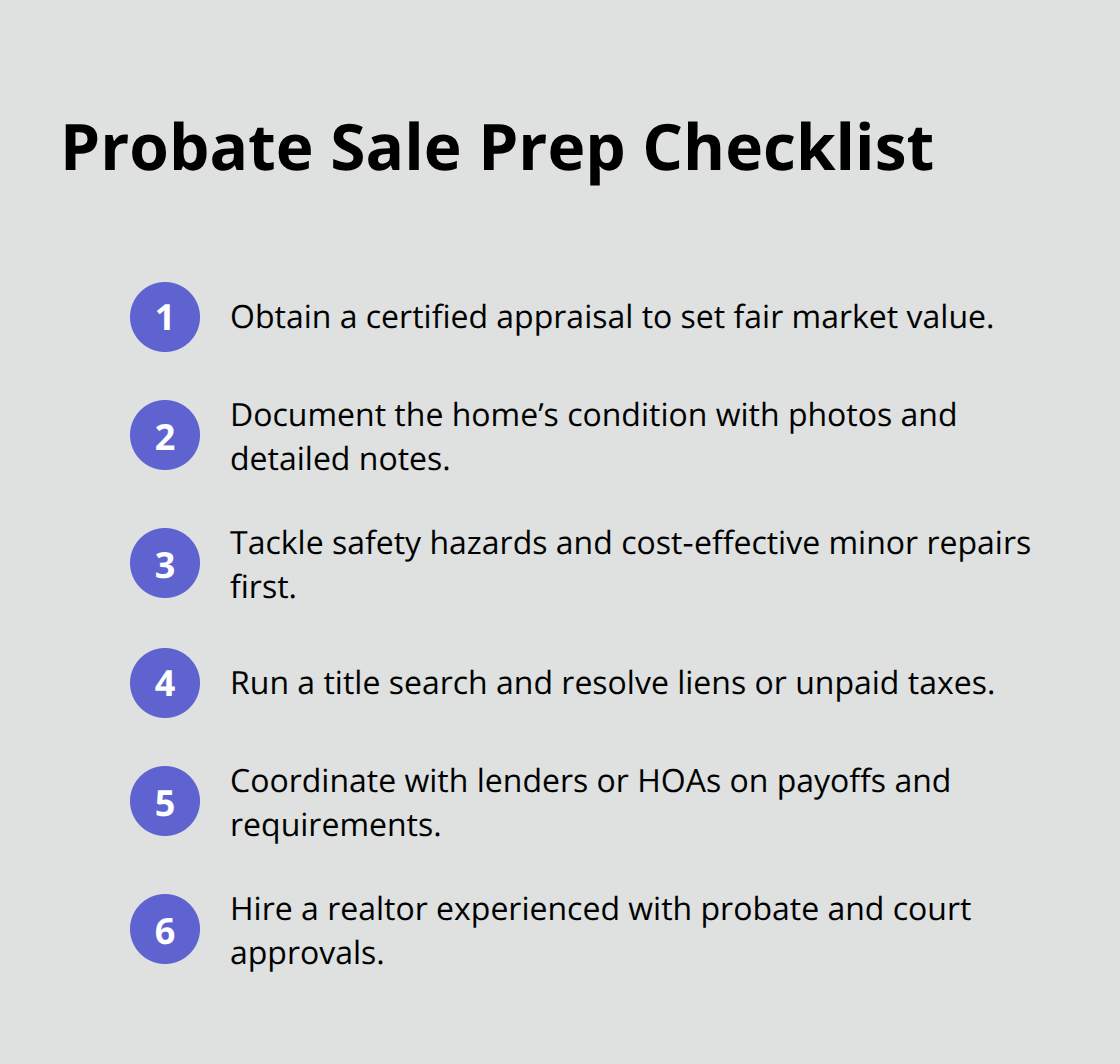
Prepare the property for sale by addressing obvious safety hazards, removing clutter, and securing the home against weather damage. Small repairs-fresh paint, landscaping, fixing broken fixtures-often return more than their cost in increased buyer interest and higher offers. However, avoid major renovations unless the numbers clearly support them; buyers of probate properties frequently plan their own upgrades, and you risk overspending on improvements they will not value.
Clear Title Issues Before Listing
Title issues can derail a sale entirely if not handled before listing. Order a title search to identify liens, easements, unpaid property taxes, or other encumbrances attached to the deed. The Personal Representative must satisfy liens from estate funds or negotiate payoff amounts with lienholders before closing. Unpaid property taxes are a common problem-the county assessor’s office can provide exact amounts owed, and these must be paid from estate proceeds. If the property has an outstanding mortgage, coordinate with the lender to understand payoff requirements and whether the loan can be assumed. Some probate properties carry HOA liens or code enforcement liens that complicate title transfer; address these early rather than discovering them during the buyer’s title examination.
Prepare for Market and Court Approval
Once the appraisal is complete, repairs are finished, and title issues are resolved, the property is ready for listing with a realtor who understands probate timelines and court approval requirements. This preparation phase typically takes four to eight weeks, depending on the extent of needed repairs and how quickly title issues are cleared. With the property now in marketable condition and its title clean, you move into the final stage: closing the probate real estate transaction itself, which requires coordination between the buyer, the court, and all parties involved in the transfer.
Closing the Probate Real Estate Transaction
Once an offer arrives, the real work of closing begins-and this stage moves faster than earlier probate phases but demands precision. The buyer’s lender will order a title search, appraisal, and inspection within 7 to 10 days, and you must respond quickly to any issues they identify. Title defects discovered during the buyer’s examination can kill the deal or force renegotiation; this is why clearing title before listing matters so much. The inspection typically reveals deferred maintenance items the appraiser missed, and South Carolina probate courts expect the Personal Representative to address material defects or adjust the sale price downward.
Negotiate Repairs and Finalize the Offer
Negotiate repairs versus price reduction based on actual contractor estimates, not buyer guesses-obtain written quotes for any major work. Most probate property sales close within 30 to 45 days after an offer is accepted, which is faster than a typical residential transaction, but this timeline compresses when the court must approve the sale.
Petition the Court for Sale Approval
The Personal Representative must petition the probate court for permission to sell before closing can occur. File this petition once you have a signed purchase agreement, and request court approval at the next available hearing-typically 2 to 4 weeks out depending on the court’s schedule. South Carolina probate courts routinely grant sales at fair market value supported by an appraisal, so approval is usually granted without objection if the price is reasonable.
Coordinate the Closing Process
After court approval arrives, coordinate the closing date with the buyer, title company, and any lienholders who must be paid from proceeds. The title company will prepare a closing statement showing all costs: realtor commission (typically 5-6%), appraisal fees ($400-$600), title insurance, transfer taxes, and any liens being satisfied.
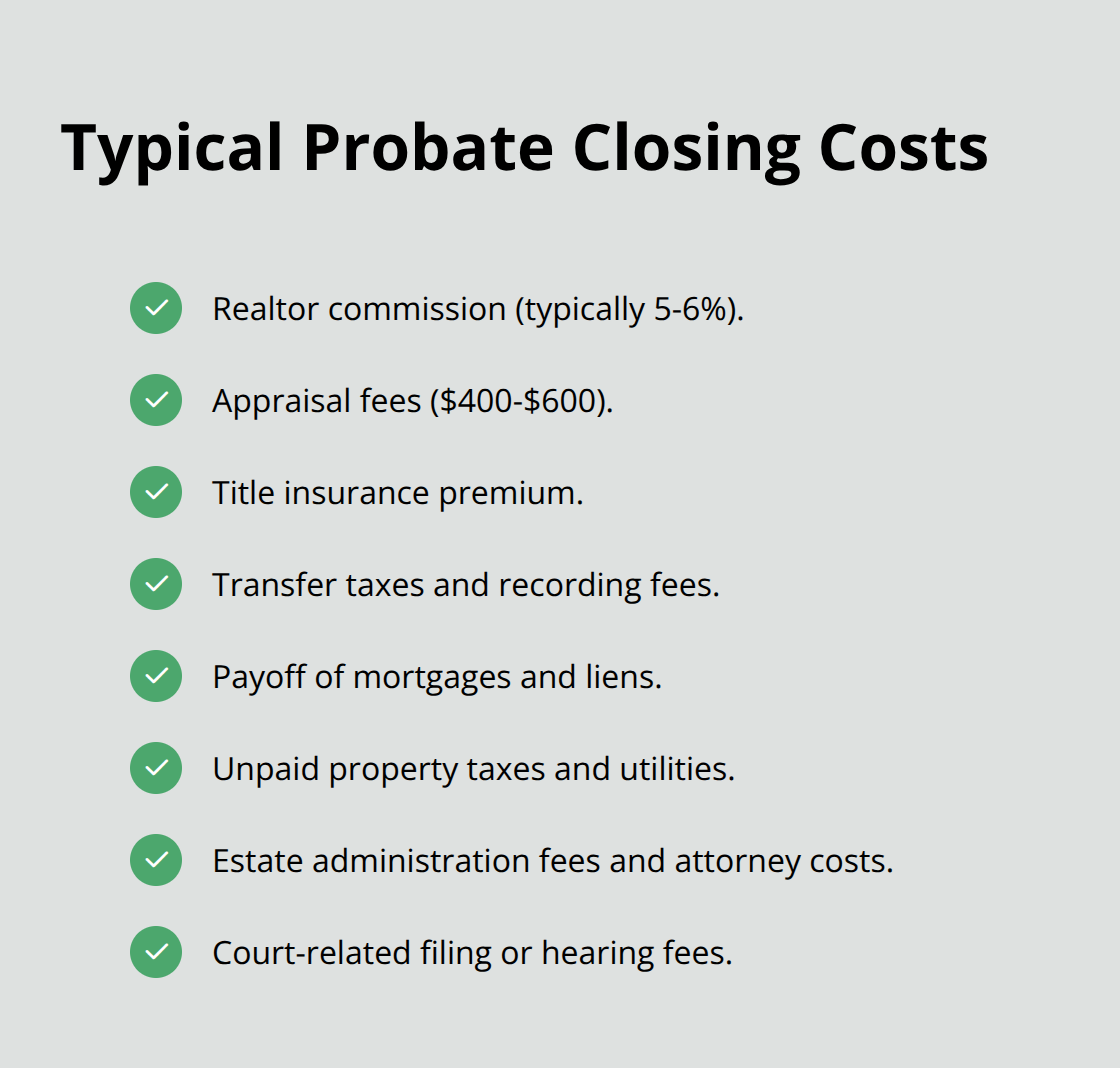
Estate administration fees and attorney costs also come from sale proceeds, so calculate these amounts before closing to ensure sufficient funds remain for distribution to heirs.
Execute the Deed and Distribute Funds
At closing, the Personal Representative signs the deed transferring ownership to the buyer, and funds flow to the title company, which disburses payments to creditors, the realtor, the court-appointed attorney, and finally to the estate account. Once funds are received and all estate debts are paid, the Personal Representative files a final accounting with the probate court and distributes remaining assets to beneficiaries according to the will or intestacy laws-this final step typically takes 2 to 4 weeks after closing.
Final Thoughts
Probate real estate closing demands attention to detail at every stage, from the moment the court appoints a Personal Representative through the final distribution of funds to beneficiaries. The process moves forward when you stay organized, meet court deadlines, and address title issues before listing. Skipping steps or rushing through documentation creates delays that cost time and money-delays that compound when the court must intervene to resolve disputes or clarify ownership rights.
Professional guidance makes the difference between a closing that takes four months and one that stretches into a year. An attorney familiar with South Carolina probate rules files required notices on time, coordinates with the court, and anticipates problems before they derail the transaction. A real estate professional who understands probate timelines markets the property effectively and negotiates with buyers who may be unfamiliar with court approval requirements.
If you are managing an estate and need help with a probate real estate closing, contact Law Offices of Roshni T. Desai to discuss your next steps. We will guide you through the process and work to keep your closing on track.