




Probate Attorney Consultation: Preparing Questions and Goals
Most people avoid thinking about what happens to their estate after they’re gone. Without proper planning, your family faces delays, unexpected costs, and potential conflict over your assets.
A probate attorney consultation is your chance to ask the right questions and set clear goals for your family’s future. We at Law Offices of Roshni T. Desai help clients prepare for these conversations so they walk away with real answers and a solid plan.
Why Probate Matters Now
Dying without a plan forces your family into probate, a court-supervised process that costs money, takes time, and opens your private affairs to public record. In California, probate typically lasts between nine months and two years, though complex estates or family disputes can stretch to three years or longer. Court fees alone run between $1,000 and $5,000 for modest estates, with attorney fees often reaching 4% of the estate value-sometimes substantially more if complications arise. Your heirs receive nothing until the court approves distributions, leaving them without access to bank accounts, property, or investments during this waiting period.
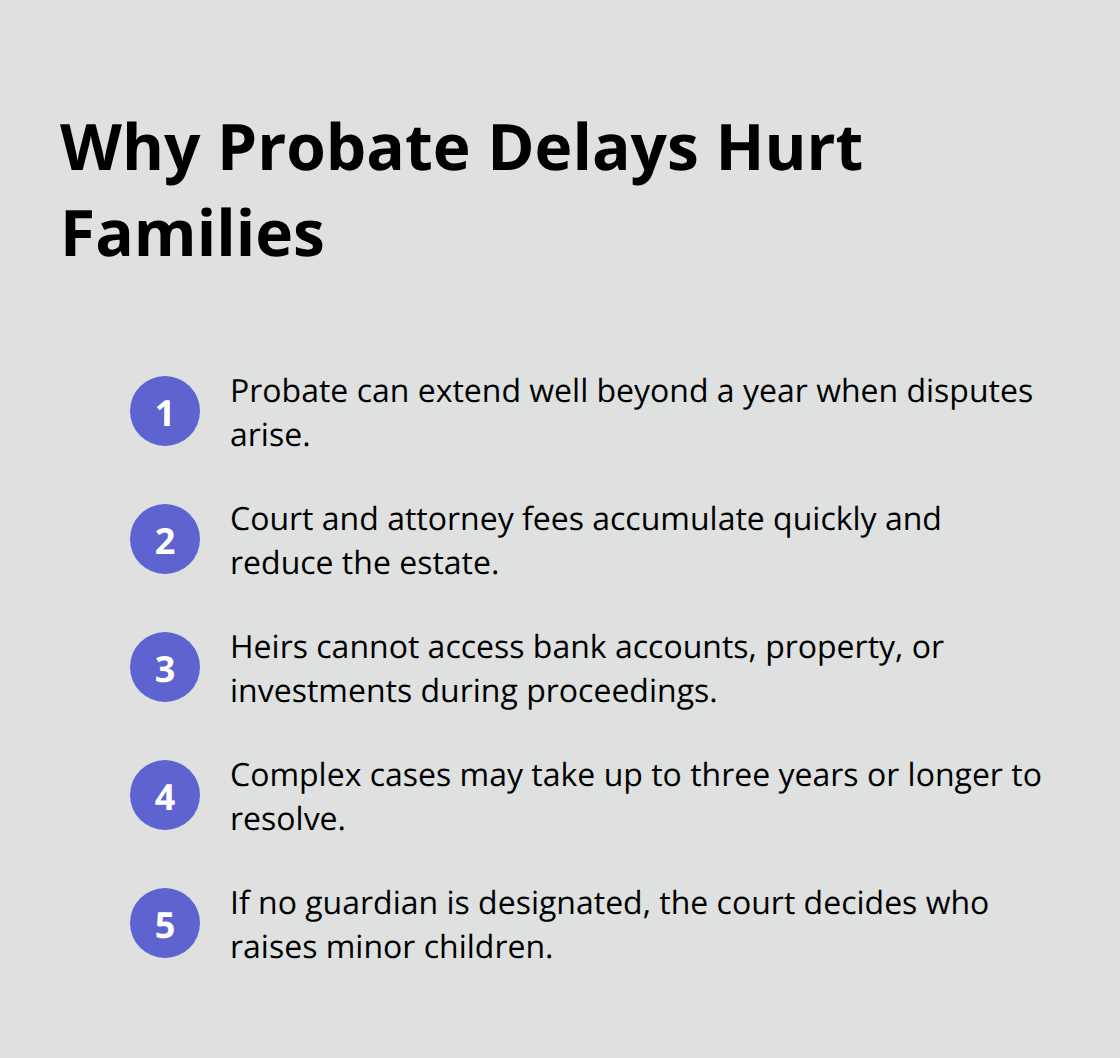
If you have minor children and no designated guardian, the court decides who raises them, potentially placing them with someone you would never have chosen.
The Hidden Costs of Inaction
Probate drains estates through multiple channels that most people don’t anticipate. Court filing fees, appraisal costs, bond premiums, and accounting fees accumulate quickly. An executor who mishandles the process can trigger disputes among beneficiaries, turning a straightforward administration into litigation that doubles or triples expenses. Creditors have up to six months after death to file claims in California, and if proper notice procedures aren’t followed, the estate remains vulnerable to claims long after initial distributions. Taxes compound the problem-federal estate taxes apply to estates exceeding $13.61 million as of 2024, but California has no state estate tax, so many California residents overlook the need for tax planning. Without proper structuring, beneficiaries may inherit retirement accounts or life insurance proceeds that trigger unnecessary income tax burdens. Families often lose 20% to 30% of an estate’s value to unnecessary costs and taxes that proper planning would have prevented entirely.
What Intestacy Laws Mean for Your Family
Your state’s intestacy laws take over if you die without a will, meaning California law, not your wishes, determines who inherits what. A surviving spouse receives the first $120,000 plus half of the remaining community property, with children splitting the rest-an outcome many families don’t want. Blended families face particular hardship: a second spouse may inherit assets you intended for adult children from a previous relationship. Business owners without succession plans often see their life’s work liquidate at a fraction of its value, leaving employees and family members with nothing. Real estate in multiple states triggers ancillary probate, requiring separate court proceedings in each state, multiplying costs and delays significantly.
Protecting Digital Assets and Online Accounts
Your digital assets-cryptocurrency, online banking, social media accounts-become inaccessible to your family because they cannot legally log in, potentially losing important photos, financial records, or business data permanently. Most families never consider that passwords and account information disappear with the account holder, leaving heirs unable to access anything online. A comprehensive digital asset directive names someone to manage these accounts and includes instructions for each platform. Without this planning, your family faces months of legal battles just to recover basic information, and some accounts may be lost forever. This gap in planning affects nearly every estate today, yet most people address it only after a death occurs. The right preparation now means your family can access what matters most when they need it most, and a probate attorney can help you document these assets and create a plan that protects them.
What to Ask Your Probate Attorney
Probate costs vary wildly depending on your county, estate size, and whether disputes arise. In California, probate administration fees typically range from 4% of the estate value for straightforward cases to 8% or higher when complications surface. A $500,000 estate might cost $20,000 to $40,000 in attorney fees alone, before court costs, appraisals, and accounting charges. Ask your attorney for a county-specific timeline and fee estimate based on your situation, not general averages. Some counties process probate in nine months; others routinely take two years or longer due to court backlogs. Request a realistic breakdown of what you’ll actually pay: filing fees (typically $500 to $2,000), appraisal costs ($1,500 to $5,000 for complex estates), and ongoing administrative expenses. Ask whether the attorney charges hourly rates, flat fees, or a percentage of the estate, and confirm there are no hidden costs for copying, mailing, or administrative tasks.
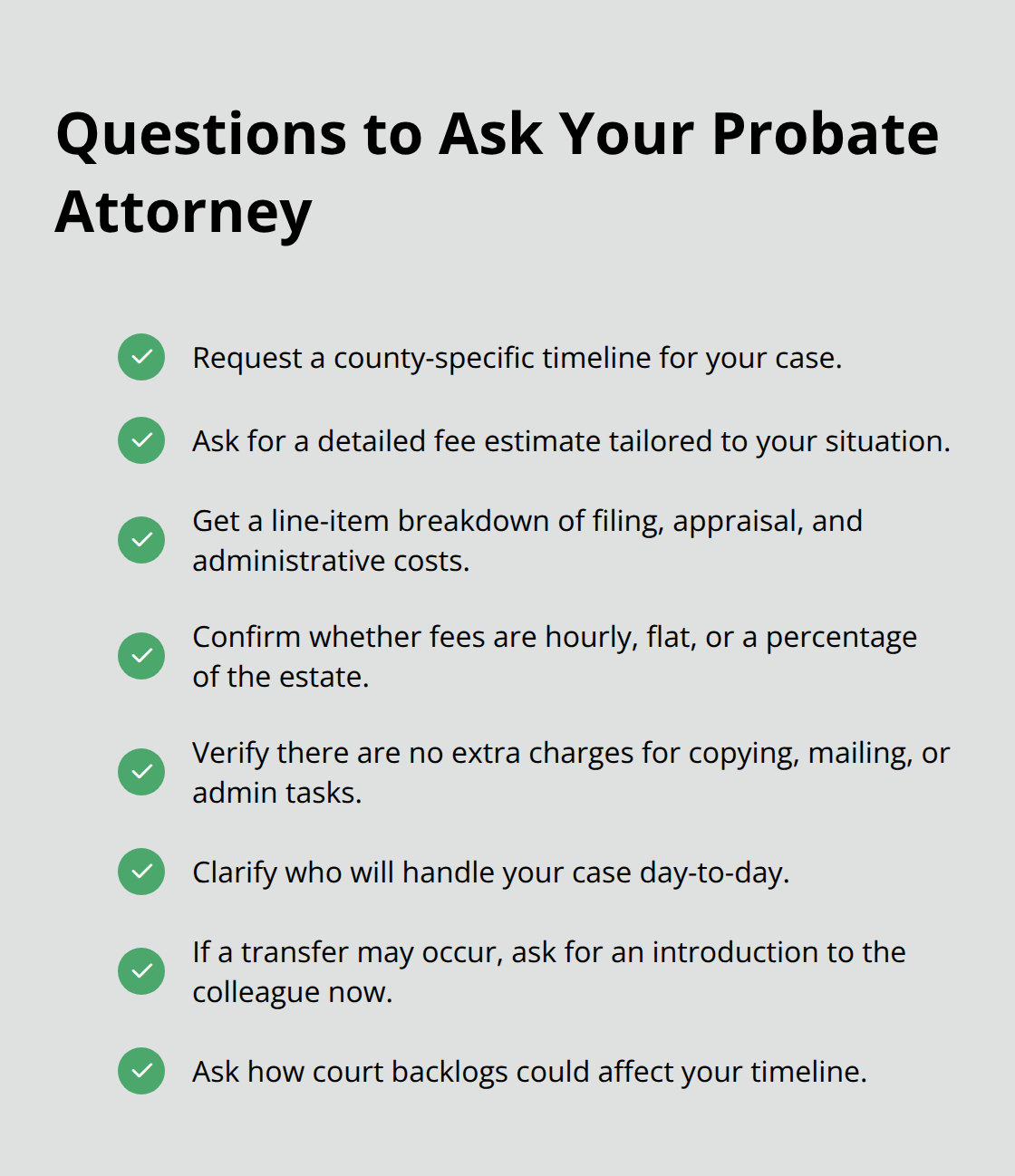
Find out who will handle your case-the attorney directly or paralegals and assistants-because this affects both quality and cost. If your case might transfer to a colleague partway through, demand an introduction upfront so you’re not surprised later.
Tax Planning Separates Strong Administration From Weak Handling
Federal estate taxes hit estates exceeding $13.61 million in 2024, but California residents often ignore this because the state has no estate tax. However, retirement accounts, life insurance proceeds, and investment gains trigger income tax when beneficiaries receive them, and improper titling of assets can waste your federal exemption entirely. Ask your attorney how they’ll structure distributions to minimize taxes for your heirs and whether strategies like portability of the federal exemption apply to your situation. Request a clear explanation of which assets will be subject to income tax and which won’t. Ask specifically about beneficiary designations on retirement accounts and insurance policies-these bypass probate but create separate tax consequences that most families overlook. Request that the attorney coordinate with your accountant or tax advisor before probate finalizes to catch tax issues early. Understand which administrative fees are deductible against the estate’s income tax liability, as this affects net costs. Bring three years of recent tax returns to your consultation so the attorney can assess your family’s overall tax picture, not just probate-specific issues.
Organize Documents Before Your Consultation
Most people show up to a probate consultation empty-handed or with disorganized stacks of papers. Bring the death certificate (order multiple certified copies-you’ll need at least four for banks, courts, insurers, and creditors), the will or trust documents if they exist, and recent financial statements showing bank accounts, investments, and retirement balances as of the date of death. Gather property deeds, vehicle titles, life insurance policies with beneficiary designations clearly marked, and a list of debts including mortgages, credit cards, and loans. Include recent federal and state tax returns, which reveal the estate’s income and tax obligations. Bring names and contact information for all heirs, beneficiaries, and potential guardians if minor children are involved. Document digital assets separately: list cryptocurrency accounts, online banking access, social media accounts, and email addresses, along with instructions for accessing them if possible. If the deceased owned a business, bring ownership documents and any buy-sell agreements. The more organized your paperwork, the faster the attorney can assess your situation and provide accurate cost and timeline estimates.
What Happens Next With Your Information
Once you submit your documents and financial details, your attorney reviews them to identify potential complications before your formal meeting. This preparation phase reveals whether disputes among heirs might surface, whether creditor claims could drain the estate, or whether tax planning opportunities exist that most families miss. Your attorney then tailors questions and recommendations to your specific situation rather than offering generic advice that applies to everyone. This focused approach means your consultation time produces real answers instead of vague generalities, and you leave with a concrete plan that addresses your family’s actual needs and concerns.
Setting Your Goals Before Probate Begins
Your probate consultation isn’t just about understanding costs and timelines-it’s about defining what you actually want to happen to your family, your assets, and your legacy. Most people enter these meetings without clear objectives, which means they accept whatever the court process delivers rather than steering it toward their real priorities. You need to walk in knowing whether your main concern is speed, minimizing family conflict, protecting a second spouse while preserving children’s inheritances, or keeping certain assets out of probate entirely. These goals fundamentally shape the strategy your attorney recommends.
Privacy, Trusts, and Public Records
If your top priority is keeping your affairs private, a living trust becomes non-negotiable because it avoids probate and keeps distributions confidential-something a will cannot accomplish since probate records become public. A living trust transfers your assets during your lifetime into a trust structure, and when you pass away, distributions happen outside the court system entirely. Your family’s financial details, the amounts each heir receives, and the full inventory of your estate remain private rather than appearing in court documents that anyone can access. This privacy protection matters especially for families with significant wealth, business interests, or blended family situations where discretion prevents conflict and protects heirs from unwanted attention.
Protecting Minor Children and Their Financial Future
If you have minor children, your consultation should focus heavily on guardianship designations and trust structures that protect them financially until they reach an appropriate age to manage money responsibly. Without a designated guardian, the court appoints someone to raise your children-potentially someone you would never have chosen. A testamentary trust (created within your will) or a standalone trust can hold assets for your children’s benefit, with a trustee managing funds for education, healthcare, and living expenses until each child reaches an age you specify (typically 25, 30, or even 35 for significant inheritances). This approach prevents a young adult from receiving a large lump sum at age 18 and squandering it, instead allowing gradual distributions as they mature and demonstrate financial responsibility.
Multi-State Real Estate and Ancillary Probate
If you own real estate in multiple states, your goals must include preventing ancillary probate in those states, which requires specific titling strategies that only an attorney familiar with multi-state planning can execute correctly. Ancillary probate means your estate goes through separate court proceedings in each state where you own property, multiplying costs, delays, and administrative burden significantly. A living trust funded with out-of-state properties, or strategic use of transfer-on-death deeds where your state allows them, can bypass these additional probate proceedings entirely and transfer property directly to your heirs.
Incapacity Planning and Healthcare Decisions
Incapacity planning matters far more than most families realize because probate only handles what happens after death-but you might become incapacitated tomorrow through illness or accident. A durable power of attorney names someone to handle your financial and legal decisions if you cannot, avoiding costly conservatorship proceedings that strip you of control and drain your estate through court fees and ongoing supervision. A healthcare directive specifies which medical treatments you’ll accept or refuse and names someone to execute those wishes if you’re unconscious or unable to communicate, preventing family members from making guesses about your preferences.
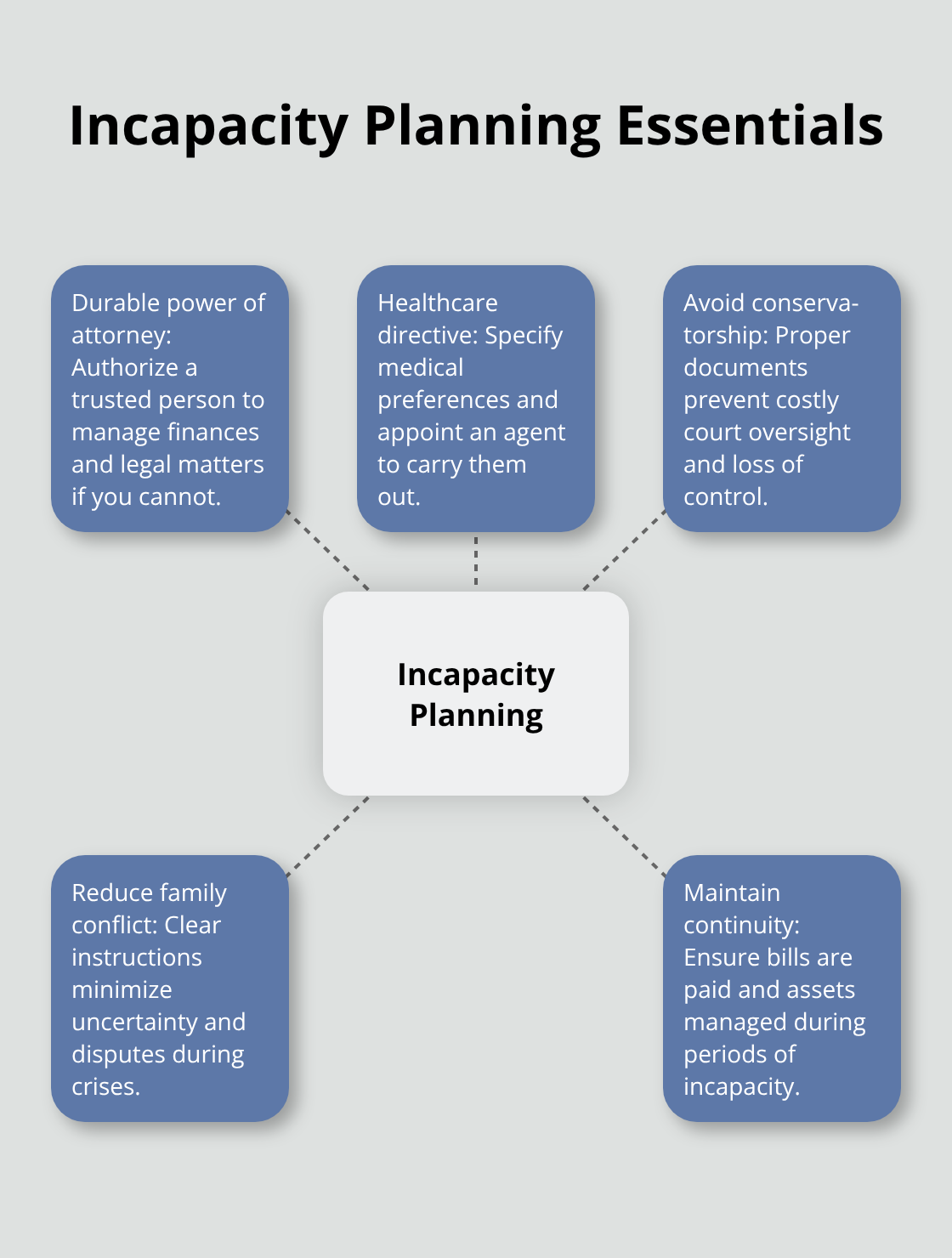
Without these documents, your family faces lengthy court processes and uncertainty about your actual wishes, potentially resulting in medical decisions you would have rejected and financial mismanagement during a vulnerable period.
Digital Assets and Online Account Access
Digital asset planning deserves equal attention-designate someone as your digital executor and document every online account, password manager access, cryptocurrency holding, and social media presence so your family can settle your affairs efficiently rather than losing years of photos, financial records, or business data to inaccessible accounts. Your digital assets (cryptocurrency, online banking, social media accounts) become completely inaccessible to your family because they cannot legally log in, potentially losing important information permanently. A comprehensive digital asset directive names someone to manage these accounts and includes instructions for each platform. When you discuss these goals with your attorney, you create a comprehensive framework that protects your family during your lifetime and long after.
Final Thoughts
Your probate attorney consultation transforms from a generic meeting into a focused strategy session when you arrive prepared with clear goals and organized documents. You control the conversation rather than scrambling to answer unexpected questions, and your attorney addresses your specific situation instead of offering one-size-fits-all advice that misses what matters most to you. This preparation means you walk away with real answers and a concrete plan that protects your family’s future.
Life changes like marriage, divorce, the birth of children, or significant financial shifts mean your plan needs updates every three to five years to stay aligned with both your wishes and current law. Your attorney will draft documents tailored to your goals, whether that means creating a living trust to avoid probate, establishing guardianship designations for minor children, or structuring distributions to minimize taxes and family conflict. You’ll review these documents carefully, ask questions about anything unclear, and execute them properly so they’re legally valid when your family needs them.
We at Law Offices of Roshni T. Desai help families across Southern California prepare for probate attorney consultations and execute comprehensive plans that protect what matters most. Contact us to schedule your consultation and take the first step toward protecting your family’s future.