




Executor Probate Responsibilities: Guidance For Probate Executors
Serving as an executor means handling significant legal and financial tasks during an already difficult time. Many executors don’t realize how complex executor probate responsibilities can become without proper guidance.
At Law Offices of Roshni T. Desai, we help executors navigate this process with clarity and confidence. This guide walks you through what you need to know.
What Your First Steps Should Be as an Executor
Your initial actions as an executor set the tone for the entire administration process. The first 30 days matter most. Locate the original will and all related documents, including trust paperwork, insurance policies, and contact information for the deceased’s attorney, accountant, and financial advisor. Request multiple certified copies of the death certificate immediately-try for at least 10 copies. Banks, insurers, and creditors will each demand originals, and ordering them in batches costs far less than requesting them one at a time later. Open an estate bank account within the first two weeks to separate estate funds from your personal finances. This single step prevents confusion when paying bills, mortgages, and utilities that continue after death.
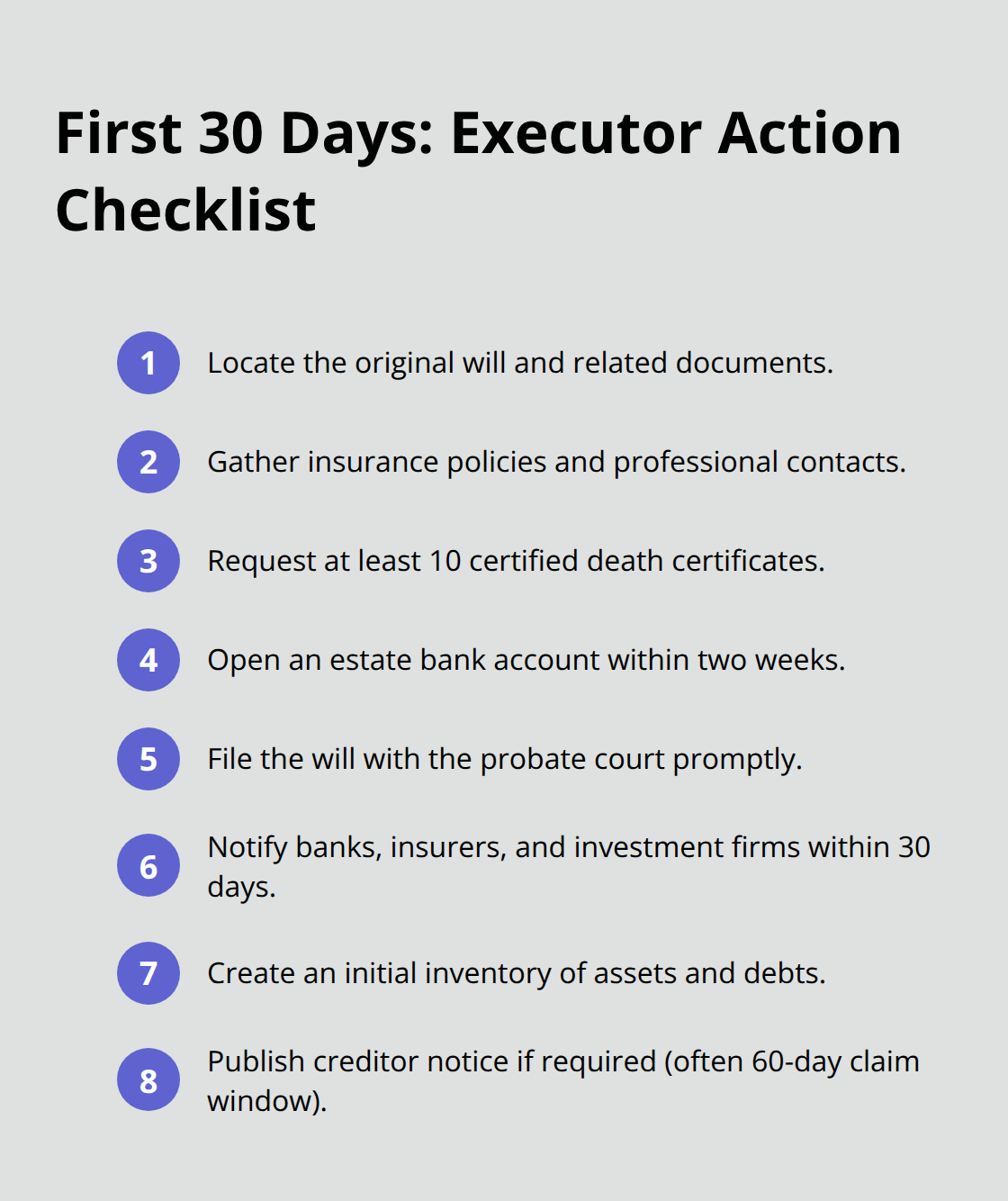
File the will with the probate court without delay. According to the American Bar Association, delays in filing increase the risk of disputes and complications down the line.
Gathering Financial Records and Asset Information
Collect bank statements, brokerage and advisory statements, pension documents, Social Security records, deed information, and credit card statements. Create a physical or digital inventory of all property, including items in safety deposit boxes. Some states require a formal personal property inventory filed with the court. Real estate and valuable items may need professional appraisal, particularly if their value affects tax liability or fair distribution among beneficiaries. Notify the Social Security Administration, U.S. Postal Service, DMV, and Veterans Affairs of the death. Send written notice to all banks, insurance companies, and investment firms within 30 days (this prevents identity theft and stops accounts from accruing unauthorized charges). For creditors, publish a notice in a local newspaper if state law requires it, which typically gives creditors a window (often 60 days) to submit claims against the estate.
Addressing Debts, Taxes, and Distributions
Pay ongoing expenses from the estate account first-property taxes, utilities, insurance premiums, and mortgage payments cannot wait. Federal and state income tax returns for the deceased are due by the normal tax deadline. If the estate generates income, file an estate income tax return. Estate tax returns are due within nine months of death. According to the American Bar Association, a common executor mistake is distributing assets early before settling all debts and taxes, which exposes you to personal liability. Wait until you have certainty on tax obligations and creditor claims. In Pennsylvania specifically, executors who pay inheritance tax within three months of death receive a discount; missing this deadline raises the tax burden unnecessarily. Distribute remaining assets only after debts, taxes, and administrative costs are paid and documented. Obtain receipts from each beneficiary confirming they received their distribution. This protects you against future claims that assets were mishandled.
The complexity of these responsibilities often leads executors to seek professional guidance. Understanding where to turn for support makes the difference between a smooth administration and costly delays.
What Derails Executor Administration
Family Conflict Stops Progress Cold
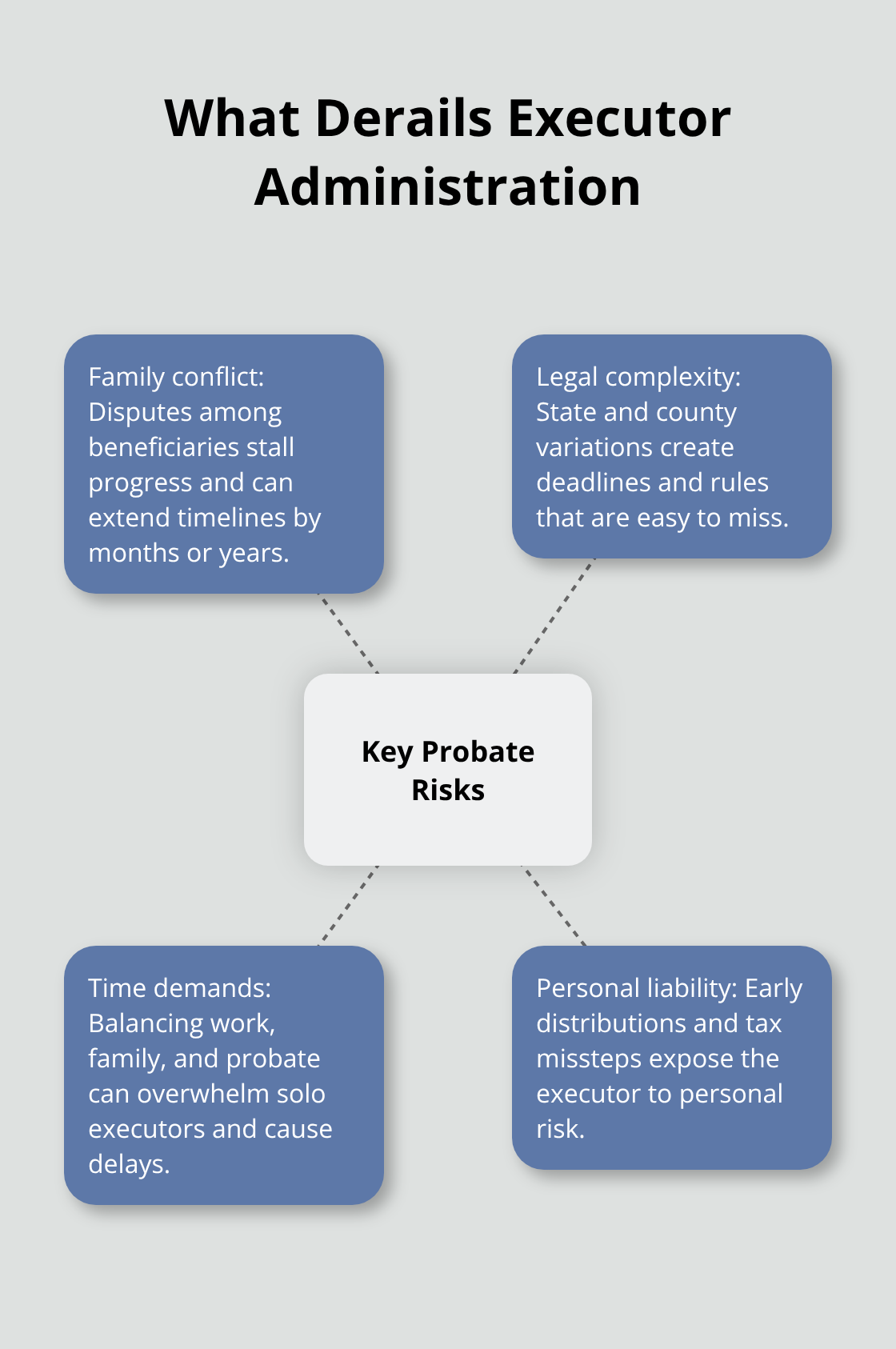
Family conflict is the single largest reason executor administration stalls. According to the American Bar Association, disputes among beneficiaries rank among the top challenges executors face, and unresolved conflicts extend probate timelines by months or years. The problem intensifies when beneficiaries feel excluded from decisions or when asset distribution seems unfair. You cannot prevent all disagreement, but transparency stops most conflicts immediately.
Share a written accounting of all estate assets, debts paid, and distributions planned within 60 days of taking office. Many executors wait until the final accounting to reveal details, which guarantees pushback. Early disclosure gives beneficiaries time to ask questions while you still have flexibility to address concerns. If a beneficiary contests the will itself or disputes your actions, the probate court becomes involved, and legal fees escalate rapidly. Document every decision you make, every expense you pay, and every communication with beneficiaries. Courts expect this paper trail, and it protects you from false accusations of mismanagement.
Legal Complexity Varies by State and County
Legal complexity catches most executors off guard because probate rules vary dramatically by state and county. Pennsylvania inheritance tax deadlines differ from California requirements, and missing a three-month payment window in Pennsylvania means paying a higher tax rate unnecessarily. Federal estate tax returns involve valuation rules, step-up basis calculations, and income allocation decisions that require precise execution. One misclassification-treating probate property as non-probate property, for example-can trigger incorrect distributions and tax penalties.
Time Demands Overwhelm Solo Executors
Time management becomes impossible when you juggle a full-time job, family obligations, and estate administration simultaneously. Executors commonly underestimate how many hours probate demands. A straightforward estate requires 40 to 80 hours of work across six to twelve months. Complex estates with real estate, business interests, or family discord demand 200 or more hours. Many executors attempt this solo and burn out halfway through, which delays the entire process and frustrates beneficiaries waiting for their inheritance.
Personal Liability Risk Demands Professional Support
The combination of legal complexity, tax obligations, and time pressure creates genuine personal liability risk. If you distribute assets before paying all debts and taxes, creditors can pursue you personally for unpaid amounts. The executor’s bond (if required) provides limited protection. This is why professional support matters from the start rather than trying to handle everything yourself and discovering problems after distributions are made. We at Law Offices of Roshni T. Desai help executors navigate these obstacles with clarity and confidence throughout the administration process.
How We Support Executors Through Probate
The Cost of Inadequate Legal Guidance
Personal liability risk as an executor demands more than good intentions. When you distribute assets before confirming all debts are paid, creditors pursue you personally for the shortfall. When you miss tax deadlines, penalties accumulate fast. When beneficiaries disagree on distributions, court involvement drains both time and money. The American Bar Association identifies inadequate legal counsel as a major risk factor that delays probate and increases liability exposure. Professional legal support works to eliminate these risks through structured guidance at each phase of administration.
Preventing Costly Mistakes Before They Happen
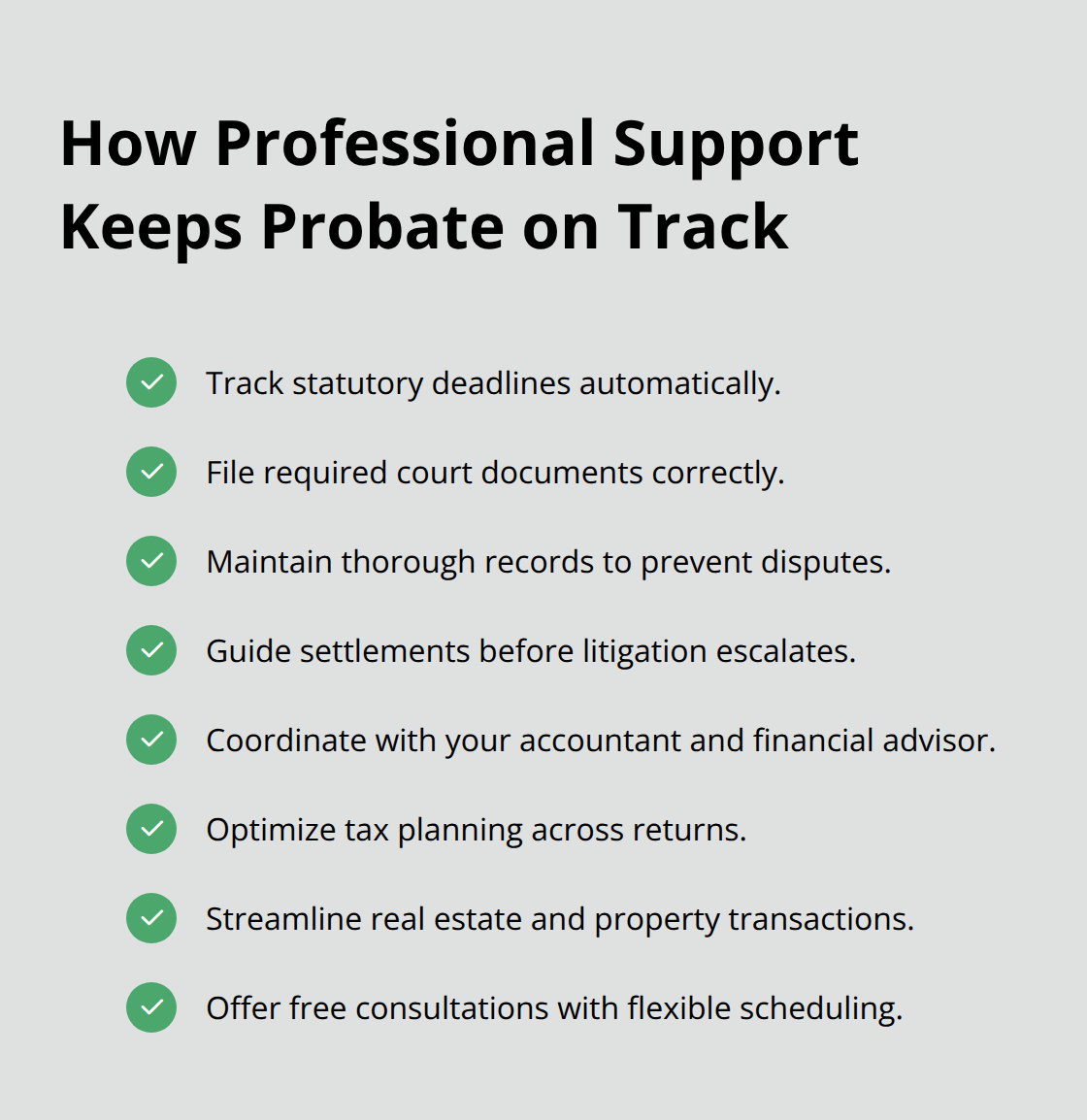
An effective probate strategy focuses on preventing costly mistakes rather than fixing them after they happen. Legal documentation that courts require must be filed within statutory deadlines, and compliance with both federal and state tax obligations cannot slip. In Pennsylvania, the three-month inheritance tax payment deadline carries a real cost if missed-a professional team tracks these deadlines automatically so you don’t carry that burden alone. Detailed records of every transaction, decision, and communication with beneficiaries protect you against future disputes and provide the paper trail courts expect to see. When beneficiaries conflict over distributions or challenge the will itself, professional representation guides settlement discussions before litigation becomes necessary. Many executors wait until problems escalate to seek legal support, but early involvement costs significantly less and prevents months of delays.
Managing Complex Asset Decisions and Tax Planning
Estate disputes often center on asset valuation and tax allocation decisions that most executors lack training to navigate independently. Securities held in the estate require careful timing decisions on liquidation, particularly in volatile markets. A delayed liquidation decision can mean the difference between sufficient funds for all distributions and a shortfall that triggers conflict. Proper tax planning allocates income correctly between the decedent’s final return and the estate’s return, which prevents penalties and reduces the overall tax burden on beneficiaries. When the estate includes real property or complex assets, integrated professional support prevents misclassification errors that trigger tax problems later. Coordination across your accountant and financial advisor ensures nothing falls through gaps between different professionals, and the overall strategy stays on track.
Streamlined Administration With Professional Support
At Law Offices of Roshni T. Desai, our dual licensure as both attorney and real estate professional streamlines property-related transactions within the estate, eliminating communication gaps between separate professionals and reducing costs and delays. We offer free consultations with flexible scheduling at your home or office, which removes barriers to getting guidance when you need it most. The goal is straightforward: complete the administration on schedule, minimize taxes and expenses, and distribute assets according to the will without exposing you to personal liability or family conflict.
Final Thoughts
Executor probate responsibilities demand careful attention to legal deadlines, tax obligations, and beneficiary communication. Mistakes in asset location, creditor notification, debt management, tax filing, or property distribution expose you to personal liability, family conflict, and costly delays that extend probate timelines by months or years. Professional legal support transforms this burden into a manageable process by preventing costly errors before they happen, tracking statutory deadlines automatically, and handling court filings that comply with state and federal requirements.
The cost of inadequate guidance far exceeds the cost of professional support from the start. Distributing assets prematurely, missing tax deadlines, or failing to document decisions creates liability that follows you long after probate closes. Early consultation with an attorney prevents these problems and gives you confidence that the administration stays on track while your accountant handles tax planning and income allocation to minimize the overall burden on the estate and beneficiaries.
We at Law Offices of Roshni T. Desai provide personalized probate administration services across Southern California. Contact us at lortd.com to discuss your executor probate responsibilities and how we can support you through administration with free consultations and flexible scheduling at your home or office.