




Probate Executor Responsibilities: Duties and Best Practices
Being named an executor is a significant responsibility that many people don’t fully understand until they’re in the role. The duties range from managing assets to handling taxes, and the legal requirements can feel overwhelming.
At Law Offices of Roshni T. Desai, we’ve guided countless executors through this process. This guide breaks down probate executor responsibilities and shows you how to handle them effectively.
Core Duties as an Executor
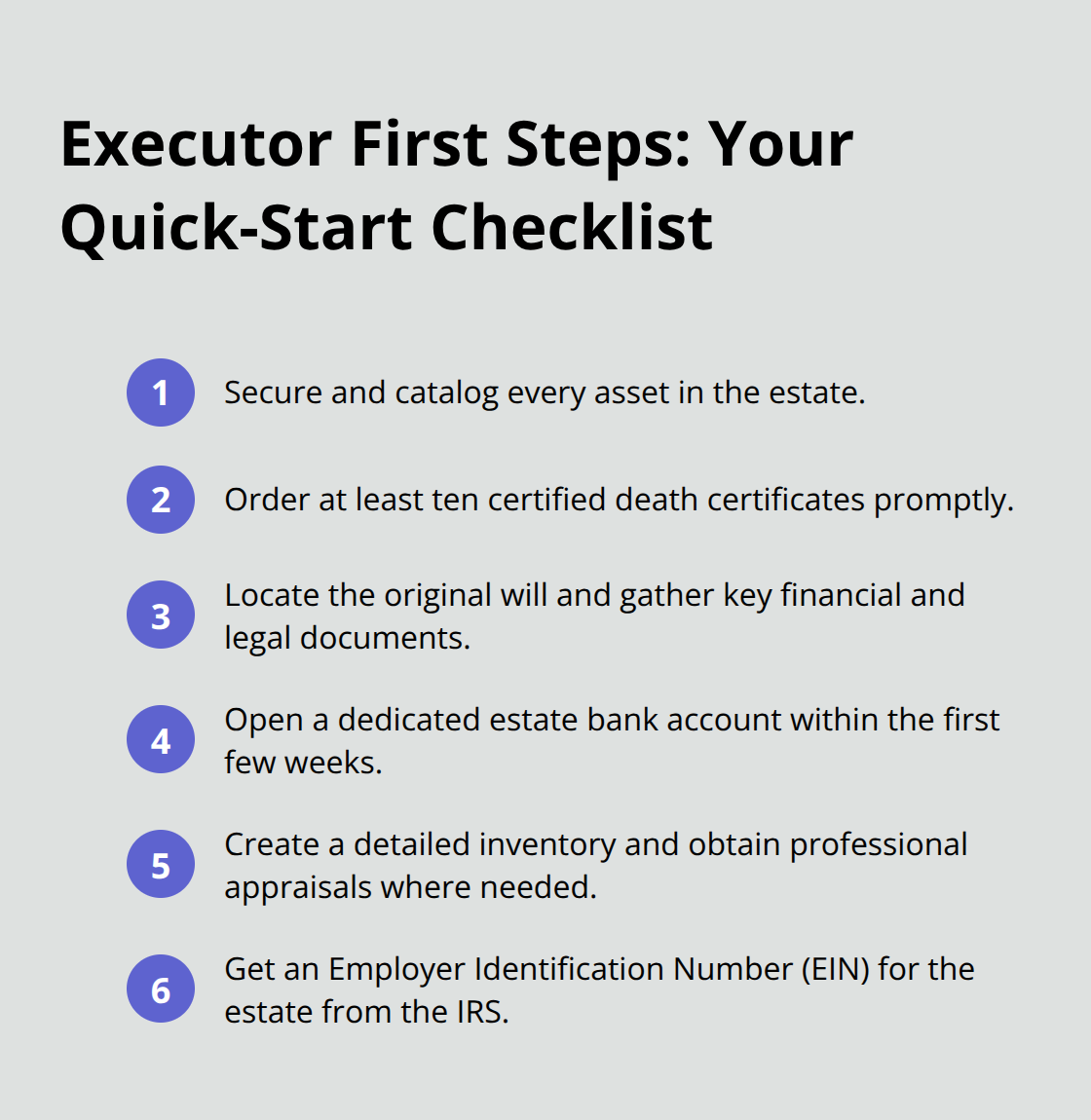
Your first responsibility as an executor is to secure and account for every asset in the estate. Obtain at least ten certified copies of the death certificate immediately, as banks, insurers, and government agencies will demand them. Locate the original will and gather essential documents including trusts, insurance policies, bank statements, deeds, and advisor contacts. Open a dedicated estate bank account within the first few weeks to manage cash flow, pay bills, and receive funds. Many executors underestimate this step, but separating estate finances from personal finances protects you legally and makes accounting infinitely simpler.
Create a detailed inventory of all assets, including real estate, financial accounts, vehicles, jewelry, artwork, and personal property. Hire a professional appraiser to establish accurate valuations for tangible assets like furniture or jewelry. This step prevents tax complications later. Obtain a separate tax identification number for the estate from the IRS, which you’ll use instead of the decedent’s Social Security number for all estate-related filings and accounts.
Settle Financial Obligations Before Distribution
You must identify and pay all legitimate debts before distributing a single dollar to beneficiaries. Review bank statements and checkbooks to locate creditors, and notify them in writing as required by state law. Most states give creditors a window (typically three to four months) to file claims against the estate. Pay estate expenses first, including funeral costs, probate filing fees, and professional fees for attorneys or accountants.
Then address taxes. File the final income tax return for the decedent, and obtain a federal tax identification number for the estate to file its own income tax return. Estate tax returns are generally due within nine months of death according to IRS guidance. If the estate exceeds the federal threshold (currently around thirteen point six million dollars), you’ll need to file an estate tax return. Don’t overlook state inheritance or estate taxes either, as they vary significantly by location and can consume substantial assets if missed. If assets are insufficient to cover all obligations, state law typically prioritizes debts in a specific order, with funeral expenses and administrative costs often coming first.
Transfer Assets to Beneficiaries
Distribution happens only after debts, taxes, and all expenses are paid. Fund specific bequests first-items or amounts designated to particular people in the will. Then distribute the residue, which is whatever remains after all obligations are settled. Obtain written receipts from each beneficiary confirming they received their distribution. If no will exists, state intestacy laws determine who receives what, and you must follow those rules precisely.
Many executors expose themselves to personal liability by distributing assets too early. Wait until you have written confirmation that all tax returns are filed, debts are paid, and creditor claims windows have closed. For real estate, ensure proper title transfers occur in fiduciary form-meaning the deed should read as Executor of the Estate of [Name] or similar language. This protects you from personal liability and creates a clear record that you acted in your fiduciary capacity, not as an individual.
These core duties form the foundation of estate administration, but they’re only the beginning. The real challenges emerge when family dynamics, complex assets, or tight legal deadlines enter the picture.
Common Challenges Executors Face
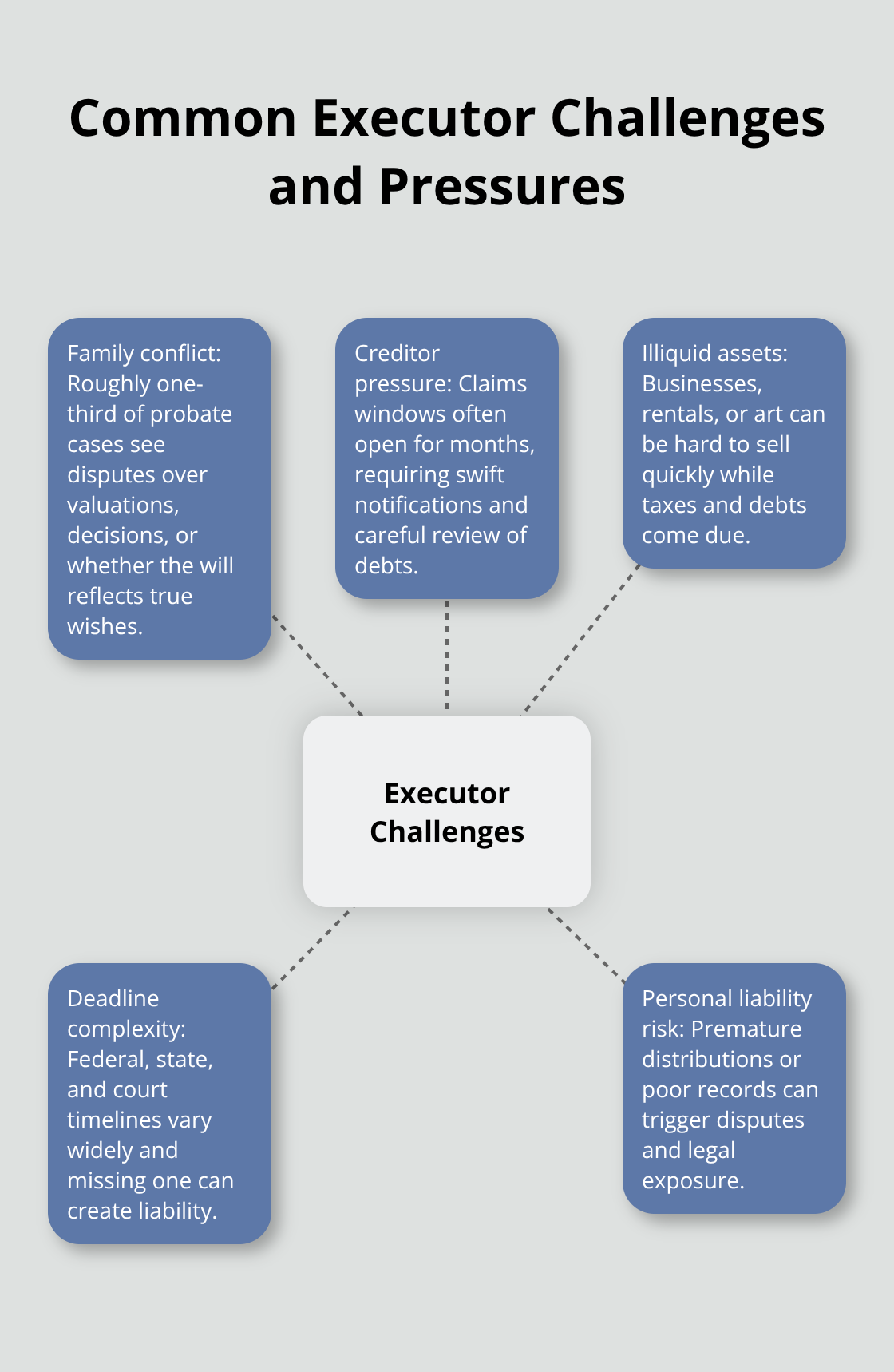
Family conflict emerges in roughly one-third of probate cases, according to data from the American College of Trust and Estate Counsel. Disagreements often center on asset valuations, the executor’s decisions, or claims that the will doesn’t reflect the decedent’s true wishes. Beneficiaries may question whether you’re spending estate money appropriately or distributing assets fairly. The tension intensifies when multiple beneficiaries have competing interests or when someone feels excluded from decisions.
Protect Yourself with Documentation
Document every action you take-every appraisal, every bill paid, every communication with creditors. Written records protect you from accusations of mismanagement and provide clear evidence of your fiduciary duty. If a beneficiary contests your decisions, documentation becomes your strongest defense. Hold a family meeting early in the process to explain the timeline, the debts that must be paid first, and when distributions will occur. Transparency reduces suspicion and prevents small disagreements from escalating into costly litigation.
Navigate Illiquid Assets and Time Pressure
Complex assets like family businesses, rental properties, or art collections cannot be quickly converted to cash, yet estate taxes and debts demand payment within months. The IRS gives you nine months to file an estate tax return, and many states impose shorter deadlines for inheritance taxes. If the estate holds a family business, you face a critical decision: sell it to generate funds, or transfer it to a beneficiary who can operate it. Selling under pressure often means accepting below-market prices. Transferring a business to an unprepared beneficiary can destroy its value.
Real estate titles must transfer in your name as executor before you can sell or distribute them, and this process takes time. Missing the three-month prepayment discount for Pennsylvania inheritance tax, for example, costs the estate money in penalties and interest. Hire a tax professional immediately if the estate includes business interests, investment accounts, or significant real estate. The cost of professional guidance (typically ranging from two hundred to five hundred dollars per hour) pays for itself by preventing costly mistakes.
Meet State-Specific Deadlines and Requirements
State probate laws vary dramatically, and deadlines differ by location. Some states require creditor notifications within specific timeframes, while others impose inventory filing deadlines that fall shortly after probate opens. Missing even one deadline can expose you to personal liability or allow creditors to make claims the estate cannot dispute. These legal requirements demand immediate attention and systematic tracking-which is precisely why many executors turn to professional guidance when deadlines tighten and complexity increases.
How to Stay Organized and Avoid Costly Mistakes
Build Your Command Center from Day One
The difference between smooth estate administration and a nightmare often comes down to one thing: systematic organization from day one. Create a master folder-physical or digital-that holds the death certificate copies, the original will, trust documents, insurance policies, bank statements, deeds, and contact information for all financial institutions and advisors. Use a spreadsheet to track every asset with its location, account number, and current value. Update this sheet weekly as you collect appraisals and account statements. This single document becomes your command center and protects you when beneficiaries ask questions or disputes arise.
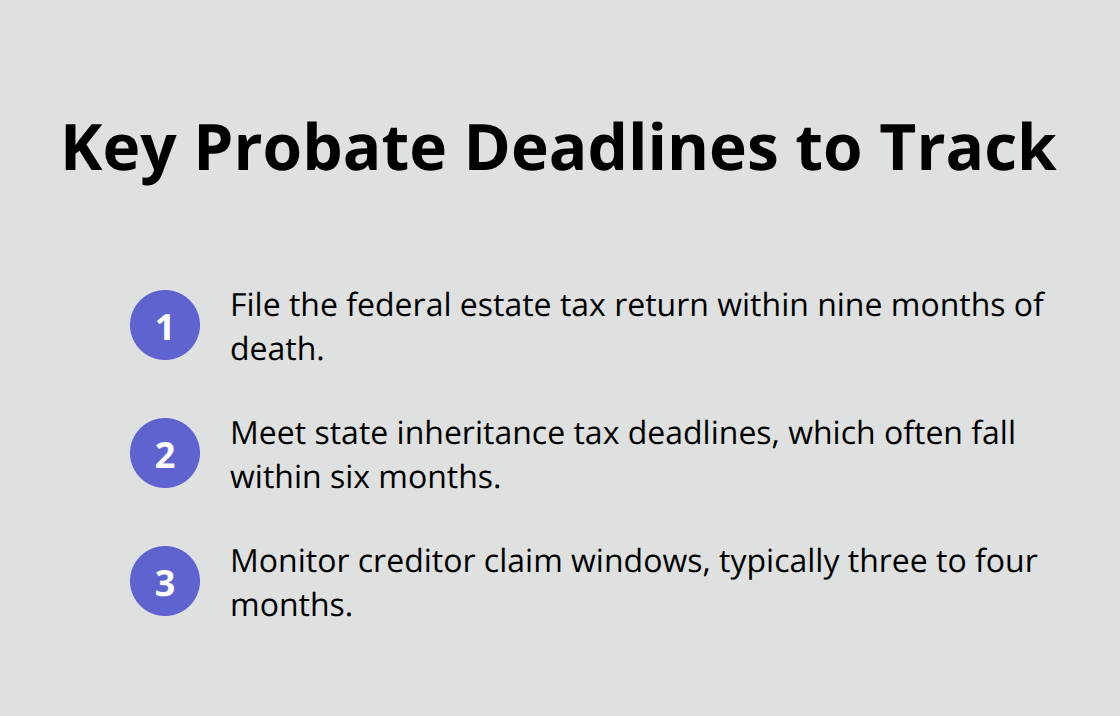
Assign each task a deadline and mark it off as completed. The IRS deadline for estate tax returns is nine months from death, state inheritance tax deadlines vary but often fall within six months, and creditor notification windows typically last three to four months. Missing even one deadline exposes you to penalties, interest, or personal liability. Use a calendar tool or simple checklist to track every deadline by state and document the date you completed each task.
Protect Yourself with Documentation
Photograph or scan every receipt, appraisal report, tax filing confirmation, and beneficiary signature. Store copies in two locations-one physical and one cloud-based-so nothing gets lost if your home office floods or your computer fails. Courts and beneficiaries will demand proof of your actions, and documentation is your only defense against accusations of mismanagement. This record-keeping habit takes minutes each week but prevents months of conflict later.
Communicate Transparently with Beneficiaries
Communication prevents most estate conflicts before they start. Schedule a family meeting within the first month to explain the probate timeline, which debts get paid first, and when distributions will happen. Many beneficiaries expect immediate payouts because they don’t understand that estate taxes, funeral costs, and creditor claims come first. Walk them through the process step by step.
Provide written updates every two to three months, even if nothing major has changed. Tell beneficiaries exactly what you’re doing, why you’re doing it, and when they’ll receive distributions. If you discover the estate has less money than expected, tell beneficiaries immediately rather than letting them discover it later. Transparency builds trust and prevents small frustrations from escalating into litigation.
Hire Professional Help for Complex Assets
When complex assets like family businesses or significant real estate are involved, hire a tax professional immediately-don’t wait until problems emerge. The cost of professional guidance at two hundred to five hundred dollars per hour prevents mistakes that cost ten times that amount. A tax advisor can help you choose the most advantageous fiscal year for the estate, properly allocate income between the decedent’s final return and the estate’s return, and identify tax-saving strategies specific to your state.
We at Law Offices of Roshni T. Desai recommend consulting with an attorney early if the estate exceeds two million dollars, if beneficiaries are in dispute, or if assets include business interests or real property in multiple states. Professional guidance transforms a stressful solo effort into a managed process where responsibility is shared and mistakes are prevented rather than discovered months later.
Final Thoughts
Probate executor responsibilities demand attention to detail, strict adherence to deadlines, and a willingness to ask for help when complexity exceeds your comfort level. The core duties-securing assets, paying debts and taxes, and distributing what remains-form a straightforward framework, but executing them correctly requires systematic organization and careful documentation from day one. Most executors who encounter serious problems didn’t lack good intentions; they simply underestimated the legal and financial complexity involved or waited too long to bring in professional support.
The decision to handle probate administration alone versus hiring professional guidance depends on your estate’s size, complexity, and your own financial and legal knowledge. If the estate exceeds two million dollars, involves business interests, includes real property in multiple states, or shows signs of beneficiary conflict, professional guidance isn’t optional-it’s a practical investment that prevents costly mistakes (a tax advisor or probate attorney typically costs two hundred to five hundred dollars per hour, but mistakes in asset valuation, tax filing, or distribution can cost multiples of that amount). We at Law Offices of Roshni T. Desai understand that executor duties feel overwhelming when you’re grieving and managing competing demands, and our firm provides personalized probate administration services across Southern California to help you navigate every step from asset inventory through final distribution.
Your role as executor carries real legal responsibility, but you don’t carry it alone. Reach out to professionals when deadlines tighten, assets become complex, or family tensions rise, and that decision transforms probate administration from a solo burden into a managed process where mistakes are prevented rather than discovered months later.