




Probate Administration Supports Executors: Keeping Probate On Track
Being named executor comes with real responsibility. Court deadlines, asset inventories, creditor notifications-the list grows quickly, and missing even one step can create serious problems.
At Law Offices of Roshni T. Desai, we know that probate administration supports executors by handling these complex tasks so you can focus on what matters. We manage the paperwork, communicate with courts, and guide you through each phase of the process.
What Probate Administration Handles
Court Filings and Legal Deadlines
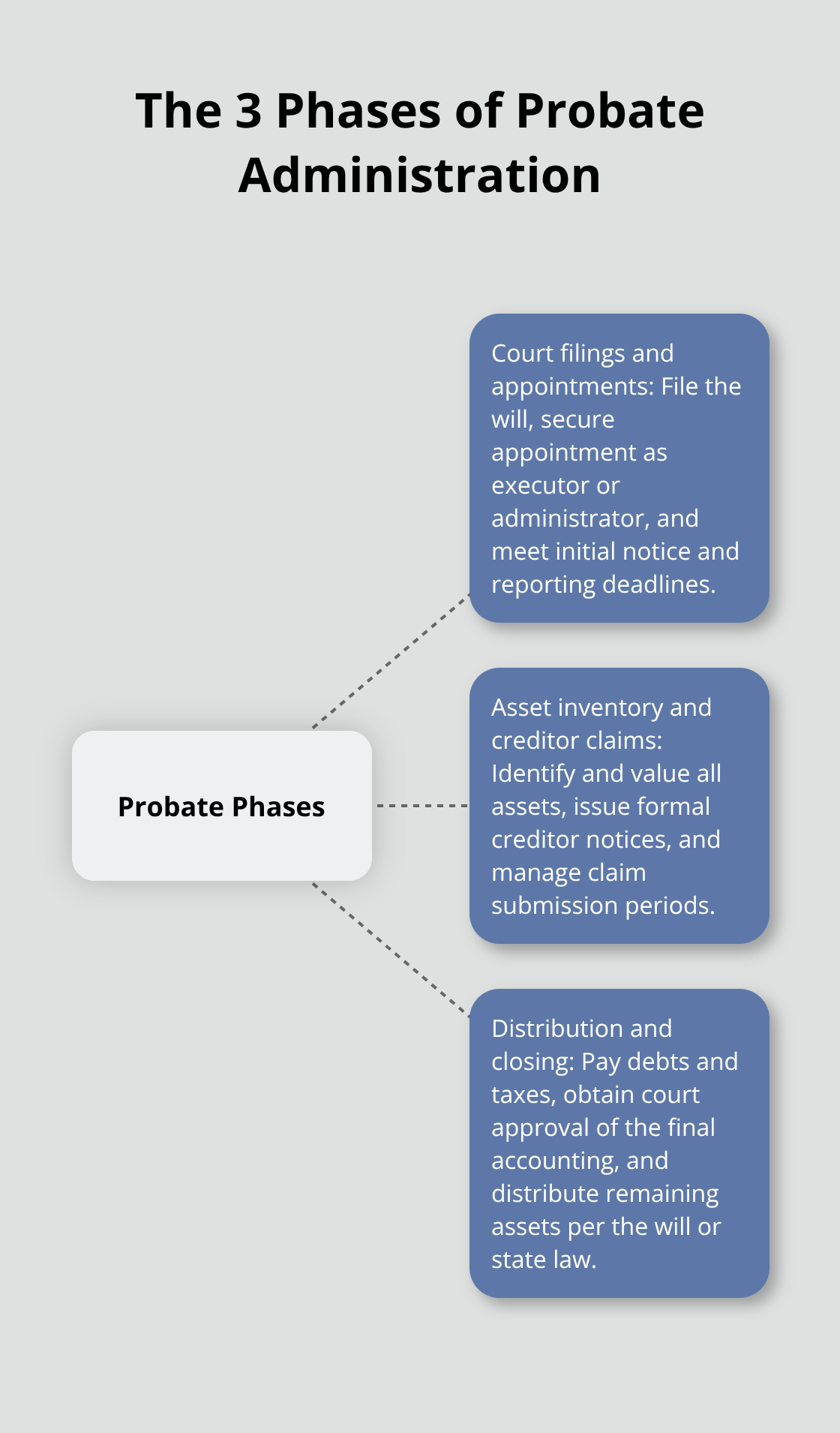
Probate administration manages three distinct phases that executors must navigate, and each phase involves specific court requirements and deadlines that vary by state. The first phase focuses on court filings and legal deadlines-filing the will with the probate court, obtaining appointment as executor or administrator, and meeting state-imposed deadlines for creditor notifications and asset reporting.
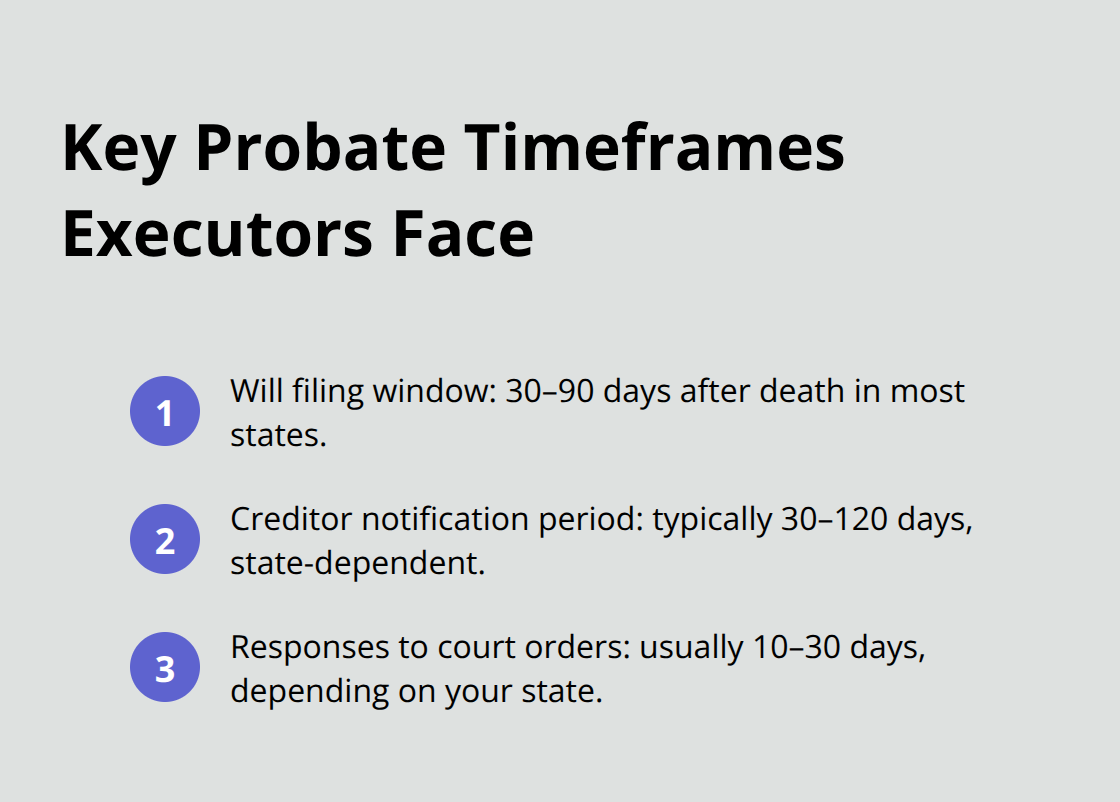
Most states require the will to be filed within 30 to 90 days of death, and missing this window can delay the entire process or trigger court penalties.
Inventorying Assets and Managing Creditor Claims
The second phase involves inventorying all estate assets and managing creditor claims. Executors must identify bank accounts, investments, real property, vehicles, and digital assets while simultaneously notifying creditors of the estate’s existence and establishing deadlines for their claims. Missing a creditor claim deadline can result in unpaid debts that executors may become personally liable for. Proper asset valuations prevent disputes among beneficiaries and protect against tax penalties.
Distributing Property to Beneficiaries
The third phase distributes remaining property to beneficiaries according to the will or state law if no will exists. This step cannot occur until debts, taxes, and administrative expenses are fully paid and the court approves the final accounting. Executors must maintain detailed financial records showing every dollar received and spent, file tax returns for the deceased and the estate itself, and respond to court orders within specified timeframes.
Understanding the Timeline and Complexity
The probate timeline typically spans months to over a year depending on estate complexity. Many executors underestimate how much time court approvals, asset appraisals, and creditor claim periods actually consume. Each phase demands precision and documentation-improper handling creates personal liability for executors and delays asset distribution to beneficiaries. These administrative burdens fall squarely on the executor’s shoulders, which is why many turn to professional support to navigate the process correctly.
What Goes Wrong When Executors Go It Alone
Court Deadlines That Courts Don’t Forgive
State probate courts impose strict timelines for filing the will, notifying creditors, submitting asset inventories, and filing tax returns. Each missed deadline carries real consequences. A will filing deadline missed by even a few days can trigger court penalties, delay the entire probate process, or force the court to appoint a replacement administrator.
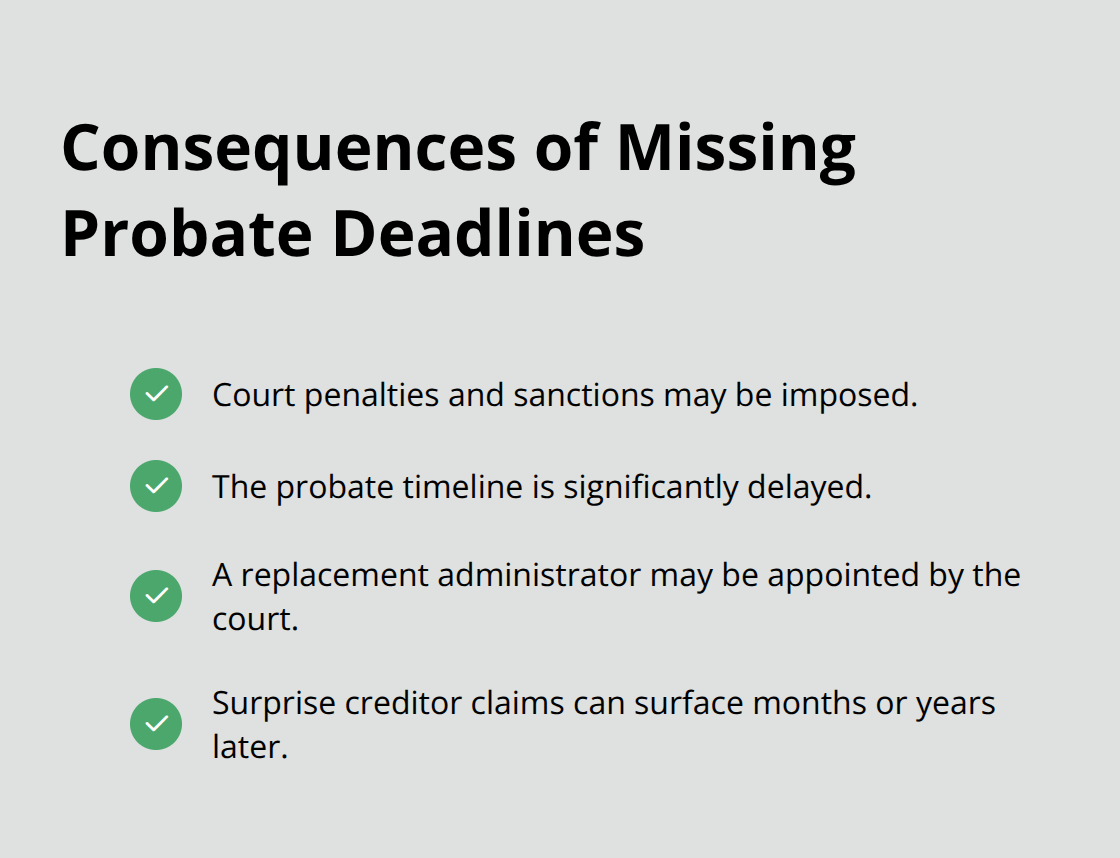
Creditor notification deadlines typically range from 30 to 120 days depending on your state, and improper notice leaves the estate vulnerable to surprise claims months or even years later.
The Hidden Time Commitment
Many executors underestimate how long probate actually takes. While some simple estates close within six months, estates with real property, business interests, or family disputes routinely extend beyond one year. During this extended timeline, executors must track dozens of deadlines simultaneously, respond to court orders within specified timeframes, file tax returns for both the deceased and the estate, and maintain detailed financial records documenting every transaction.
Communication Breakdowns Create Liability
The complexity multiplies when beneficiaries and creditors don’t receive proper notification or when communication becomes sporadic. Vague or incomplete creditor notifications can result in claims filed after the deadline has passed, leaving executors personally liable for unpaid debts. Similarly, failing to keep beneficiaries informed about probate progress and asset distributions creates conflict, triggers disputes, and sometimes leads to litigation against the executor for alleged fiduciary breaches.
Why Professional Guidance Matters
Executors who handle probate without support face personal liability, court sanctions, and years of unresolved disputes because critical steps were missed or incomplete. These mistakes are entirely preventable with proper guidance from the start. The right support transforms probate from an overwhelming burden into a manageable process with clear accountability and documented compliance at every step.
How We Guide Executors Through Probate
We at Law Offices of Roshni T. Desai handle the administrative burden that stops most executors from staying on track. When you work with us, we file court documents within state deadlines, prepare and submit creditor notifications with proper legal language, inventory assets with professional valuations, and maintain the financial records that courts require. Most probate cases demand responses to court orders within 10 to 30 days depending on your state, and missing even one deadline forces delays that extend the entire timeline. We track these deadlines systematically so they never slip past, file tax returns for both the deceased and the estate by their respective deadlines, and coordinate with financial institutions, appraisers, and government agencies on your behalf.
This approach removes the constant pressure of managing dozens of simultaneous obligations while you process grief and manage your own life.
Direct Communication Prevents Costly Conflicts
Communication failures create the most expensive probate problems. When courts, creditors, or beneficiaries don’t receive proper notification, disputes emerge that turn into litigation. We communicate directly with probate courts on behalf of the estate, send formal creditor notifications with documented proof of receipt, and provide regular status updates to beneficiaries so they understand exactly where the estate stands and when distributions will occur. This transparency prevents misunderstandings that lead to fiduciary breach claims. We also handle difficult conversations with creditors about claim disputes, negotiate payment timelines when estates have limited liquid assets, and respond to beneficiary questions with clear explanations of probate requirements. Many executors avoid these conversations because they fear conflict, but avoiding them creates far worse conflict later. Our experience resolving these situations directly means fewer family disputes and faster asset distribution.
When Disputes Arise, We Resolve Them
Some estates face will contests, valuation disagreements, or creditor disputes that require intervention beyond routine administration. We assess whether disputes have legal merit, negotiate settlements when possible, and represent your interests in court when litigation becomes necessary. Disputes over asset valuations can delay probate for months because beneficiaries and the executor may disagree on property values (which affects tax calculations and inheritance amounts). We obtain professional appraisals and defend valuations against unreasonable challenges. When a beneficiary claims the executor is mismanaging assets or violating fiduciary duties, we document every action taken and prepare responses that protect you from personal liability. Law Offices of Roshni T. Desai brings over 25 years of experience handling these contested matters, which means we know which disputes settle quickly and which require formal court resolution. This guidance saves executors from costly legal exposure and prevents probate from stalling indefinitely.
Final Thoughts
Probate administration supports executors by handling the administrative work that derails most estates when tackled alone. Court deadlines, creditor notifications, asset inventories, and financial records demand precision and constant attention-tasks that consume hundreds of hours and create personal liability when you mishandle them. Executors who attempt probate without support face missed deadlines, communication breakdowns, and disputes that extend timelines by months or years, and the cost of these mistakes far exceeds the cost of professional guidance from the start.
We at Law Offices of Roshni T. Desai have guided executors through probate for over 25 years, handling the administrative work that keeps estates on track. We file court documents within state deadlines, manage creditor notifications with proper legal language, coordinate asset valuations, and maintain the financial records that courts require. We communicate directly with probate courts, creditors, and beneficiaries so misunderstandings never turn into disputes, and when conflicts arise, we resolve them through negotiation or court representation.
If you’ve been named executor or are facing probate administration, contact Law Offices of Roshni T. Desai for a free consultation. We offer flexible home or office visits across Southern California and provide personalized guidance tailored to your estate’s specific needs. Let us handle the complexity so you can focus on what matters.