




Probate Administration In SoCal: A Trusted Roadmap
Probate administration in SoCal involves navigating court processes, filing documents, and managing an estate-all while dealing with tight deadlines and complex rules. Many families find themselves overwhelmed by the requirements, especially when emotions run high.
At Law Offices of Roshni T. Desai, we’ve guided countless clients through this process with clarity and support. This roadmap breaks down what you need to know and how to move forward.
What Probate Actually Requires
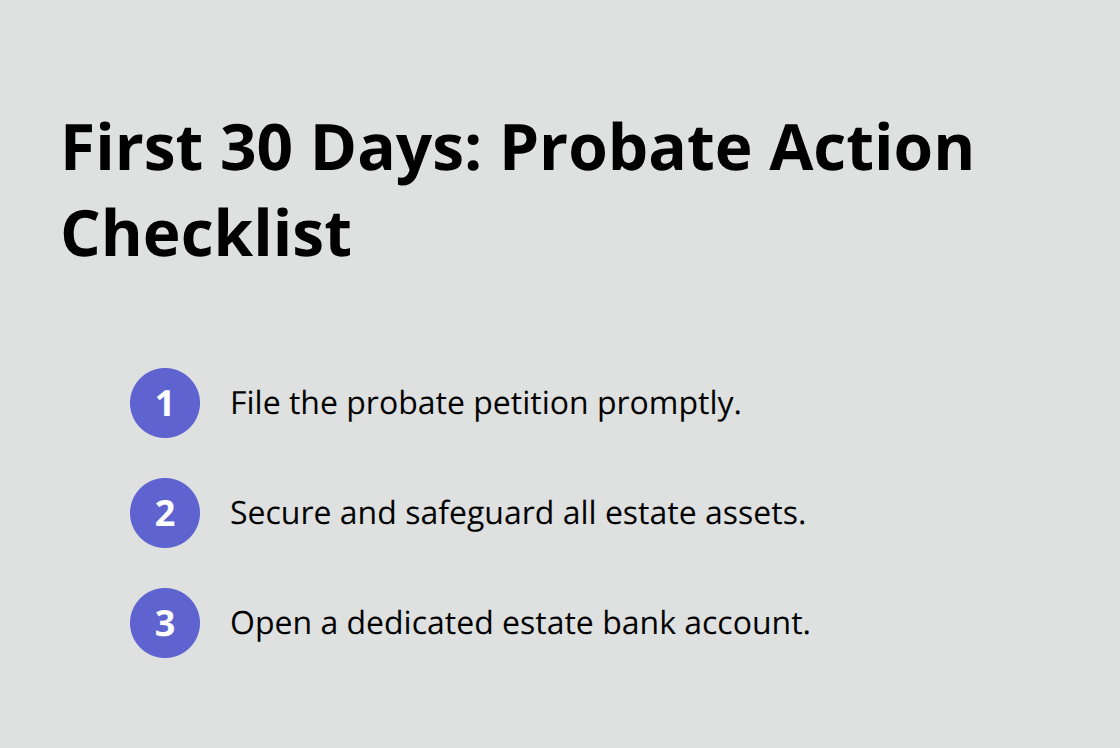
California probate unfolds as a structured sequence of tasks spread over 18 to 24 months, though simpler estates close in 4 to 6 months. The timeline depends entirely on asset complexity, family cooperation, and how quickly you handle the initial steps. The probate court requires you to file a petition to open the estate, obtain judicial authority to act as executor or administrator, inventory all assets, notify creditors within four months, settle valid claims, and finally distribute remaining property to heirs. In Southern California counties like Orange, Los Angeles, Riverside, San Bernardino, and San Diego, local court rules vary slightly, so missing a deadline in one county may differ from missing it in another. The first 30 days matter most: file the petition promptly, secure all assets immediately, and open a dedicated estate bank account to prevent personal funds from mixing with estate money.
Real Estate and Court Approval
Real estate often drives the timeline because probate courts must approve any sale price and terms before closing. You cannot simply list and sell a property like a standard transaction. If the estate includes a house worth $800,000 or more-common in SoCal-the property sits under court supervision until approval is granted, which adds weeks to the sale process. Property taxes on real estate typically run 0.75 to 1 percent of assessed value annually in SoCal, so leaving a property vacant costs steadily every month you delay distribution.
Asset Inventory and Digital Holdings
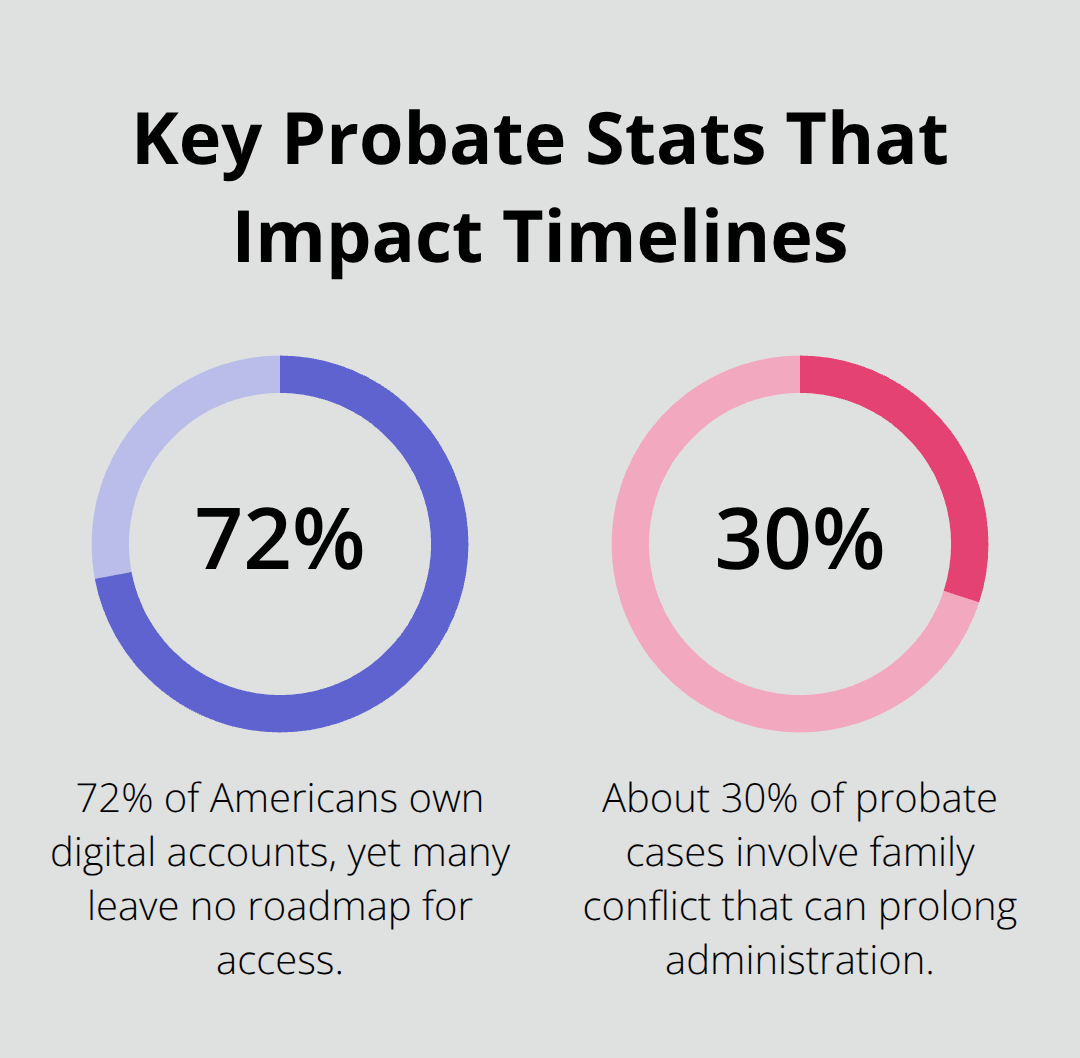
Inventory assets in four columns: description, estimated value, document location, and account numbers. Include deeds, investment statements, vehicle titles, and digital holdings so the court sees a complete picture. Digital assets complicate matters because 72 percent of Americans own digital accounts but fewer than half document where they are located, according to Pew Research Center data from 2023. Recovery costs per digital account can run $500 to $2,000, so identify passwords and access information within the first 30 days before platforms lock accounts after 90 days of inactivity.
Court Filings and Tax Obligations
The petition filing kicks off the clock on most deadlines. You must notify all heirs and beneficiaries, publish notice to creditors, and give creditors exactly four months from the petition date to file claims. Any claim filed after four months is barred, so this window is absolute. You also file the decedent’s final income tax return by April 15 of the following year, and the estate may owe taxes on probate earnings. Federal estate taxes apply to estates exceeding $13.61 million in 2024 according to the IRS, though California itself has no state estate tax. A qualified probate referee must appraise all assets to establish cost basis, preventing tax penalties later. This appraisal costs roughly $1,500 to $3,500 and requires coordination with a CPA or tax attorney.
Executor Duties and Personal Liability
As executor or administrator, you hold a fiduciary duty to act in the beneficiaries’ interest, not your own. You must collect assets, pay debts in the correct order (administration expenses and funeral costs first, then other debts), manage the estate account with complete transparency, and file detailed accountings that beneficiaries must approve before you distribute anything. Failure to follow this sequence exposes you to personal liability. If you pay a beneficiary before settling a valid creditor claim, that beneficiary can be forced to return the money and you absorb the loss. An attorney helps you navigate the statutory order and prevents costly missteps that delay distributions or trigger disputes-which is why many families in SoCal turn to professional guidance early in the process.
Common Challenges During Probate in Southern California
Family Disputes Derail Timelines
Family conflict appears in roughly 30 percent of probate cases, and when it surfaces, timelines that should take 18 to 24 months stretch into years of litigation. Contested wills, disputes over executor conduct, and disagreements about asset distribution drain both the estate and beneficiaries emotionally. Multiple heirs often question the validity of the will itself, claiming undue influence, fraud, or lack of mental capacity. California Probate Code Section 13050 gives beneficiaries 120 days from notice to contest a trust or will, creating a window where challenges can derail the entire process. If a no-contest clause exists in the will, it may prevent frivolous litigation, but California law has reformed no-contest clauses over time, and courts now scrutinize them carefully. Family disputes transform a straightforward administration into adversarial litigation that costs thousands in attorney fees and erases months from the timeline. Real estate sales freeze while disputes resolve, property taxes continue accruing, and the estate hemorrhages carrying costs on vacant properties that could otherwise sell in the spring market window when SoCal real estate demand peaks between May and July.
Court Backlogs and Processing Delays
Court processing delays compound these challenges significantly. Orange County, Los Angeles, Riverside, San Bernardino, and San Diego probate courts all face backlogs that push routine filings and hearings weeks beyond expected dates. A single missed court deadline triggers automatic delays and potential sanctions, which is why precision in document preparation matters enormously. The executor must navigate these court systems while managing dozens of concurrent obligations, and any misstep cascades into further delays that multiply costs and frustration.
Debts, Taxes, and Personal Liability
Debts and estate taxes add another layer of complexity because the executor must identify all creditors, notify them within four months of the petition filing, and settle valid claims before distributing assets to beneficiaries. Unknown creditors have up to one year from the date of death to file claims, so the estate must remain liquid and solvent throughout that entire window. If the decedent used Medi-Cal, a separate notice must be filed with the California Department of Health Care Services within 90 days, or the state may recover benefits from the estate. Federal estate taxes apply to estates exceeding $13.61 million according to the IRS, and even estates below that threshold may owe income taxes on probate earnings. A qualified probate referee must appraise all assets to establish cost basis, a process costing $1,500 to $3,500 that must coordinate with a CPA or tax attorney to prevent penalties. Executors who rush distributions before settling all debts and taxes face personal liability, meaning they absorb losses that should have been paid from estate assets.
Why Professional Guidance Matters Early
This combination of court delays, creditor deadlines, tax obligations, and the risk of personal liability explains why engaging professional guidance within the first 30 days of death-before administrative missteps lock you into costly corrections-makes a measurable difference. The right support helps you navigate these obstacles and move toward resolution rather than prolonged conflict. We at Law Offices of Roshni T. Desai bring over 25 years of experience to probate administration across Southern California, and our dual licensure as both attorney and real estate professional streamlines estate-related property sales to reduce costs and delays. The next section shows how professional support transforms these challenges into a manageable process.
How We Simplify Probate Administration
Probate administration demands precision across dozens of tasks running in parallel, and most families lack the bandwidth to track court deadlines, asset inventories, creditor notices, and tax filings while grieving. Professional support handles this coordination from day one, which eliminates the reactive scrambling that costs time and money. The approach centers on three immediate actions: securing all assets within the first 30 days, opening a dedicated estate account to prevent commingling of personal and estate funds, and filing the petition with complete documentation so no court delays compound your timeline. This front-loaded intensity prevents the cascade of missed deadlines that stretch probate from 18 months into three years or longer.
Secure Digital Assets Before They Vanish
Digital assets require immediate action because platforms lock accounts after 90 days of inactivity and recovery costs run $500 to $2,000 per account according to Pew Research Center data from 2023. Most families discover too late that their loved one owned cryptocurrency, email accounts, or subscription services worth thousands-money that disappears if access protocols aren’t documented within the first month. Inventory these holdings alongside physical assets so nothing slips through the cracks during the probate process.
Real Estate Moves Faster With Dual Expertise
Real estate often represents 60 to 80 percent of SoCal estate value, and probate court approval typically delays sales by six to twelve weeks compared to standard transactions. Professionals who hold both attorney and real estate licenses navigate court approval processes while simultaneously marketing properties to qualified buyers before the court hearing occurs. This dual approach cuts 4 to 8 weeks from typical timelines and preserves the spring market window when SoCal properties attract peak demand between May and July.
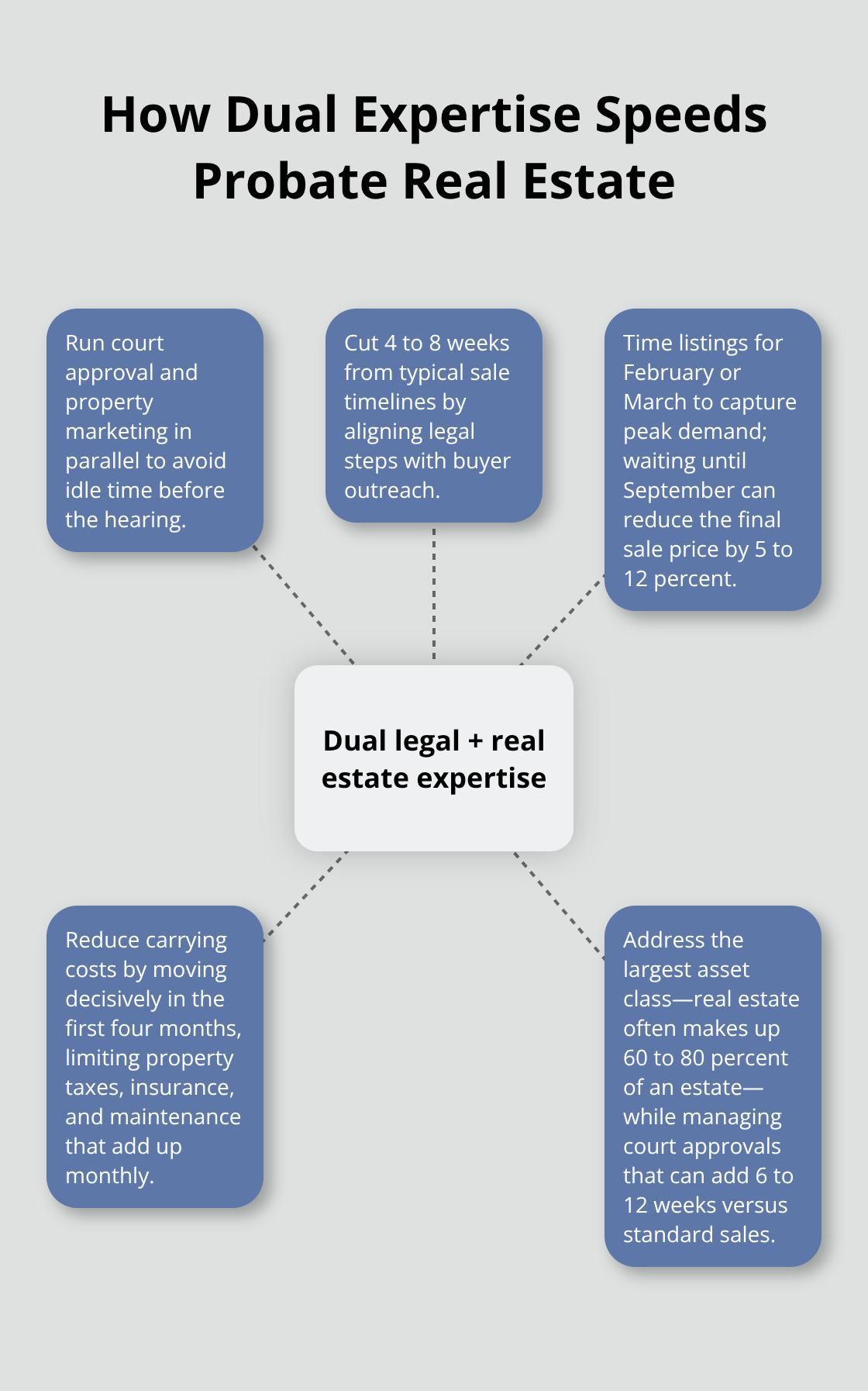
Listing in February or March positions the property to close before summer slowdown, whereas waiting until September can reduce final sale price by 5 to 12 percent on a $900,000 property-a difference worth tens of thousands. Managing property taxes, insurance, and maintenance costs that accumulate monthly on vacant estates also matters; decisive action in the first four months can save 15 to 25 percent in total probate costs.
Coordinate With Tax and Appraisal Professionals
Probate administration requires seamless communication between the court, tax professionals, creditors, and beneficiaries-a coordination burden that falls entirely on the executor without professional support. Proper workflow management prevents personal liability from rushing distributions before creditor deadlines close, missing the four-month creditor window, or failing to file the decedent’s final income tax return by April 15. Coordination with qualified probate referees for asset appraisals (costing $1,500 to $3,500) establishes cost basis and prevents IRS penalties. We at Law Offices of Roshni T. Desai provide personalized guidance through each step, with over 25 years of experience handling probate administration across Southern California. Our dual licensure as both attorney and real estate professional streamlines estate-related property sales to reduce costs and delays. Free consultations with flexible scheduling allow you to meet at your home or office, removing another barrier to getting started. Call 714-694-1200 to begin organizing your probate administration across Orange, Los Angeles, Riverside, San Bernardino, and San Diego counties.
Final Thoughts
Probate administration in SoCal demands precision, timing, and coordination across dozens of concurrent tasks that run in parallel. The 18 to 24 month timeline shrinks dramatically when you act decisively in the first 30 days: you must secure assets, open a dedicated estate account, file the petition with complete documentation, and inventory digital holdings before platforms lock accounts. Missing these early steps cascades into delays that stretch timelines, multiply costs, and drain beneficiaries emotionally, while court backlogs in Orange, Los Angeles, Riverside, San Bernardino, and San Diego counties add weeks to routine filings.
Professional support transforms this complexity into a manageable roadmap that protects you from personal liability. An attorney who understands both probate law and real estate markets navigates court approval processes while marketing properties during peak demand windows, cutting weeks from typical timelines and preserving tens of thousands in sale price. Coordination with tax professionals and qualified appraisers prevents IRS penalties and establishes cost basis correctly from the start, eliminating the reactive scrambling that costs time and money.
We at Law Offices of Roshni T. Desai bring over 25 years of experience to probate administration across Southern California, with dual licensure as both attorney and real estate professional that streamlines estate-related property sales. Free consultations with flexible scheduling allow you to meet at your home or office, and you can call 714-694-1200 to begin organizing your probate administration across Orange, Los Angeles, Riverside, San Bernardino, and San Diego counties. Visit our probate administration page to learn how personalized guidance moves your family forward.