




Ongoing Probate Administration Support You Can Trust
Probate administration involves managing assets, paying debts, and distributing what remains to beneficiaries. The process demands precision at every step, and mistakes can add months or years to the timeline.
We at Law Offices of Roshni T. Desai handle the details so executors and families don’t have to navigate this alone. This guide covers what probate actually requires, common pitfalls that delay cases, and how ongoing probate administration support makes the difference.
What Probate Administration Actually Involves
Asset Identification and Valuation
Probate administration unfolds in three interconnected phases, each requiring precision and attention to state-specific rules. The first phase focuses on asset identification and valuation. You must locate and catalog every asset the deceased owned-from bank accounts and investment portfolios to real estate, vehicles, and personal property. Courts require this inventory step, and creditors depend on it to know what funds exist to pay claims.
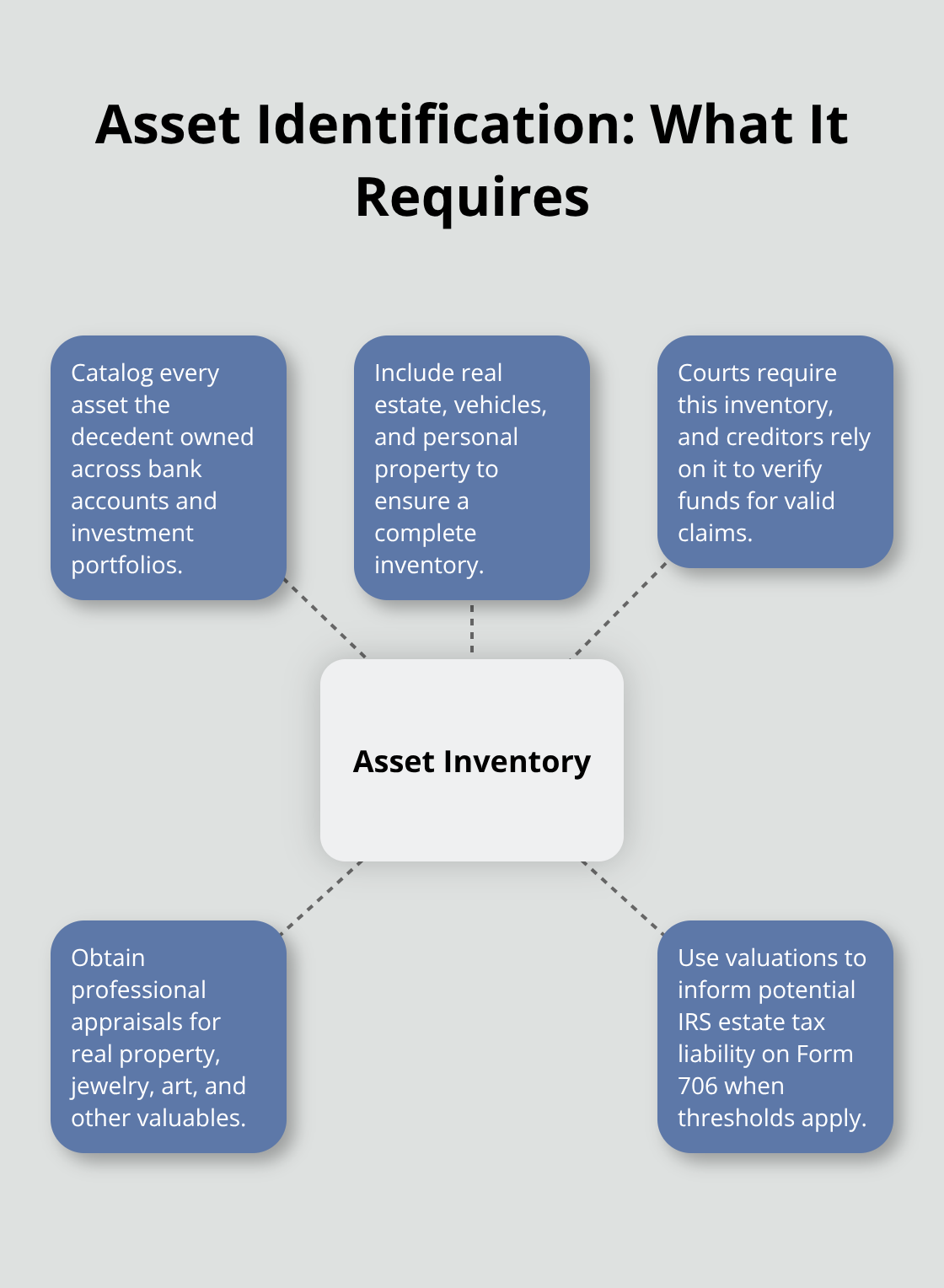
Professional appraisals are essential for real property, jewelry, art, and other valuables; the IRS uses these valuations to determine estate tax liability on Form 706 if the estate exceeds the federal threshold.
Many estates skip proper appraisals and face IRS audits later, which adds months and thousands in professional fees. You need Letters Testamentary or Letters of Administration from the probate court to access these assets and prove your authority to financial institutions and asset holders. Without these letters, banks and investment firms will not release funds or information, halting the entire process.
Managing Debts and Taxes
The second phase involves managing debts and taxes before any distribution occurs. You must verify all debts, notify creditors within state-mandated timeframes (typically 30 to 90 days after probate opens), and settle legitimate claims from estate funds. This includes filing final income tax returns for the deceased on Form 1040 or 1040-SR, and potentially an estate income tax return on Form 1041 if the estate generates more than $600 in annual income after death.
If the deceased owned a business, you must obtain a new EIN to report wages and income under the estate’s name, not the deceased’s. Your deadlines hinge directly on asset income and state probate rules, so missing filing deadlines triggers penalties and interest that reduce what beneficiaries receive. These tax obligations cannot wait-they follow strict IRS schedules regardless of how slowly other probate tasks move forward.
Distributing Assets to Beneficiaries
The final phase distributes remaining assets only after you pay all debts, taxes, and administrative expenses. This distribution must match the will’s instructions or state intestacy law if no will exists. Clear communication with beneficiaries throughout all three phases prevents disputes and shows that you have acted prudently with their inheritance.
The complexity of these three phases-especially when tax filings, creditor claims, and beneficiary expectations collide-is where most executors encounter serious problems. Common mistakes in any of these phases can derail timelines and create legal liability.
Common Probate Administration Mistakes That Delay Cases
Missing Court Filing Deadlines
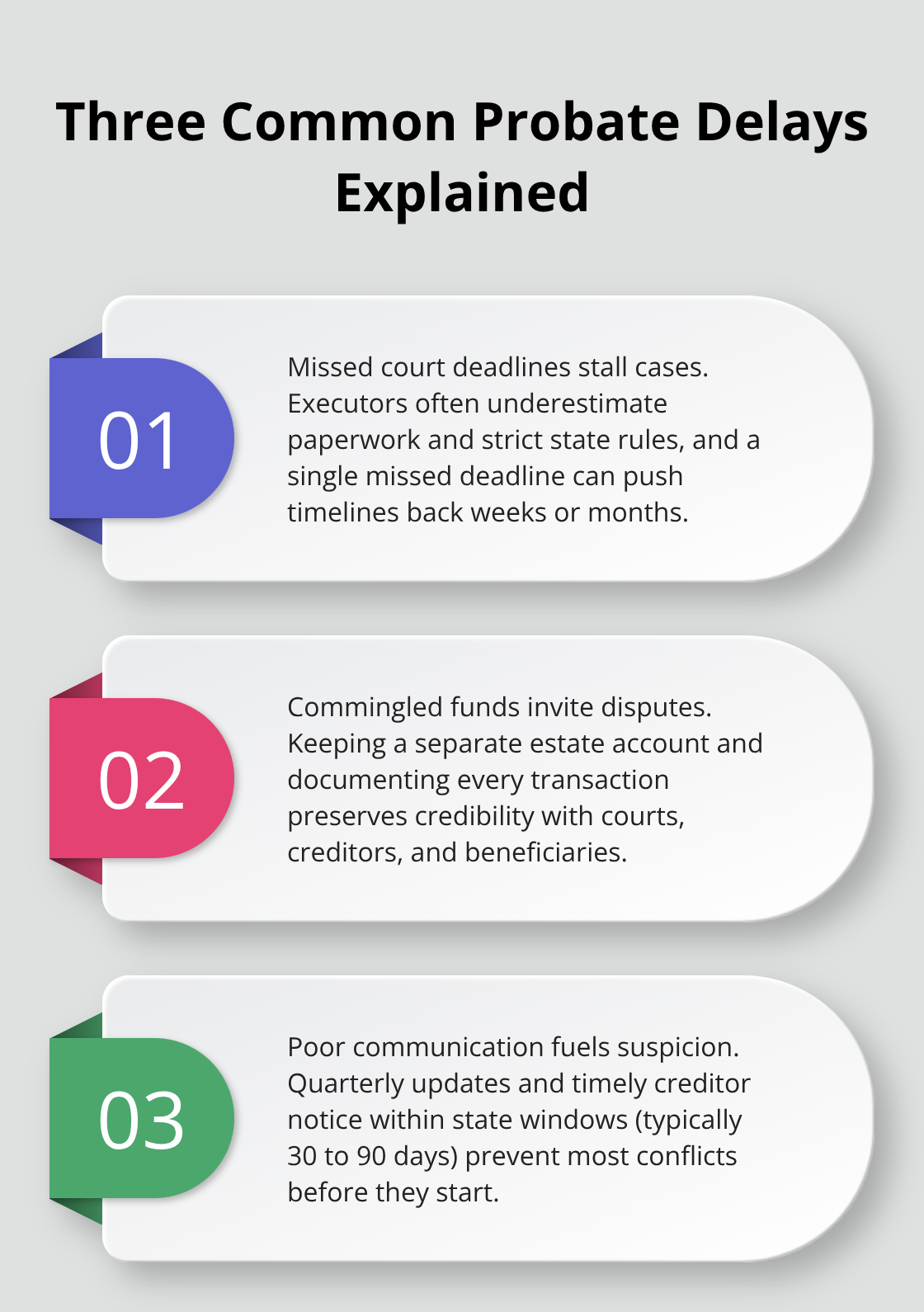
Executors frequently miss court filing deadlines because they underestimate how many documents probate requires and how tightly state rules govern submission dates. North Carolina probate filings demand specific forms and timely submissions to the Clerk of Superior Court, and missing even one deadline pushes your case back weeks or months. Many executors file documents late because they lack access to Letters Testamentary or Letters of Administration early enough, or they simply do not know which forms the court requires.
The IRS also imposes strict deadlines on estate tax returns and final income tax filings, and delays here create penalties and interest that reduce what beneficiaries ultimately receive. Executors who attempt to handle probate without professional guidance often scramble to catch up after missed deadlines, and correcting errors costs far more than getting it right from the start.
Commingling Estate Funds Destroys Credibility
Mixing personal money with estate funds ranks among the costliest mistakes an executor can make. Once you commingle accounts, courts and beneficiaries question whether you properly tracked which funds belonged to the estate and which were yours, and this immediately invites disputes and potential legal claims. Creditors also scrutinize commingled accounts because they cannot verify that the estate actually had sufficient funds to pay claims. Keeping a separate estate bank account from day one eliminates this problem entirely. You must document every deposit and withdrawal, maintain receipts, and provide a clear accounting to the probate court and beneficiaries. Without this paper trail, you may face surcharge claims where beneficiaries or the court demand you personally repay money they believe you mishandled.
Poor Communication Triggers Disputes and Litigation
Beneficiaries and creditors who receive no updates about estate progress become suspicious and often hire attorneys to investigate, which transforms a straightforward administration into a contested case. State law actually requires you to keep beneficiaries informed of the estate’s status, and failure to do so gives them legal grounds to challenge your actions. Many executors delay communication because they assume beneficiaries do not need details until final distribution, but this silence creates anxiety and resentment. Quarterly written updates explaining what assets you have identified, what debts you are paying, and what tax filings you have completed cost very little yet prevent most disputes. Creditors also need timely notice of the probate opening so they can file claims within the state-mandated window (typically 30 to 90 days after probate opens). Missing this notification deadline can bar creditors from collecting, which beneficiaries later resent if they learn you failed to properly notify someone who had legitimate claims.
How Professional Support Prevents These Pitfalls
These three categories of mistakes-missed deadlines, commingled funds, and poor communication-account for the vast majority of probate delays and disputes. Each mistake stems from the same root cause: executors lack the systems and knowledge to manage probate’s overlapping requirements. We at Law Offices of Roshni T. Desai handle these details so executors can focus on their families rather than court forms and tax deadlines. The next section shows exactly how ongoing probate administration support prevents these pitfalls and keeps cases moving forward.
How We Streamline Probate Administration
Probate administration succeeds when someone handles court filings on schedule, keeps all parties informed, and addresses problems before they become disputes. Court filing deadlines in North Carolina probate follow strict sequences-Letters Testamentary or Letters of Administration must arrive before asset transfers, inventory forms precede tax filings, and final accountings close the case only after all debts and taxes are settled. Missing even one deadline pushes timelines back weeks, and attempting to correct late filings costs thousands in professional fees.
Tracking Deadlines and Court Requirements
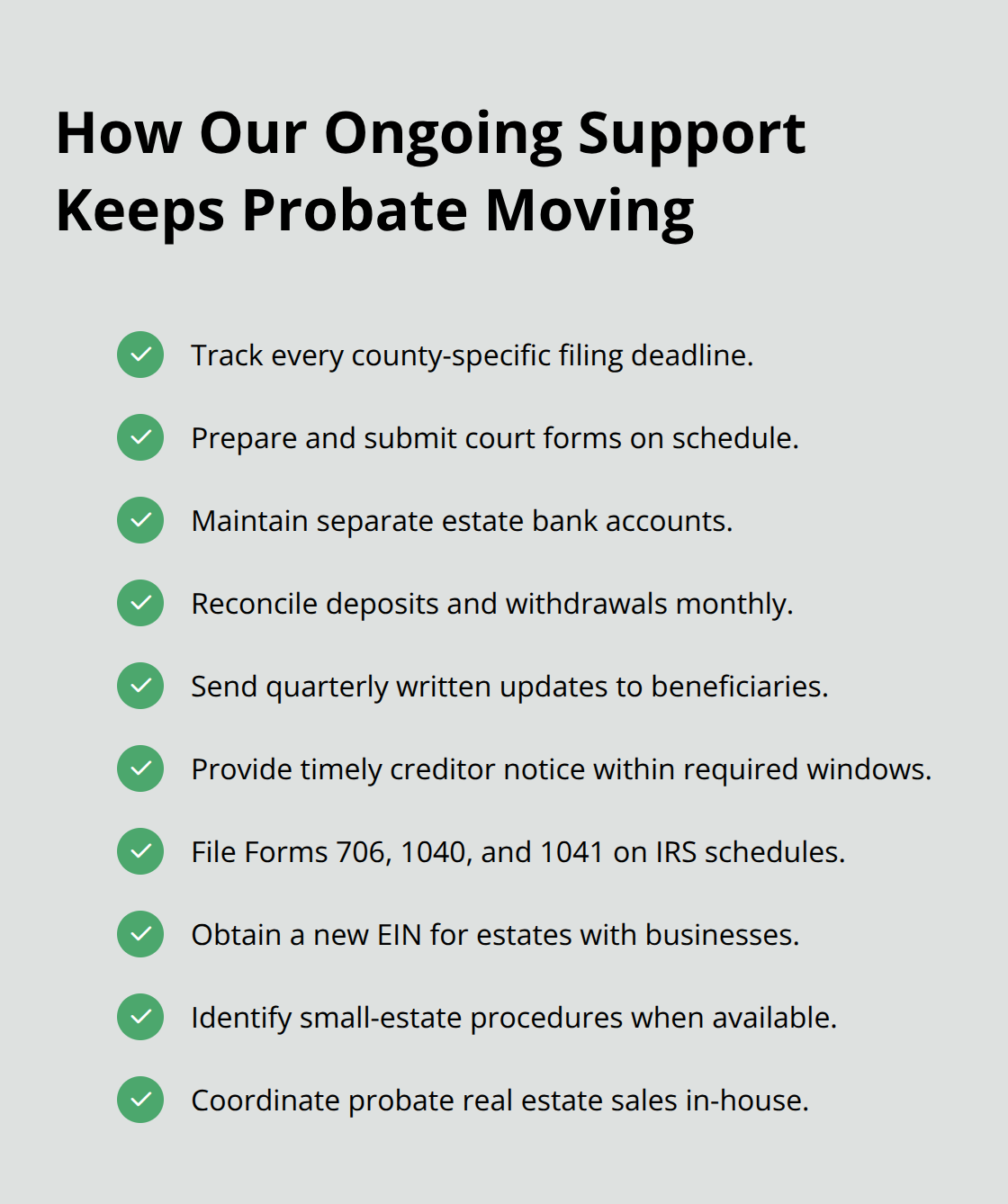
We at Law Offices of Roshni T. Desai track every filing requirement specific to your county clerk’s office, prepare documents well before deadlines, and submit them on time without exception. This prevents the cascade of delays that forces executors to scramble and beneficiaries to wait months longer than necessary. Each county maintains its own procedural rules, and our familiarity with local requirements eliminates the guesswork that trips up executors handling probate alone.
Maintaining Clean Financial Records
Separate estate bank accounts prevent commingling, and we reconcile every deposit and withdrawal monthly so your accounting remains audit-proof from day one. Once you mix personal money with estate funds, courts and beneficiaries question whether you properly tracked which funds belonged to the estate, and this immediately invites disputes and potential legal claims. Clean records demonstrate that you acted prudently with the inheritance.
Communicating Transparently with All Parties
Quarterly written updates to executors and beneficiaries explain exactly which assets we have identified, which debts we have paid, and which tax returns we have filed. These updates eliminate the silence that triggers suspicion and litigation, and they demonstrate that the estate moves forward deliberately and transparently. Creditors receive formal notice within the state-mandated window, and we track their claims to confirm they are legitimate before payment.
Resolving Disputes Before They Escalate
When disputes arise-whether a beneficiary questions an expense, a creditor challenges a claim, or the IRS raises questions about valuations-we address these issues immediately rather than letting them fester into contested litigation. Estate tax returns on Form 706 and income tax filings on Forms 1040 and 1041 follow IRS deadlines, not probate timelines, so we file these on their own schedules to avoid penalties and interest that reduce what beneficiaries ultimately receive. If the deceased owned a business, we obtain the new EIN and manage payroll and income reporting under the estate’s name to keep tax obligations clear.
Identifying Simplified Procedures When Available
North Carolina offers small estate procedures for estates under certain value thresholds, and we determine whether your case qualifies so you avoid unnecessary court involvement and expense. Our dual licensure as both attorney and real estate professional means we handle property sales within probate without coordinating between separate professionals, which reduces costs and eliminates communication delays. This systematic approach-court filings on schedule, clear communication throughout, separate accounting, and proactive dispute resolution-transforms probate from a chaotic scramble into a managed process that moves forward predictably.
Final Thoughts
Probate administration demands meticulous attention to detail and strict adherence to legal requirements at every stage. Missing a single deadline, commingling funds, or failing to communicate with beneficiaries adds months to the process and creates disputes that cost thousands in additional legal fees. State laws vary by county, IRS deadlines follow their own schedules, and creditor notification windows close whether you are ready or not.
Professional guidance transforms probate from a stressful scramble into a predictable, managed process. Ongoing probate administration support handles court filings on time, maintains clean financial records, communicates transparently with all parties, and resolves disputes before they escalate into litigation. This systematic approach eliminates the delays and mistakes that plague self-managed estates and protects what beneficiaries ultimately receive.
If you are serving as an executor or facing probate administration, contact Law Offices of Roshni T. Desai to learn how we can support your family’s inheritance and keep your case moving forward on schedule.