




SoCal Probate Attorney Services: What They Include
Handling a loved one’s estate involves far more than filing paperwork with the court. At Law Offices of Roshni T. Desai, we know that SoCal probate attorney services need to cover everything from asset management to property sales to tax obligations.
This guide walks through the full range of services that streamline the probate process and protect your family’s interests.
What Probate Administration Actually Requires
Opening the Estate and Appointing a Representative
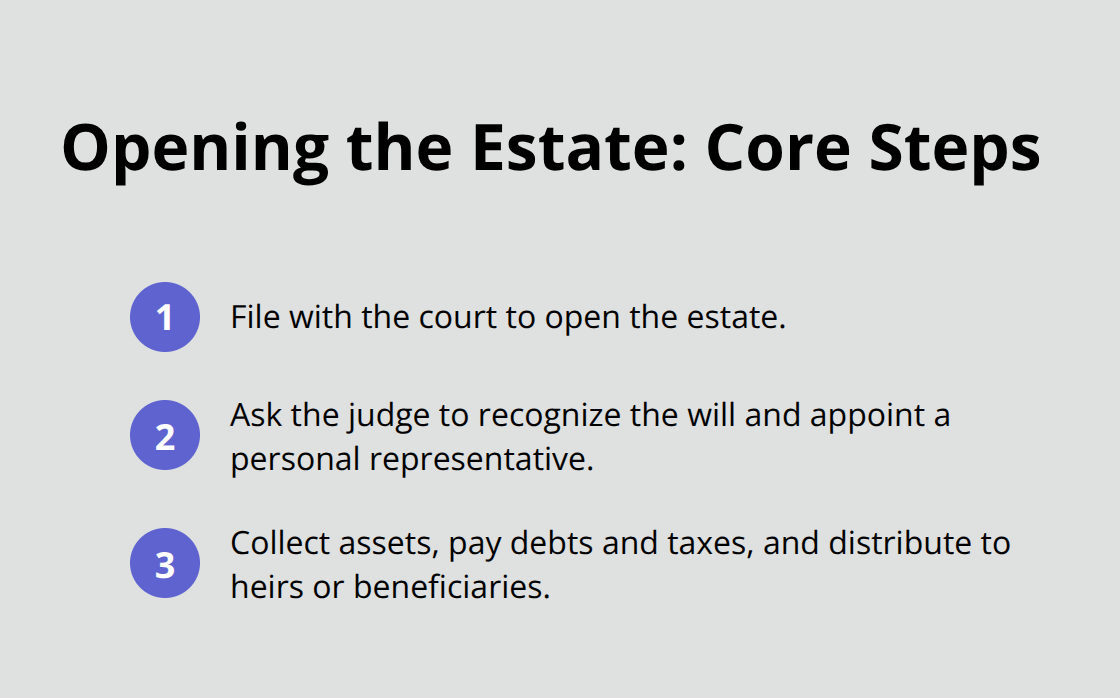
Probate administration starts the moment you file paperwork with the court to open the estate and appoint a personal representative. According to the California Courts Self Help Guide, this filing asks a judge to formally recognize the deceased’s will (if one exists) and authorize someone to manage the estate. The personal representative then collects all property owned at death, pays debts and taxes, and distributes remaining assets to heirs or beneficiaries.
Court filings demand precision-most probate documents must be verified, meaning sworn or affirmed to be true under penalty of perjury, using Form MC-030 or similar verification statements. A single error in filing dates, property descriptions, or procedural steps delays the entire process by months.
Identifying Assets and Determining Their Value
Asset inventory and property appraisal reveal why many families struggle without professional help. You must identify everything the deceased owned-real estate, bank accounts, retirement accounts, vehicles, business interests, valuable collections-and determine its fair market value as of the date of death.
Real estate typically requires a formal appraisal, which costs $300–$600 per property but is legally necessary for probate court. Bank and investment accounts need statements from the date of death forward. Life insurance policies must be located and beneficiary designations verified. This inventory becomes the official accounting submitted to the court, so accuracy matters enormously.
Managing Debts and Tax Obligations
Debt settlement and tax filing represent the final major component, and this is where costs spiral if overlooked. The personal representative must identify all debts (mortgages, credit cards, medical bills, utilities) and file a notice with creditors giving them a deadline to claim against the estate. California law allows creditors four months from the first publication of notice to file claims.
Income taxes are due on the final return of the deceased, and if the estate itself generates income during administration, an estate income tax return must be filed annually. For estates larger than $12.92 million in 2023 (the federal threshold), federal estate taxes apply, requiring specialized calculation and planning. Families often miss filing deadlines, fail to properly notify creditors, or overlook tax obligations that later create penalties and interest.
The probate process typically takes nine months to two years depending on estate complexity and whether disputes arise. Proper administration from the start compresses that timeline significantly. Beyond these core probate tasks, many families also need guidance on protecting assets and planning for the future-which is where estate planning services become equally important.
Estate Planning Tools That Prevent Probate
Living Trusts Eliminate Court Involvement
Probate administration handles what happens after death, but smart families don’t wait until probate becomes necessary. Estate planning tools created while you’re alive prevent probate entirely or dramatically shrink its scope, saving thousands in court costs and months of delay. A basic will alone leaves your family exposed to probate court, public disclosure of your assets, and a nine-month to two-year administrative process.
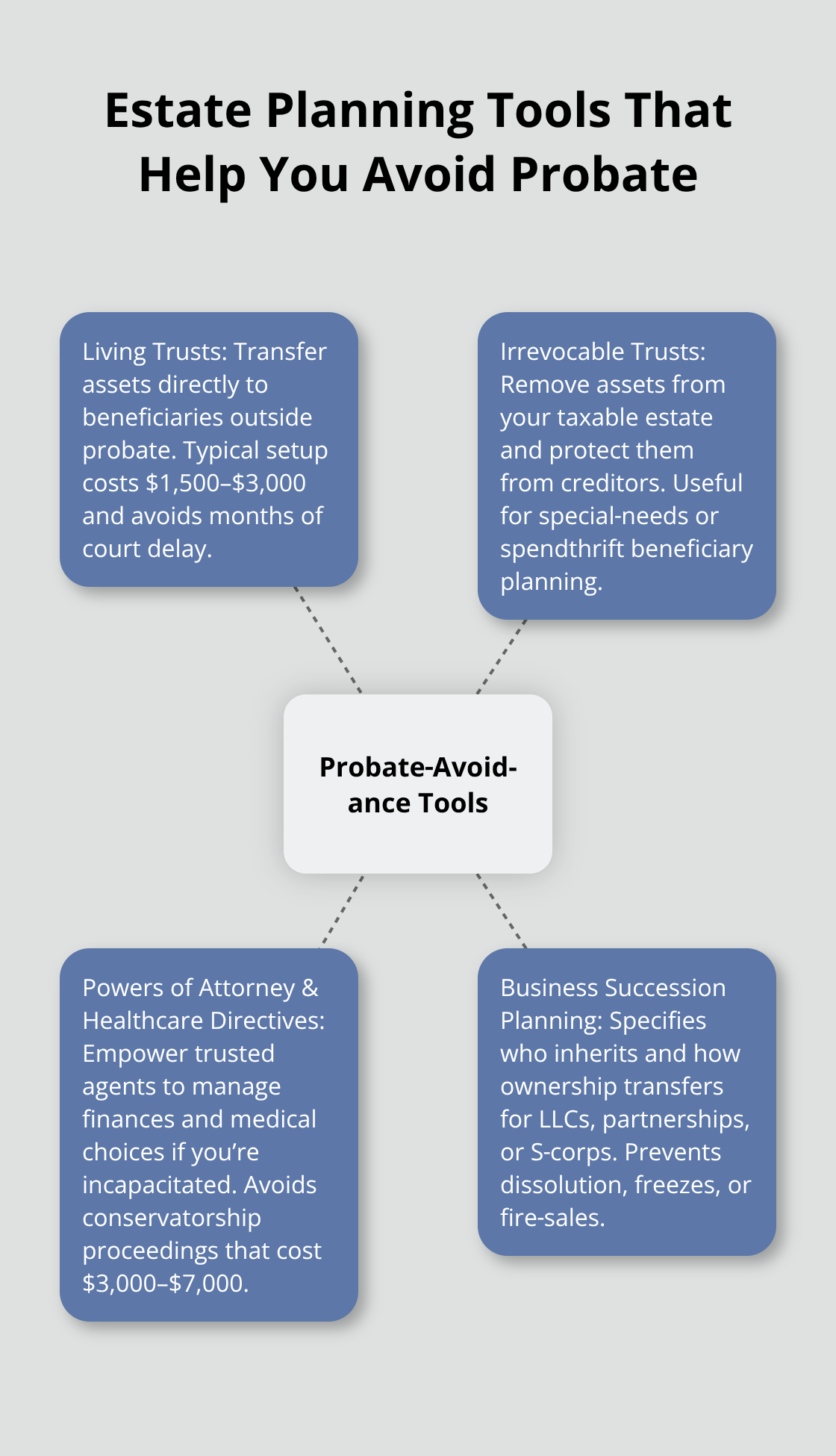
Living trusts sidestep this entirely. When you fund a living trust with your real estate, bank accounts, and investment assets during your lifetime, those assets transfer directly to beneficiaries outside probate upon death-no court involvement, no public record, no delays. The cost to establish a living trust typically ranges from $1,500 to $3,000 depending on complexity, compared to probate costs that can reach $33,000 to $66,000 for a $2,000,000 estate according to California’s statutory fee schedule under Probate Code sections 10800–10810.
Irrevocable Trusts Protect Assets and Control Distribution
Irrevocable trusts serve different purposes than living trusts. They remove assets from your taxable estate for federal tax planning, protect assets from creditors, and control how beneficiaries receive money. This structure works especially well for adult children who struggle with finances or beneficiaries with special needs.
Once you fund an irrevocable trust, you cannot change or revoke it, which is why this tool requires careful planning. The tradeoff-permanent loss of control-yields significant tax and creditor protection benefits that living trusts cannot provide.
Powers of Attorney and Healthcare Directives Address Incapacity
Powers of attorney and healthcare directives address a gap most people overlook-what happens if you’re alive but incapacitated. A durable financial power of attorney lets someone manage your bank accounts, investments, and property sales without court intervention if you become unable to act. A healthcare directive (also called an advance directive) specifies who makes medical decisions and what life-sustaining treatment you want.
Without these documents, your family faces conservatorship proceedings that cost $3,000–$7,000 and require ongoing court oversight. These two documents cost far less to create upfront and spare your loved ones from expensive court battles during your incapacity.
Small Business Succession Planning Protects Your Legacy
Small business owners face the harshest consequences of absent planning. If you own an LLC, partnership stake, or S-corporation and die without a succession plan, your business either dissolves, gets frozen during probate, or forces a fire-sale to cover estate taxes and administration costs. A succession plan inside your trust specifies who inherits the business, how ownership transfers, and whether remaining partners have buyout rights.
The Law Offices of Roshni T. Desai combines estate planning with real estate knowledge-Ms. Desai holds both attorney and real estate professional licenses-which streamlines property-related transactions tied to trusts and succession plans. This dual background cuts unnecessary delays and communication friction that typically plague multi-party deals. When property sales or business asset transfers intersect with your estate plan, having one advisor who understands both legal and real estate dimensions prevents costly missteps.
These planning tools work best when coordinated with your overall financial picture. The next section examines how property transactions and real estate considerations fit into comprehensive probate services.
Real Estate Sales During Probate and Trust Administration
Selling estate property during probate or trust administration demands speed and precision because delays cost money. Each month a property sits on the market or waits for court approval drains the estate through property taxes, insurance, maintenance, and carrying costs. A California estate with a $500,000 property paying 0.76% in annual property tax faces roughly $3,800 in yearly tax expense alone, not counting insurance and upkeep. If probate stretches from nine months to two years, that property tax bill alone climbs to $5,700–$7,600.
Court Approval Timelines Add Months to the Process
Court approval timelines add another layer of complexity. In formal probate, selling real estate requires a probate court order, which means filing a petition, waiting for hearing dates, and obtaining judicial approval before you can even list the property. This process typically consumes three to six months before marketing begins.
Trust administration typically allows faster property sales because trusts avoid probate court entirely. The trustee can authorize a sale, coordinate with a real estate agent, and close within normal market timelines without judicial approval. Probate administration requires that petition to the court, which adds the three to six month delay. Some families attempt to bypass this by listing property before obtaining court approval, hoping to have a purchase agreement ready when the court hearing occurs. This strategy creates risk. If the court denies the sale petition or imposes conditions, you’ve already committed to a buyer and face legal liability. The correct approach is to file the petition immediately upon identifying that property sale is necessary, then coordinate marketing and buyer outreach so that offers arrive near the hearing date.
Dual Expertise Accelerates Real Estate Transactions
This compressed timeline requires legal and real estate coordination that most families cannot manage alone. We at Law Offices of Roshni T. Desai understand that real estate transactions tied to probate or trust administration need someone who speaks both legal and real estate language. Ms. Desai holds dual licensure as an attorney and real estate professional, which eliminates communication gaps that typically plague these transactions.
When your attorney also understands real estate market conditions, listing strategies, and title issues, the entire process accelerates. Many families hire a separate probate attorney and a real estate agent who don’t coordinate effectively, resulting in missed deadlines, conflicting advice on pricing, and extended holding periods. Property appraisals required for probate court filings cost $300–$600 per property, and obtaining an independent appraisal separate from a real estate market analysis creates redundant expense. A real estate professional involved from the start can often provide comparable market analysis that satisfies appraisal requirements, reducing unnecessary costs.
Title Issues and Early Problem Detection
Title issues discovered late in the sales process create expensive delays. Probate administration requires clearing all liens, resolving boundary disputes, and verifying ownership before transfer. Identifying these problems early through coordinated legal and real estate review prevents last-minute deal collapse or renegotiation.
Reducing Costs Through Coordinated Strategy
Estate property sales generate multiple expenses that compound when coordination fails. Real estate commission typically runs 5–6% of sale price on a $500,000 property, equaling $25,000–$30,000. Probate court fees and attorney fees for handling the sale petition add another $2,000–$5,000. If the property requires repairs to attract buyers, those costs come from the estate. Property taxes and insurance continue accruing throughout the holding period.
A coordinated strategy compresses the timeline, which is the single most effective cost reduction lever. Each month of delay costs roughly $300–$400 in property tax and insurance combined, plus lost buyer interest if the market turns. Getting court approval faster, marketing immediately upon approval, and closing within 30–45 days of the sale petition hearing prevents months of carrying costs.
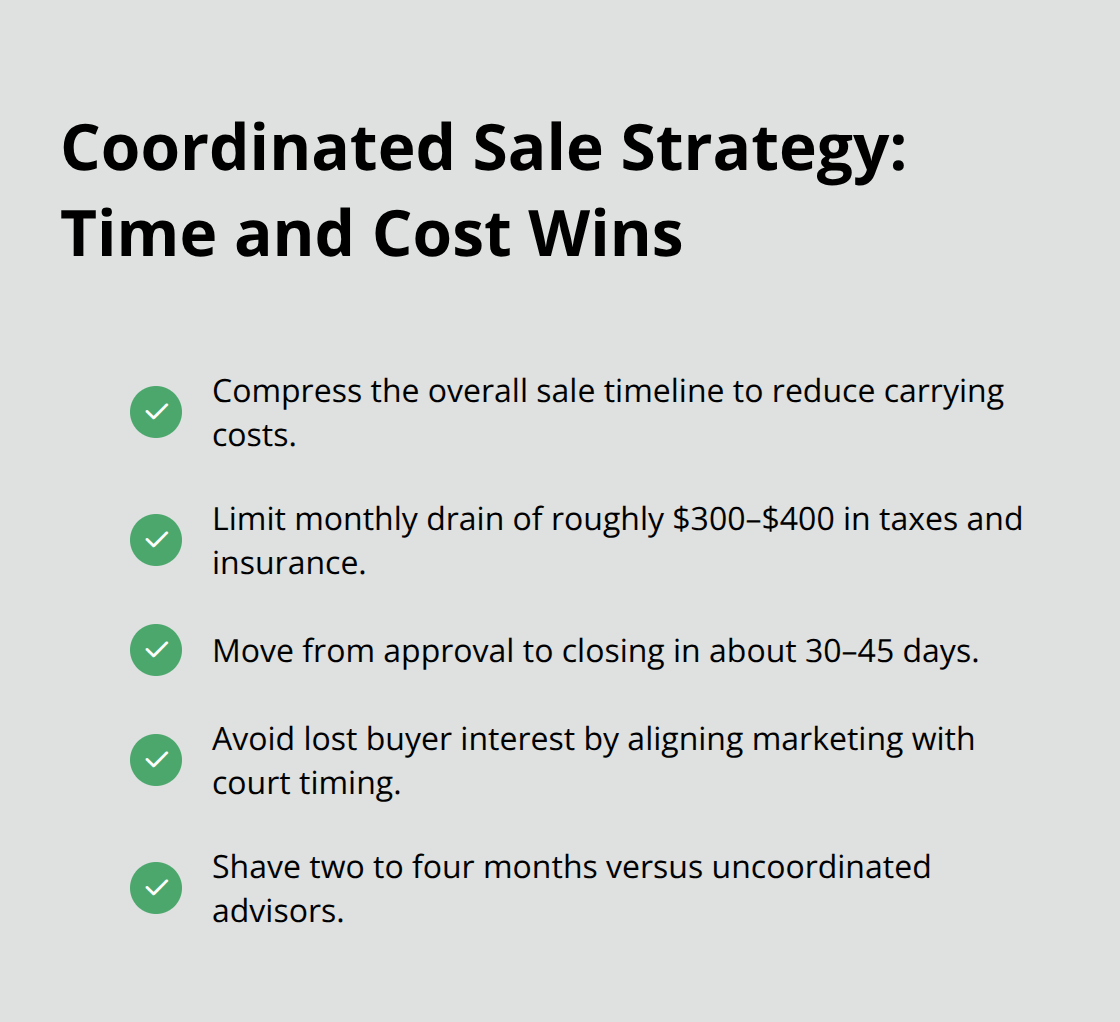
Rather than your attorney and real estate agent working independently, a single advisor who holds both credentials coordinates the petition filing, market analysis, buyer strategy, and closing logistics as one integrated process. Families consistently report that this coordination shaves two to four months off the selling timeline compared to separate advisors working in parallel.
Final Thoughts
Probate administration and estate planning involve overlapping decisions that most families cannot navigate alone. Court filings demand precision, asset inventories require accurate valuations, tax obligations carry penalties if missed, and property sales need both legal approval and market timing. When these tasks operate independently, delays compound and costs spiral.
We at Law Offices of Roshni T. Desai understand that SoCal probate attorney services work best when they integrate all these moving parts into one coherent strategy. Rather than hiring separate advisors for probate administration, estate planning, and real estate transactions, you benefit enormously from working with someone who holds both legal and real estate credentials. Ms. Desai’s dual licensure eliminates the communication gaps that typically plague multi-party deals, and her familiarity with Southern California probate courts prevents costly procedural missteps.
Contact Law Offices of Roshni T. Desai for a free consultation to discuss your specific situation. There is no obligation, and the conversation will clarify what services you actually need and what costs you can expect. Many families discover that proactive planning now prevents far larger expenses and stress later.