




Trust Administration Timeline: From Setup to Smooth Transfer
A trust administration timeline spans years, from the initial setup through final asset distribution to beneficiaries. Understanding each phase helps you avoid costly mistakes and unnecessary delays.
At Law Offices of Roshni T. Desai, we guide clients through every step of this process. This guide walks you through the key milestones and practical strategies to keep things moving smoothly.
Getting Your Trust Structure Right From the Start
Building a trust that actually works means getting the foundation solid before anything else happens. The trust document itself must meet your state’s legal requirements, which vary depending on where you live and whether you set up a revocable living trust, an irrevocable trust, or something more specialized. A revocable living trust, the most common choice, lets you maintain control during your lifetime and avoid probate after death. The document must clearly identify you as the settlor, name your successor trustee, list your beneficiaries, and spell out exactly how assets should be distributed. Vague language causes problems later, so the trust needs specific instructions about who gets what and when.
Why Professional Drafting Protects Your Goals
Many people draft their own trusts online or use templates, but this creates real risk. A poorly worded trust might not accomplish your actual goals, might not be enforceable, or might trigger probate anyway if key assets aren’t properly titled. An attorney drafts your trust to match your specific situation, especially if you own real estate, have a business, or want to provide for minor children or beneficiaries with special needs.
Funding the Trust Actually Matters
Creating the trust document is only half the work. Funding means retitling your assets in the trust’s name so they pass outside of probate. A funded trust holds real property deeds, bank accounts, investment accounts, and other valuable assets. An unfunded trust is basically worthless because assets don’t automatically transfer to it after death.
You change the title on your home or other real estate by recording a new deed with the county. Bank and investment accounts require new beneficiary designations or account registrations showing the trust as owner. If you own a business, the operating agreement or ownership certificates must reflect the trust. Insurance policies should list the trust as owner or beneficiary depending on your goals. This process takes time but prevents the need for a Heggstad petition later, which is a court process used to add assets to a trust after death and costs thousands of dollars in legal fees. Failing to fund a trust means those assets still go through probate, defeating the entire purpose of having a trust in the first place.
Documentation and Registration Create the Paper Trail
After funding, you need to handle registration and filing requirements. Some states require trusts to be registered with a court, while others don’t. California and Florida, for example, have different rules. In California, you file a notice of trust with the county clerk in the settlor’s domicile, according to California Probate Code requirements. In Florida, similar notice requirements apply in the county where the settlor lived. These filings create an official record and protect against creditor claims later.
You obtain a certification of trust, which is a shortened document that proves the trust exists and shows your trustee’s authority without revealing sensitive details like beneficiary names or asset amounts. Banks and title companies often request this certification before they work with you. Store originals of the trust document, all amendments or restatements, the certification of trust, and any personal property memorandum (which lists items like jewelry or collectibles) in a safe deposit box or with your attorney. Give copies to your successor trustee and your accountant. Good organization at this stage prevents confusion and delays when administration begins after death.
What Happens When the Settlor Passes Away
Once you have a properly drafted, fully funded, and registered trust in place, the real work of trust administration begins the moment the settlor dies. The successor trustee must act quickly to secure assets, notify beneficiaries and creditors, and start the formal administration process. The timeline from this point forward depends heavily on the complexity of the estate, the number of assets, and whether disputes arise among beneficiaries.
Running Your Trust Smoothly During Your Lifetime
A living trust only works if you actually use it during your lifetime. Many people create a trust, then never take the next step, which means the trust sits dormant while they continue operating as if it doesn’t exist. As the settlor, you remain in control of your revocable living trust, but this control comes with real responsibilities.
Taking Active Control of Your Trust
You must act as trustee or oversee your appointed trustee to ensure the trust functions as intended. This means making decisions about which assets enter the trust, when distributions happen to beneficiaries, and how to handle modifications when your circumstances change. The trustee-whether that’s you or someone else-has a legal duty to manage trust assets prudently, avoid conflicts of interest, and keep detailed records of everything.
If you name yourself as trustee, you manage your own assets for your own benefit during your lifetime, which is straightforward. But if you name someone else as trustee, that person must follow your instructions exactly and cannot use trust assets for their own purposes. Many trustees make mistakes because they don’t understand this fiduciary responsibility. They might comingle trust money with personal funds, fail to document distributions, or make investment decisions without proper authority. These mistakes create liability and trigger disputes with beneficiaries later.
The best practice is to maintain a separate trust bank account, even during your lifetime, and conduct all trust business through that account. This separation makes accounting simple and proves to future beneficiaries and creditors that you managed the trust properly.
Documenting Everything as You Go
Record-keeping during your lifetime prevents chaos after death. You should maintain a master spreadsheet listing all trust assets, account numbers, financial institution contacts, and current values updated at least annually. Document any distributions you make to beneficiaries, including the date, amount, and reason. Keep copies of deeds, account statements, insurance policies, and investment confirmations organized and accessible.
Updating Your Trust When Life Changes
If you need to modify the trust-because you acquired new property, your beneficiaries changed, or your goals shifted-work with an attorney to create a formal amendment rather than marking up the original document. Unsigned amendments or handwritten changes create confusion and may not be enforceable. Some trustees wait too long to make needed modifications, then the settlor dies with an outdated trust that doesn’t reflect their actual wishes.
Modifications become especially important if you experience major life changes like marriage, divorce, the birth of children or grandchildren, significant wealth changes, or relocation to a different state. A trust that hasn’t been reviewed or updated in ten years almost certainly needs attention. Schedule a trust review every three to five years to catch problems early and keep your trust aligned with your actual situation and goals.
Making Distributions During Your Lifetime
During your lifetime, you also have the power to make distributions to beneficiaries if your trust allows it. Some trusts authorize the trustee to distribute income or principal to beneficiaries before the settlor dies, while others prohibit distributions until after death. Whatever your trust says, follow those instructions precisely. Unauthorized distributions create personal liability for the trustee and may result in beneficiaries suing to recover funds.
When the settlor passes away, the successor trustee must shift into a completely different mode. The trust transitions from a planning tool you controlled during your lifetime into an administration vehicle that requires strict compliance with state law, tax obligations, and beneficiary notification requirements. The timeline from this point forward depends heavily on the complexity of the estate, the number of assets, and whether disputes arise among beneficiaries.
What Happens in the First 60 Days After Death
The successor trustee must act fast. California Probate Code Section 16061.7 requires trustees to notify all qualified beneficiaries within 60 days of the settlor’s death, and Florida Statute 736.0813 imposes the same deadline. Missing this window creates legal exposure and signals to beneficiaries that you lack organization. Start by obtaining 10 to 15 certified copies of the death certificate immediately-banks, insurance companies, and government agencies all demand originals, and delays multiply when you scramble for copies weeks later.
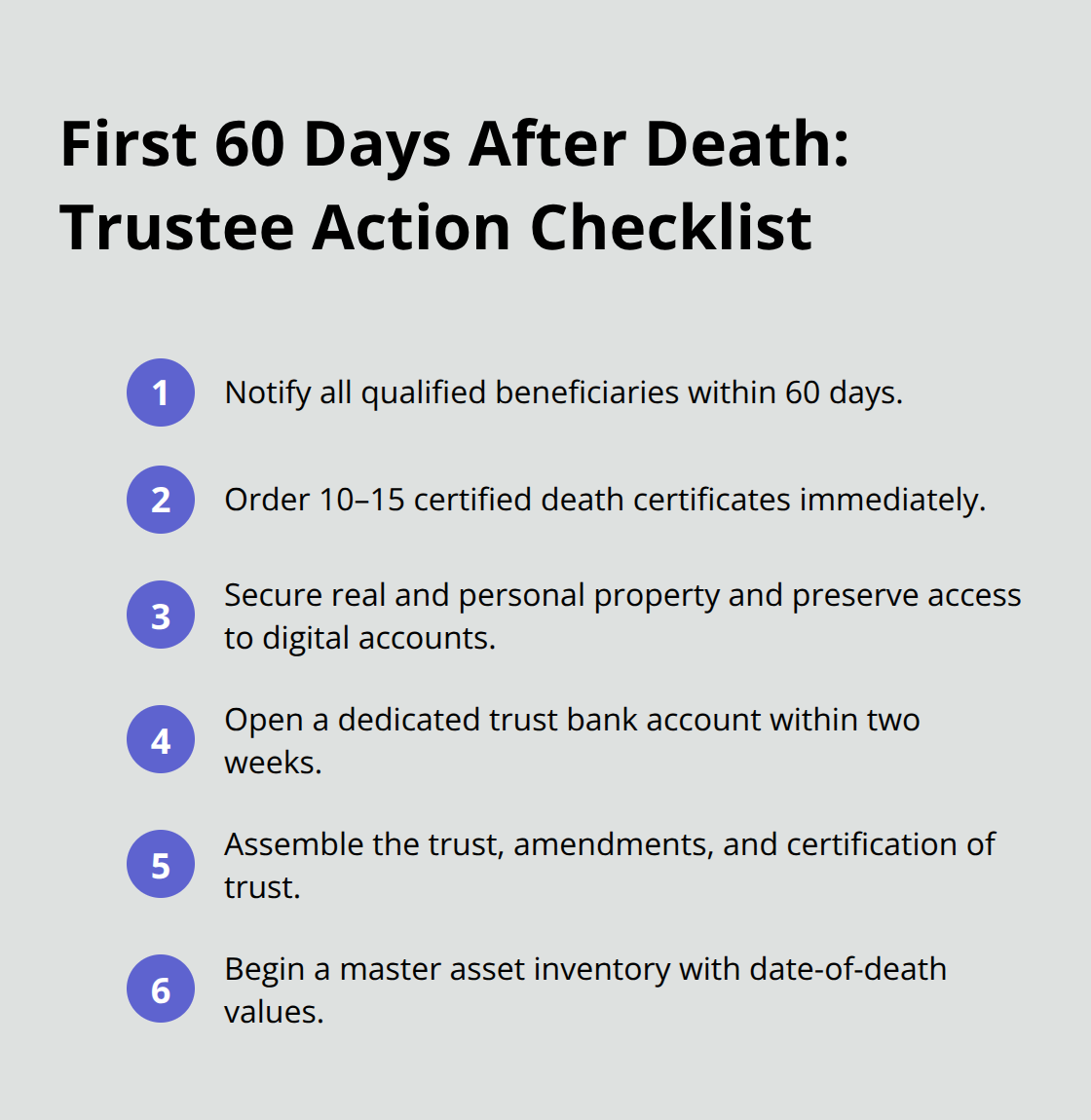
Simultaneously, locate the original trust document, any amendments or restatements, and the certification of trust. Secure all physical assets: change locks on real property, locate vehicle titles, safeguard jewelry and collectibles, and preserve access to digital accounts and passwords. Open a dedicated trust bank account within the first two weeks and transfer liquid assets into it to keep trust funds separate from personal money. This separation protects you from liability and makes accounting transparent to beneficiaries later.
Filing Notices and Establishing Professional Guidance
Within 30 days, file a notice of trust with the county clerk in the settlor’s domicile-in California, this follows Probate Code Section 16061.8 requirements, and in Florida, similar filing rules apply depending on the county. The notice creates an official record and starts the clock on creditor claims. Schedule a trust administration consultation with an attorney within the first two weeks to establish a clear action plan and avoid costly mistakes. Many trustees skip this step, then spend months untangling problems that professional guidance would have prevented.
Notifying Beneficiaries and Inventorying Assets
The next 30 days focus on notifications and asset inventory. Send the required 60-day beneficiary notice that includes your name and address as trustee, the principal administration address, the fact that beneficiaries have the right to request a copy of the trust, and in California, the 120-day contest window under Probate Code Section 16061.8. Use certified mail or secure email with read receipts to prove timely service-if a beneficiary claims they never received notice, documentation protects you. Simultaneously, create a detailed master spreadsheet listing every trust asset, account numbers, financial institution contacts, and date-of-death values. This inventory becomes the foundation for tax returns, accountings, and distributions.
Contacting Financial Institutions and Identifying Unfunded Assets
Contact all banks, investment firms, insurance companies, and title companies to notify them of the death and request account statements as of the date of death. Identify which assets were funded into the trust and which were not-unfunded assets might require a Heggstad petition (a court process to add assets to the trust post-mortem) or separate probate proceedings, both of which add months and thousands in legal fees. Obtain a federal Employer Identification Number (EIN) for the trust from the IRS if one doesn’t already exist, then use that EIN to open the trust bank account and file fiduciary tax returns later.
Protecting Yourself From Creditor Claims
Do not rush distributions. Waiting at least six months protects you from personal liability for unknown creditor claims, since California law allows creditors up to one year from death to file claims. If you distribute assets too quickly and a creditor emerges, you become personally liable for the shortfall.
Final Thoughts
Trust administration timelines vary dramatically based on complexity, but most straightforward estates complete within 6 to 12 months. Simple trusts with minimal assets and no disputes move faster, while estates involving real property, business interests, or family conflict stretch to 18 months or longer. The key milestones remain consistent: you secure assets within days, notify beneficiaries within 60 days, inventory and value property within the first few months, pay debts and taxes by month four, and distribute remaining assets after creditor claims expire around month 12.
Common delays stem from disorganized records, missing or unfunded assets, family disputes, and slow title transfers on real estate. You prevent most delays by acting immediately after death and organizing from day one with a master spreadsheet that tracks assets and contacts. You keep beneficiaries informed throughout the process rather than leaving them in the dark, which breeds suspicion and conflict, and you avoid premature distributions before debts and taxes are settled since rushing creates personal liability for the trustee.
Working with legal counsel transforms the trust administration timeline from a source of stress into a manageable process. An attorney interprets the trust document, ensures you meet all statutory deadlines, coordinates with financial institutions and the IRS, and protects you from personal liability. We at Law Offices of Roshni T. Desai guide clients through every phase of trust administration with personalized attention and practical solutions, and we recommend you schedule a consultation within the first two weeks after death to establish a clear action plan and avoid costly mistakes that derail the entire timeline.