




Real Estate Heirs Probate: Protecting Property Interests Through Probate
Real estate heirs probate involves complex legal processes that can leave families confused and property transfers delayed for months or years. When someone passes away, their real estate doesn’t automatically transfer to heirs-it must go through probate court, where property is valued, inventoried, and eventually distributed according to the will or state law.
At Law Offices of Roshni T. Desai, we’ve seen how poor planning creates unnecessary obstacles for families trying to protect their property interests. This guide walks you through what happens to real estate during probate, common delays you’ll face, and concrete strategies to safeguard your family’s property future.
What Happens to Real Estate During Probate
Real Estate Cannot Transfer Without Court Authorization
When someone dies owning real estate solely in their name, that property cannot transfer to heirs automatically. The probate court must establish ownership, verify the property’s value, and authorize the transfer. This process protects everyone involved-beneficiaries, creditors, and the estate itself. A professional appraisal establishes fair market value for accounting and tax purposes, which becomes the basis for estate calculations and any sale decisions.
Inventory and Documentation Requirements
The personal representative (executor) collects all property information, including deeds, mortgage documents, and tax records, then files this inventory with the court. Courts require detailed documentation because real estate represents a significant asset, and accuracy prevents disputes and creditor challenges later. In Nevada, inherited houses typically end up in probate with one of two outcomes: sale during probate to cover estate debts, funeral expenses, and attorney fees, or direct transfer to heirs once the court approves the distribution. The choice between selling and transferring depends on how much the estate owes and whether heirs want to keep the property or divide its value among multiple beneficiaries. Cash from a sale is often easier to split than shared ownership of real estate, which reduces conflict over who maintains the property and pays property taxes.
Timeline Varies by Estate Complexity
The timeline varies significantly based on complexity. Summary administration in Florida, available for estates with non-exempt assets under $150,000 as of July 2026, closes in two to three months. Formal probate typically takes six to twelve months or longer, with the personal representative’s appointment taking four to six weeks alone.
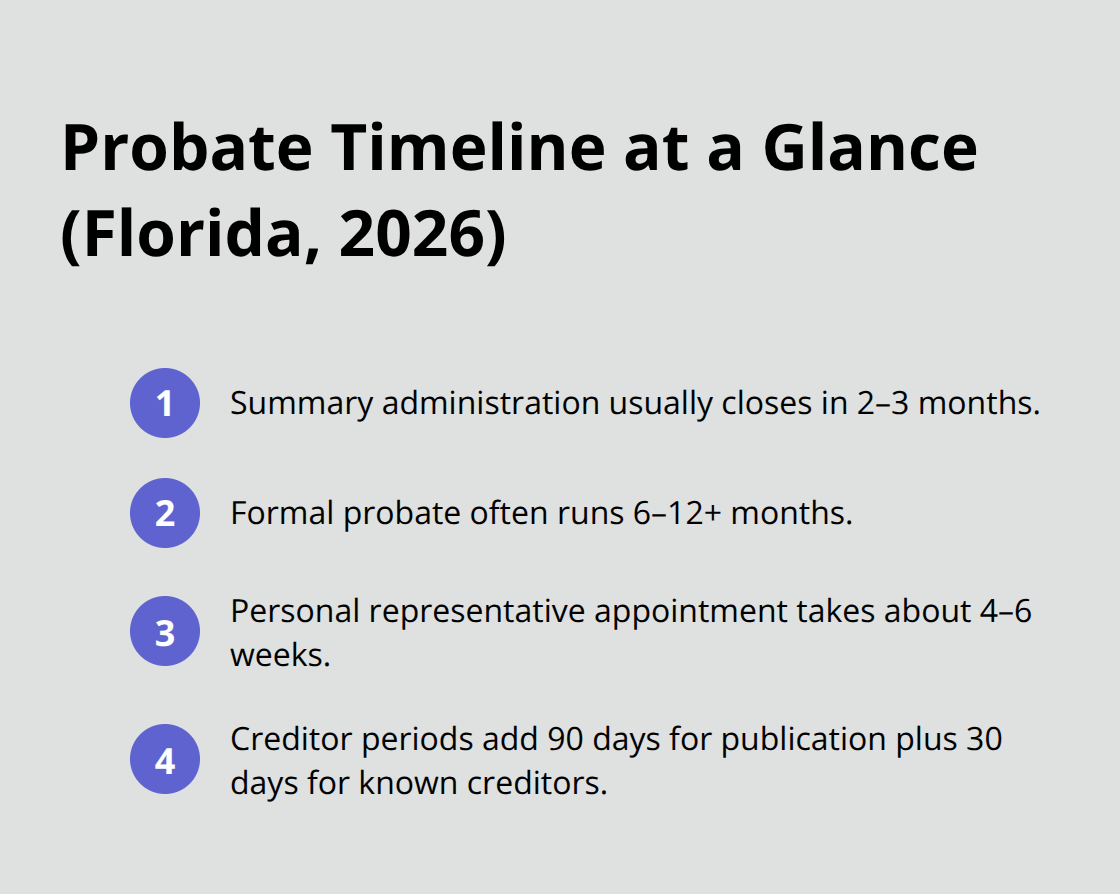
Court oversight includes verifying the will’s validity, addressing creditor claims properly, and approving any real estate sales before they proceed. In formal administration, Florida law requires a published notice to creditors with a 90-day window to file claims, plus a 30-day window for known creditors-these timelines cannot be shortened.
Court Approval and Title Transfer
Real estate transfers require court approval and proper deed documentation to establish clear ownership rights and protect title. Property condition and current market conditions also affect whether to sell during probate or keep the property; major repairs or weak markets may favor sale to avoid ongoing costs and liability. Planning ahead to remove real estate from probate through trusts or other strategies makes a real difference in reducing these delays and complications.
Understanding what happens during probate sets the stage for recognizing where problems commonly arise-and how to prevent them before they affect your family’s property interests.
Common Issues That Delay Real Estate Transfer
Missing Property Documentation Halts the Process
Missing property documentation ranks as the fastest way to derail a real estate probate. When the personal representative cannot locate original deeds, mortgage payoff statements, or property tax records, the court cannot authorize transfer or sale. Families often search through decades of paperwork, discovering that property titles were never properly recorded or that multiple deeds exist for the same parcel. Without clear documentation, appraisers cannot establish fair market value, creditors cannot verify liens, and courts cannot approve transfers.
The fix is straightforward: organize property records now. Store original deeds in a safe deposit box or fireproof safe, maintain a current list of all real estate holdings with parcel numbers and mortgage lender information, and share this inventory with your personal representative before you pass. Florida probate courts specifically require certified copies of deeds and title reports before approving any distribution, which means incomplete paperwork adds weeks or months to the timeline.
Disputes Among Heirs Create Bottlenecks
Disputes among heirs create the second major bottleneck. When multiple beneficiaries inherit real estate, disagreement over whether to sell or keep the property can halt probate entirely. One heir wants to sell immediately to pay estate debts; another wants to preserve the family home. A third heir may claim the property should have gone to them under an older will. These conflicts require court intervention and often result in forced sales at unfavorable prices or prolonged litigation that exhausts the estate budget on legal fees.
The practical solution involves advance planning: establish clear communication with potential heirs about your wishes and consider a revocable living trust to bypass probate disputes entirely.
Creditor Claims Force Real Estate Sales
Creditor claims compound this problem significantly. When the decedent owed substantial debts (medical bills, mortgages, or business obligations), Florida law requires formal notice to creditors with a 90-day filing window, plus 30 days for known creditors. If the estate lacks liquid funds to pay these claims, the court may order the real estate sold to cover debts before any heir receives their inheritance.
A $300,000 home with a $200,000 mortgage, $50,000 in medical debt, and $30,000 in estate administration costs leaves little for heirs after the sale. Ensure your estate has enough liquid assets to cover known debts without forcing real estate sales.
Strategic Planning Prevents Delays
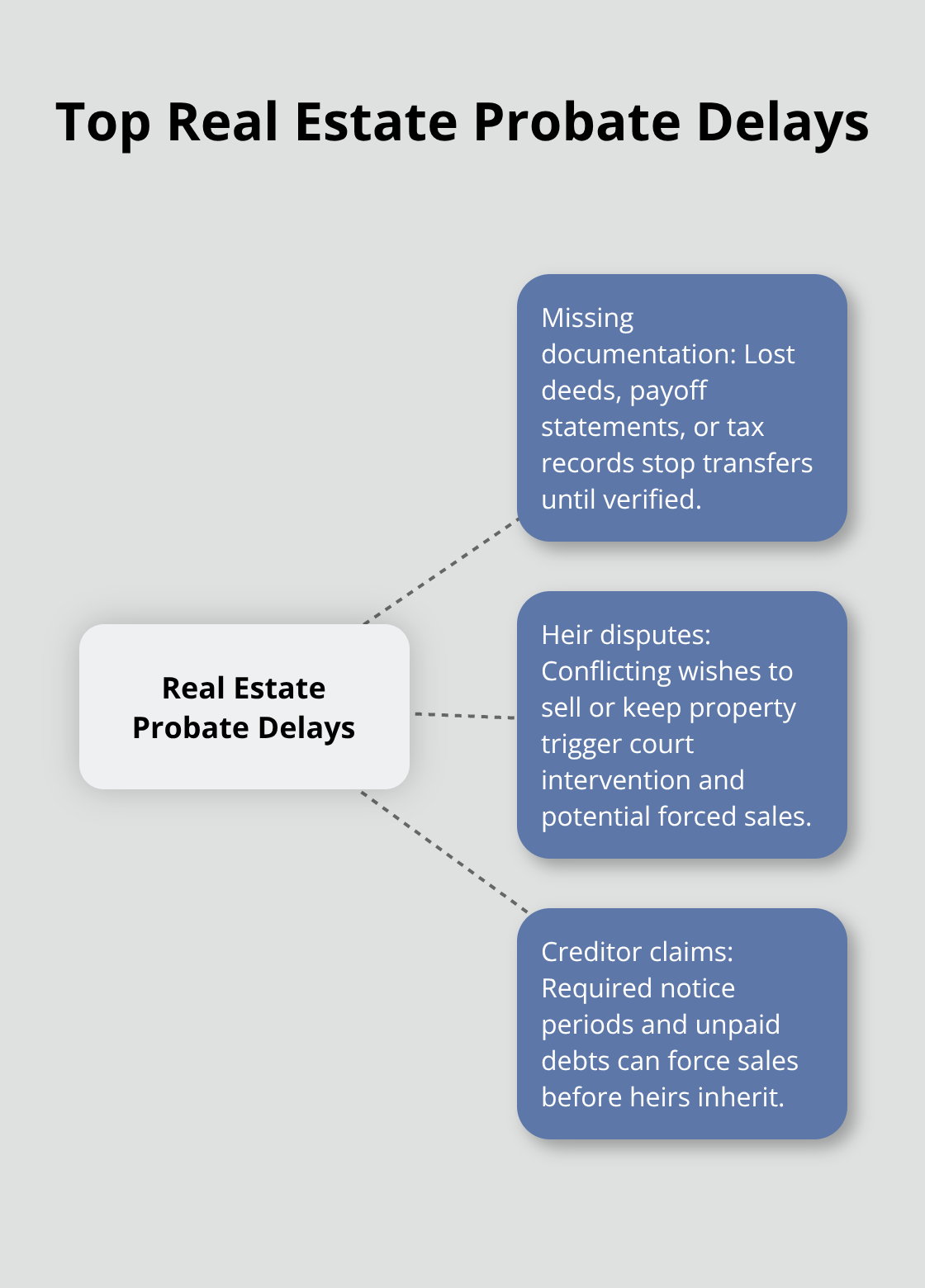
These three obstacles-missing documentation, heir disputes, and creditor claims-share a common thread: they all stem from inadequate planning. The strategies that prevent them require action before probate begins, which is why the next section focuses on concrete steps you can take now to protect your property interests and streamline the process for your heirs.
Strategies to Protect Your Property Interests
A Revocable Living Trust Keeps Real Estate Out of Probate
A revocable living trust stands as the single most effective tool to keep real estate out of probate entirely. When you transfer property into a trust during your lifetime, the trust becomes the owner, and upon your death, the property passes directly to your named beneficiaries without court intervention. This approach eliminates the inventory requirements, creditor claim periods, and court approval delays that plague traditional probate.
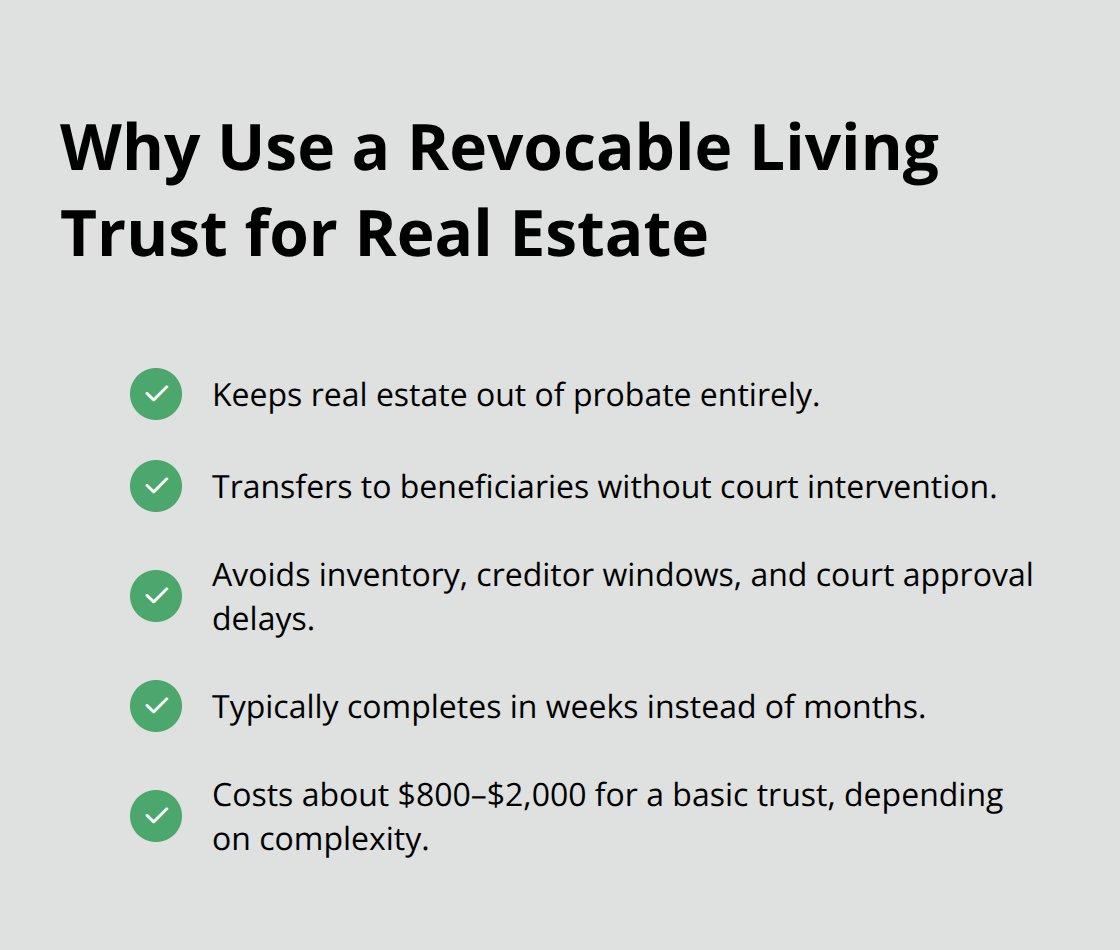
In Florida, formal probate typically runs six to twelve months or longer, but trust-based transfers complete in weeks. The cost to establish a basic revocable living trust ranges from $800 to $2,000, depending on complexity, which is far less than probate litigation or extended administration timelines.
Lady Bird Deeds Offer Affordable Homeowner Protection
Enhanced Life Estate Deeds, commonly called Lady Bird deeds, offer another direct route for homeowners. These deeds let you retain full control and use of your home during your life while automatically transferring it to named beneficiaries upon death, all while preserving homestead protections and avoiding probate. Lady Bird deeds typically cost $250 to $350 to draft and work in Florida and several other states, making them an affordable alternative to traditional probate for primary residences.
Joint Ownership With Survivorship Rights Transfers Property Automatically
Joint ownership with survivorship rights provides a third option-when property is held as tenancy by the entirety or joint tenancy with rights of survivorship, the surviving owner automatically receives full ownership upon the other owner’s death, bypassing probate entirely. However, joint ownership carries tax and creditor liability risks, so this strategy works best for spouses and requires careful coordination with your overall estate plan.
Your Will Alone Cannot Prevent Real Estate Probate
Your will alone cannot prevent probate for real estate titled solely in your name. Naming beneficiaries clearly in your will is essential for intestacy protection, but the property still requires court authorization to transfer. The real protection comes from retitling assets now-moving real estate into a trust, adding a surviving spouse as a joint owner, or using a Lady Bird deed for your home.
A Property Review Identifies Which Assets Need Protection
A comprehensive review of all property deeds and titles identifies which assets will face probate and which can transfer directly. This inventory prevents the documentation delays that halt many real estate transfers and clarifies which strategy fits each property. An attorney can review your current deed structure, assess whether your property has proper beneficiary designations or survivorship language, and draft the necessary documents to implement your chosen approach. This proactive planning takes days to complete but saves your heirs months of probate court procedures and thousands in administration costs.
Final Thoughts
Real estate heirs probate delays cost families thousands in legal fees and months of uncertainty. The strategies outlined in this guide-revocable living trusts, Lady Bird deeds, joint ownership with survivorship rights, and comprehensive property reviews-eliminate most of these obstacles before they arise. Planning ahead transforms what could be a year-long court process into a streamlined transfer that protects your heirs and preserves your property’s value.
One family spends weeks transferring property directly to beneficiaries through a trust; the other spends a year in probate court waiting for creditor claim periods to close and court approval to finalize. One family pays $2,000 upfront for trust preparation; the other pays $5,000 or more in probate administration costs. The difference shows up immediately after death, and the choice becomes clear.
Your next step is straightforward: schedule a free consultation with us to review your current property titles and deed structure. We at Law Offices of Roshni T. Desai will identify which assets face probate exposure, recommend the strategies that fit your situation, and draft the necessary documents to implement your plan. Contact Law Offices of Roshni T. Desai today to protect your real estate legacy and give your heirs the gift of clarity and simplicity.