




Probate Dispute Resolution: Finding Solutions Without Prolonged Litigation
Probate disputes often emerge when families face disagreements over wills, inheritance rights, or how an estate should be managed. These conflicts can quickly drain financial resources and damage relationships that matter most.
At Law Offices of Roshni T. Desai, we’ve seen how probate dispute resolution doesn’t always require a courtroom battle. There are practical alternatives that resolve disagreements faster and with far less expense.
What Triggers Probate Disputes
Will Interpretation and Validity Challenges
Will disputes represent the most common entry point into probate conflict. Ambiguous language in a will creates immediate tension-when a document states that property goes to grandchildren but doesn’t specify whether adopted grandchildren qualify, or when heirloom distribution instructions lack clarity, beneficiaries interpret the same words entirely differently. Courts see these cases regularly, and litigation over interpretation alone stretches timelines by months while legal fees accumulate. Testamentary capacity questions add another layer; if a beneficiary believes the deceased lacked mental clarity when signing the will, they challenge its validity outright. Undue influence claims follow similar patterns-a beneficiary convinced that someone manipulated the decedent into changing their will must prove it through evidence, depositions, and often expert testimony, all of which consume both time and money before a judge even evaluates the merits.
Blended Family Complications
Family dynamics amplify these legal questions into genuine conflicts. Blended families present the starkest scenario: adult children from a first marriage compete with a surviving spouse for assets, each believing they deserve priority. The competing interests (and the emotional weight behind them) transform straightforward legal questions into deeply personal battles. Disinheritance generates resentment that transforms into litigation-when a parent leaves their entire estate to one child while excluding others, the excluded siblings often feel compelled to challenge capacity or influence rather than accept the outcome.
Fiduciary Mismanagement and Trust Breaches
Fiduciary mismanagement complaints emerge when executors or trustees make decisions that beneficiaries view as self-serving. If an executor sells estate property to themselves at below-market value or delays distributions for years without explanation, beneficiaries question whether the fiduciary protects their interests or prioritizes their own. These situations demand documentation-account statements, correspondence, valuations-to establish whether actual wrongdoing occurred or whether beneficiaries simply distrust the fiduciary’s judgment. The emotional weight of these disputes runs deep because they involve both money and family legacy, making settlement far harder than in typical civil litigation where parties lack ongoing relationships.
These conflicts share a common thread: they pit family members against each other at a time when grief and stress already run high. Understanding what drives these disputes reveals why alternative resolution methods often succeed where litigation fails.
Beyond the Courtroom: What Actually Works
Mediation: Control Stays With Your Family
Mediation stands out as the most practical path forward when probate disputes arise. Unlike litigation, mediation keeps control in the hands of the family rather than handing it to a judge. A neutral mediator facilitates conversation between parties, helping them identify what truly matters beneath the surface disagreements. Research on probate cases shows that mediation resolves disputes at roughly one-third the cost of full litigation, with average savings exceeding $15,000 to $30,000 depending on estate complexity.
The process remains confidential, meaning family members can speak candidly without worrying their words become public court records. Timing matters significantly here-early mediation, before extensive discovery costs accumulate, often proves most effective. A retired probate judge serving as mediator brings particular value because they understand how courts would likely rule, giving both sides realistic expectations about litigation outcomes.
Preparing Your Case for Mediation Success
Preparation determines success in mediation. Assemble complete documentation beforehand: the will or trust, asset schedules, debt lists, and any medical or capacity evidence. Parties should also prepare a realistic settlement range with best-case and worst-case scenarios, which prevents unrealistic demands that derail negotiations.
The mediator’s style matters too-some families need a direct, no-nonsense approach while others respond better to empathetic facilitation. Discussing mediator preferences with opposing counsel during selection (before the process begins) produces a better fit for everyone involved.
Arbitration: A Private Judge Makes the Call
Arbitration offers a faster alternative when mediation stalls or when parties want a binding decision without court involvement. An arbitrator acts as a private judge, hearing evidence and rendering a decision that both sides must accept. Arbitration typically concludes within months rather than years, and proceedings remain private.
However, arbitration works best for disputes centered on clear financial questions or contractual interpretation rather than complex capacity or undue influence claims that require extensive evidence development. These complicated matters demand the kind of thorough examination that arbitration’s streamlined process cannot always provide.
Family Settlement Agreements: Restructure and Move Forward
Negotiated settlements deserve consideration before either mediation or arbitration begins. Sometimes direct conversation between attorneys, supported by clear documentation of assets and liabilities, produces agreement without involving a third party. Family settlement agreements formalize these negotiations, binding all heirs to a restructured distribution plan that overcomes poorly drafted wills or competing claims.
Once signed and filed with the court, a properly drafted family settlement agreement becomes binding and requires no court approval-the court lacks authority to modify it. This approach works exceptionally well in blended families where competing interests might otherwise generate years of conflict (and substantial legal fees). The major constraint is unanimous consent; if even one heir refuses, dependent administration with court oversight becomes necessary, which shifts the entire resolution strategy and timeline considerably.
Why Litigation Remains the Costliest Path Forward
The Financial Toll of Court Battles
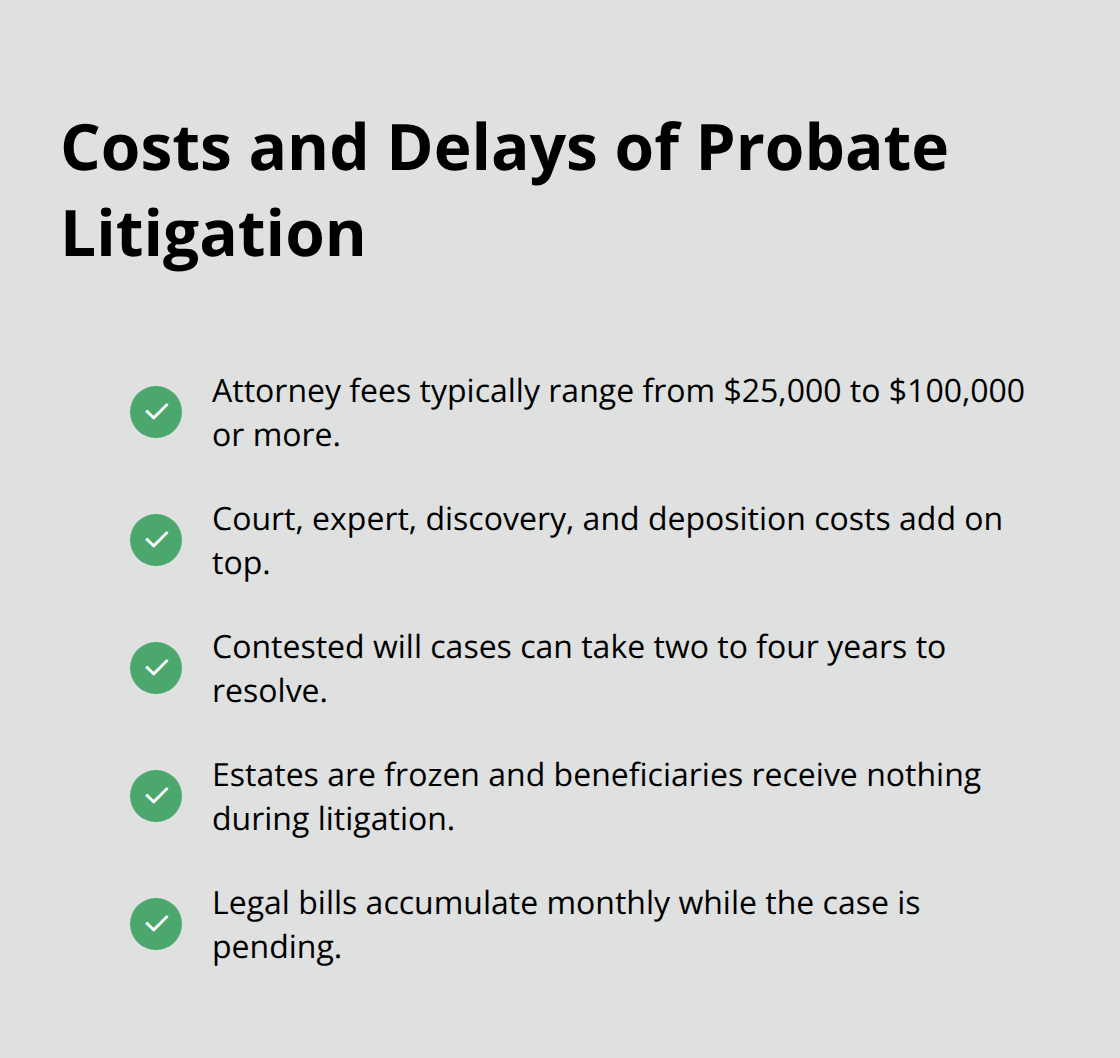
Probate litigation consumes resources at a rate that catches most families off guard. When disputes land in court, attorney fees alone typically range from $25,000 to $100,000 or more, depending on case complexity and how far the matter proceeds through trial and potential appeals. Court filing fees, expert witness costs, discovery expenses, and depositions stack on top of these base fees. A contested will case in California probate court stretches across two to four years before resolution, during which the estate remains frozen and beneficiaries receive nothing. Legal bills accumulate monthly throughout this entire period.
Beneficiary disputes that escalate to litigation cost between $15,000 and $50,000 in attorney fees alone, according to industry data.
This extended timeline creates immediate hardship for families. If the decedent left a surviving spouse or dependent children, those individuals may struggle financially while waiting for distribution. Property cannot be sold without court approval, business operations stall, and family members often drain personal savings to cover living expenses while the estate sits locked in legal limbo. Court dockets in many California counties face substantial backlogs-even straightforward probate matters experience delays of months between hearings, and contested cases face substantially longer waits.
How Litigation Transforms Family Relationships
Litigation converts family relationships into adversarial contests where each party must present the worst possible interpretation of the other’s motives and actions. Siblings become opponents. Spouses become adversaries. The process demands that family members attack one another’s character and credibility in front of a judge, creating wounds that rarely heal even after the case concludes.
The confidentiality protection that mediation provides disappears entirely in court. Probate files become public records accessible to anyone-including creditors, distant relatives, and the general public. Estate details, asset values, family conflicts, and personal information about the decedent spread across court documents that remain permanently searchable. When a will contest proceeds to trial, testimony about capacity, undue influence, or family dysfunction becomes part of the permanent public record. Many families find that the reputational damage and loss of privacy inflicts lasting harm that exceeds the financial cost of the dispute itself.
Why Alternative Paths Make Sense
Mediation, arbitration, and settlement negotiations offer pathways that preserve both finances and family bonds. These methods resolve disputes faster, cost substantially less, and maintain the privacy that families need during grief. The moment a probate dispute enters the courtroom, the path to affordable and dignified resolution becomes substantially narrower. Exploring alternatives before litigation becomes unavoidable protects your family’s future in ways that courtroom battles simply cannot match.
Final Thoughts
Probate dispute resolution outside the courtroom delivers tangible benefits that litigation cannot match. Families preserve financial resources, protect privacy, and maintain relationships that matter beyond the estate itself. Mediation costs one-third of what litigation demands, resolves disputes within months rather than years, and keeps sensitive family matters away from public court records.
Will interpretation disputes often respond well to mediation, where a neutral third party helps clarify ambiguous language. Fiduciary mismanagement claims benefit from early documentation review and direct negotiation before positions harden. Capacity and undue influence questions may demand more thorough evidence development, making mediation less effective until facts become clearer (though early intervention still produces faster and cheaper resolution across all methods).
We at Law Offices of Roshni T. Desai help you evaluate whether mediation, arbitration, or settlement negotiation fits your situation, then guide you through whichever path you choose. Contact us for a free consultation to discuss your specific circumstances and explore the probate dispute resolution strategy that protects your family’s future.