




Probate Property Coordination: Smooth Real Estate Transitions in Probate
Probate property coordination is one of the most overlooked aspects of estate administration. When legal and real estate processes operate separately, delays multiply and costs climb. We at Law Offices of Roshni T. Desai have seen estates lose significant value because properties weren’t managed strategically during probate.
This guide shows you how integrated coordination protects your estate and accelerates the sale process.
What Probate Property Coordination Actually Means
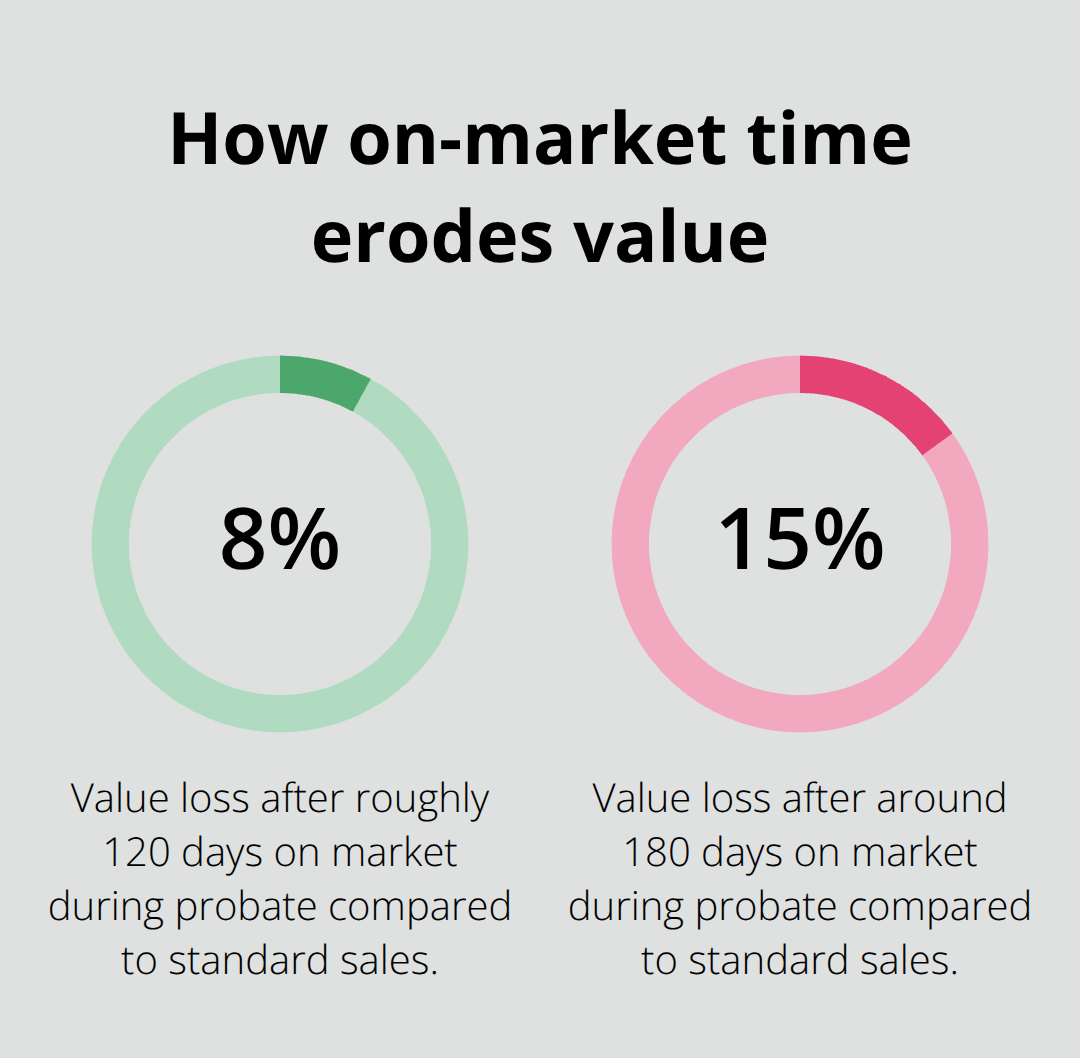
Probate property coordination integrates three separate processes that typically operate in isolation: legal probate administration, real estate valuation and marketing, and financial asset management. Without this integration, the executor handles probate paperwork while a real estate agent lists the property without understanding court deadlines, and the attorney proceeds unaware of market conditions affecting sale timing. Properties that sit on the market for 120 to 180 days during probate lose 8 to 15 percent of their value compared to standard sales, largely because coordination failures create gaps in decision-making.
Coordination means the executor and attorney communicate property condition and timeline to the real estate professional before listing, the agent informs the legal team of market feedback and offer timelines, and all parties align on when valuations occur and when the property should hit the market. This alignment prevents the scenario where an attorney files for court confirmation while the property remains under-marketed, or where a strong offer arrives but the executor lacks authority to accept it quickly.
Understanding South Carolina’s Specific Rules
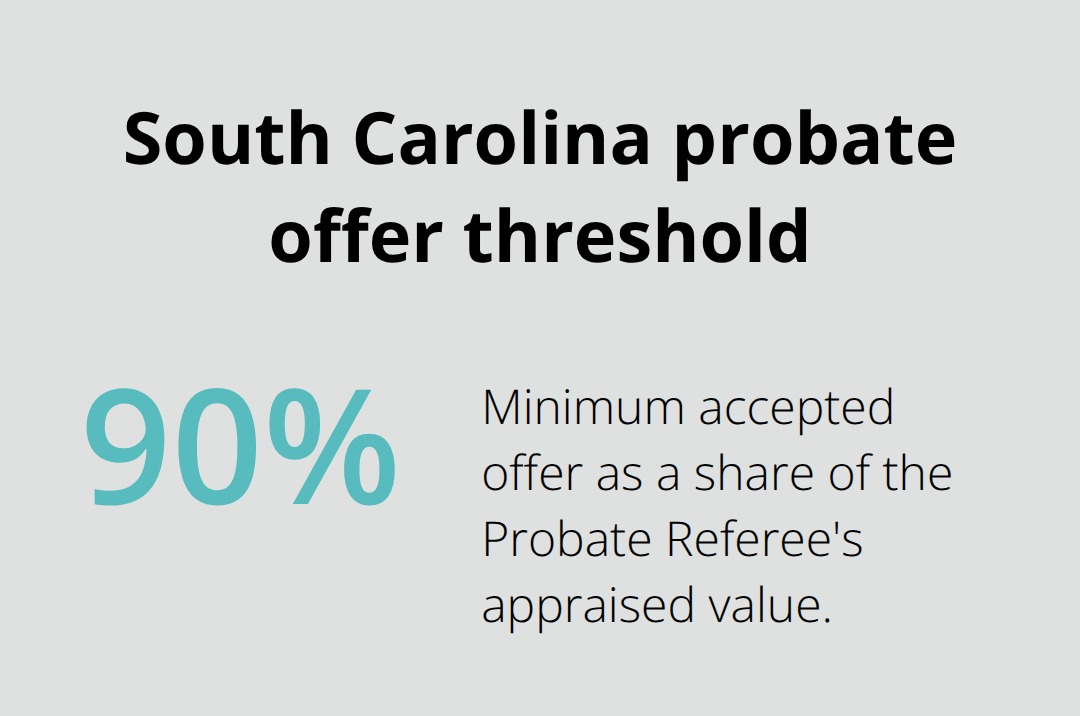
Probate property coordination also addresses the specific rules that govern these sales. In South Carolina, accepted offers must meet at least 90 percent of the Probate Referee’s appraised value, and heirs have 15 days to object after receiving notice of the proposed sale. Without coordination, an agent may accept an offer below this threshold, forcing renegotiation and losing the buyer, or the notice period passes without proper documentation, triggering publication requirements that add 30 to 45 days to the timeline.
How Delays Compound Without Coordination
Uncoordinated probate sales experience cascading delays that feed into one another. When the attorney doesn’t know the property needs significant repairs, the listing happens as-is and attracts lower offers; when the real estate professional doesn’t understand the court confirmation timeline, they stop marketing too early and miss potential overbids that could increase the final price. Estates where the executor waited six weeks to hire an agent after the property was appraised, the agent then spent four weeks preparing the listing while the attorney scheduled a court hearing, and the property went live only after market conditions had shifted and comparable sales had dropped-these situations illustrate how each delay multiplies the next.
The Real Cost of Coordination Failures
Each delay also increases holding costs: property taxes, insurance, utilities, and maintenance on a probate property typically run $300 to $800 monthly depending on location and condition. A property that should sell in 90 days but takes 180 days due to coordination failures costs the estate an additional $4,500 to $9,600 in direct expenses before any consideration of lost sale price.
Coordination failures also create legal liability. If the executor accepts an offer without proper authority or the attorney fails to disclose title issues the real estate agent discovers during inspection, disputes arise that require additional legal work and delay closing further. These complications make the next step-understanding how integrated legal and real estate credentials streamline the entire process-essential for protecting estate value.
The Role of Dual-Licensed Attorneys in Probate Real Estate
How Dual Credentials Streamline Property Sales
Attorneys who hold both legal and real estate licenses operate from a fundamentally different position than traditional probate counsel. They see the title issues, market conditions, and court timelines as one interconnected problem rather than three separate challenges handed off between professionals. This dual perspective eliminates the translation delays that plague standard probate sales.
When an attorney understands real estate valuation, they know why a Probate Referee’s appraisal might miss recent comparable sales in a shifting market, and they can advise the executor on whether to challenge an appraisal or accept it strategically. When they understand court procedures, they coordinate the Notice of Proposed Action with actual market readiness instead of filing court paperwork while the property still needs repairs and staging.
An attorney managing probate administration without real estate knowledge typically waits for the appraiser’s report, then hires an agent, then schedules the court confirmation hearing. An attorney with real estate credentials schedules the appraisal while the agent begins market analysis, prepares the property during the appraisal window, and times the court filing to align with actual market conditions. The difference in timeline reaches 30 to 45 days on many cases, which translates directly to lower holding costs.
Eliminating Communication Gaps Between Teams
Communication gaps between legal and real estate teams dissolve when one professional owns both responsibilities. The executor no longer manages conflicting advice from an attorney who prioritizes court compliance and an agent who prioritizes market positioning. Instead, one conversation covers both concerns.
When a buyer’s inspection reveals foundation cracks, the dual-licensed attorney-real estate professional immediately assesses whether disclosure is required under South Carolina law, whether repair costs justify rejecting the offer, and whether the Probate Referee’s appraisal already factored in the damage. A traditional setup requires the agent to contact the attorney, the attorney to review disclosure rules, and then a call back to the agent-a cycle that often takes days and causes the buyer to withdraw.
Reducing Costs Through Integrated Management
Cost savings follow naturally from this integration. Properties that spend 120 to 180 days on market under uncoordinated management incur significant holding costs; coordinated sales that close in 75 to 90 days reduce those expenses substantially. A property with $500 monthly holding costs saves $2,000 to $2,500 just from accelerated sale timing.
Additionally, reduced communication overhead means fewer attorney hours billed for coordination calls and fewer agent hours spent clarifying legal requirements. The real estate professional who understands probate court rules makes smarter decisions about pricing and overbid strategy without needing attorney guidance on every market move. This efficiency advantage compounds across the entire transaction, from initial valuation through final closing.
Why Property Preparation Timing Matters
Properties that sit on the market for extended periods lose value. The dual-licensed approach addresses this by aligning property preparation with court timelines rather than treating them as separate events. Repairs, staging, and inspections happen while the appraisal is underway, not after court paperwork is filed. This synchronization means the property reaches the market in optimal condition at the moment when market conditions are most favorable, rather than waiting for legal processes to complete before real estate work begins.
Understanding how these integrated credentials reduce delays and costs reveals why the next step-implementing best practices for property management during probate-requires coordination across all three areas: legal authority, market readiness, and beneficiary communication.
Coordinating Valuations and Property Preparation With Court Timelines
Schedule Appraisals and Property Work in Parallel
The timing of property valuation determines everything that follows in a probate sale. Many executors order the Probate Referee’s appraisal immediately after court appointment, then wait for the report before taking any real estate action. This sequential approach wastes 30 to 45 days. Instead, schedule the appraisal while simultaneously preparing the property and gathering market data. The appraiser’s visit window provides the perfect opportunity to complete repairs, cleaning, and inspections that buyers will inevitably request later. If the appraisal happens on day 15 of your timeline and the property still needs foundation work or roof repairs, you’ve already lost negotiating leverage.
Properties appraised in move-in condition command valuations 5 to 12 percent higher than those requiring obvious repairs, according to data from the National Association of Realtors. South Carolina law requires accepted offers to reach at least 90 percent of the appraised value, so maximizing that appraisal figure directly impacts your minimum acceptable offer. The executor should order the appraisal, engage a real estate professional familiar with probate sales, and begin property preparation simultaneously. This parallel approach compresses the timeline from a typical 120 to 150 days down to 80 to 100 days, reducing holding costs by $2,000 to $4,000 on a property with $400 monthly carrying expenses.
Verify Appraisal Accuracy Against Market Conditions
Documentation matters here: obtain the appraisal report within ten days and review it for accuracy against recent comparable sales in your area. Challenge it if market conditions have shifted significantly since the appraisal date. An outdated appraisal becomes your sale floor, so accuracy directly protects estate proceeds.
Communicate Early and Often With Beneficiaries
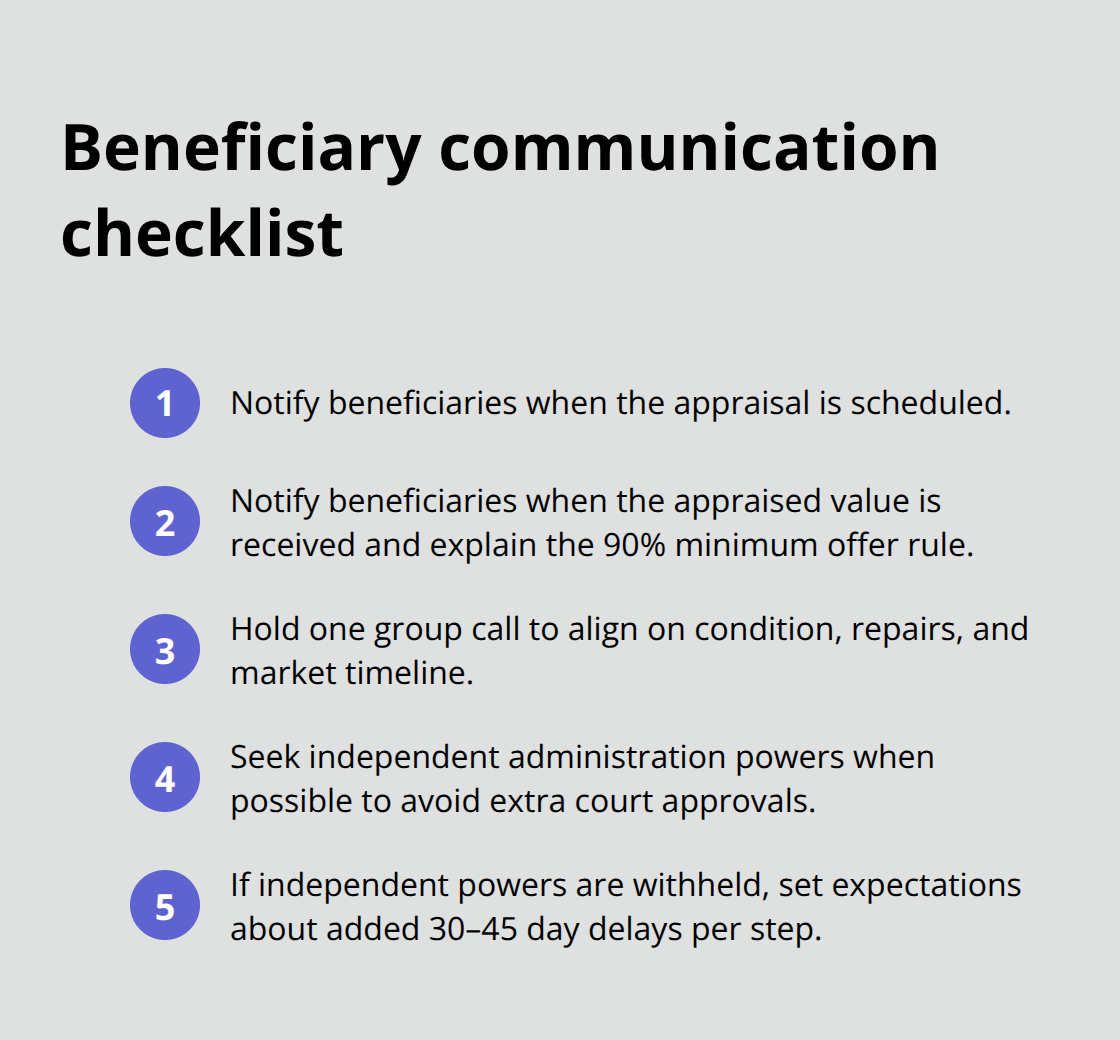
Coordinating beneficiary communication throughout this process prevents disputes that derail timelines. Notify all beneficiaries in writing when the appraisal is scheduled and again when the appraised value is received, explaining how this figure affects the minimum acceptable offer under South Carolina law.
Beneficiaries often harbor unrealistic expectations about property value, and early transparency prevents objections later when court confirmation approaches.
Schedule a single call with all beneficiaries to discuss the property condition, necessary repairs, and realistic market timeline rather than fielding individual questions that create conflicting information. The executor must have clear authority to make decisions during this phase, which means the probate court should grant independent administration powers when possible. Without independent powers, every offer requires court approval, adding 30 to 45 days per step. If the court withholds independent powers, prepare beneficiaries for this reality upfront so they understand why the process moves slower.
Establish Single-Channel Communication Between All Parties
Establish one point of contact between the executor, attorney, and real estate professional to prevent miscommunication. When the agent discovers a title issue during inspection, it reaches the attorney directly, not through the executor relaying information. When the attorney needs to understand why an offer fell through, the agent explains market conditions directly rather than through a third party. This single-channel communication reduces delays caused by information gaps and prevents the executor from receiving conflicting guidance about whether to accept an offer or hold for a higher price.
Final Thoughts
Probate property coordination transforms what typically becomes a months-long ordeal into a manageable process that protects estate value at every step. Legal timelines, market conditions, and beneficiary expectations must move together, not separately. When they operate in isolation, properties languish on the market, holding costs accumulate, and final sale prices drop below their potential.
The financial impact proves substantial. Properties managed through coordinated probate sales close 30 to 45 days faster than uncoordinated transactions, saving $2,000 to $4,000 in direct holding costs alone. Properties prepared and appraised strategically command 5 to 12 percent higher valuations, which directly increases your minimum acceptable offer under South Carolina law (these gains compound when the executor, attorney, and real estate professional operate from shared timelines and clear communication channels).
Professional coordination also prevents the legal complications that derail sales and create liability. Title issues discovered during inspection reach the attorney immediately rather than through delayed communication chains. Disclosure requirements are handled correctly the first time. Contact Law Offices of Roshni T. Desai for a free consultation to discuss how integrated probate property coordination applies to your situation.