




Trust Real Estate Coordination: Aligning Assets for Your Family
Real estate held in a trust requires careful coordination to transfer smoothly to your family. Without proper planning, property transfers can stall for months, creating unnecessary delays and expenses.
We at Law Offices of Roshni T. Desai help families align their real estate assets with their overall estate plans. This guide walks you through the steps that protect your property and simplify the process for those you leave behind.
Understanding Trust Real Estate Coordination
When someone passes away with property held in a trust, the real estate doesn’t automatically transfer to beneficiaries. A successor trustee must take control, verify the trust’s validity with the county recorder, and confirm their legal authority to act. This verification step alone takes two to four weeks in most California counties. During this time, the property sits in limbo-no one can sell it, refinance it, or make major decisions about it. If the deceased owned multiple properties across different counties, the waiting period multiplies. The successor trustee also needs to identify all liens, mortgages, and back taxes attached to the property. A single missed lien can derail a sale months later.
What Happens to Real Property During Trust Administration
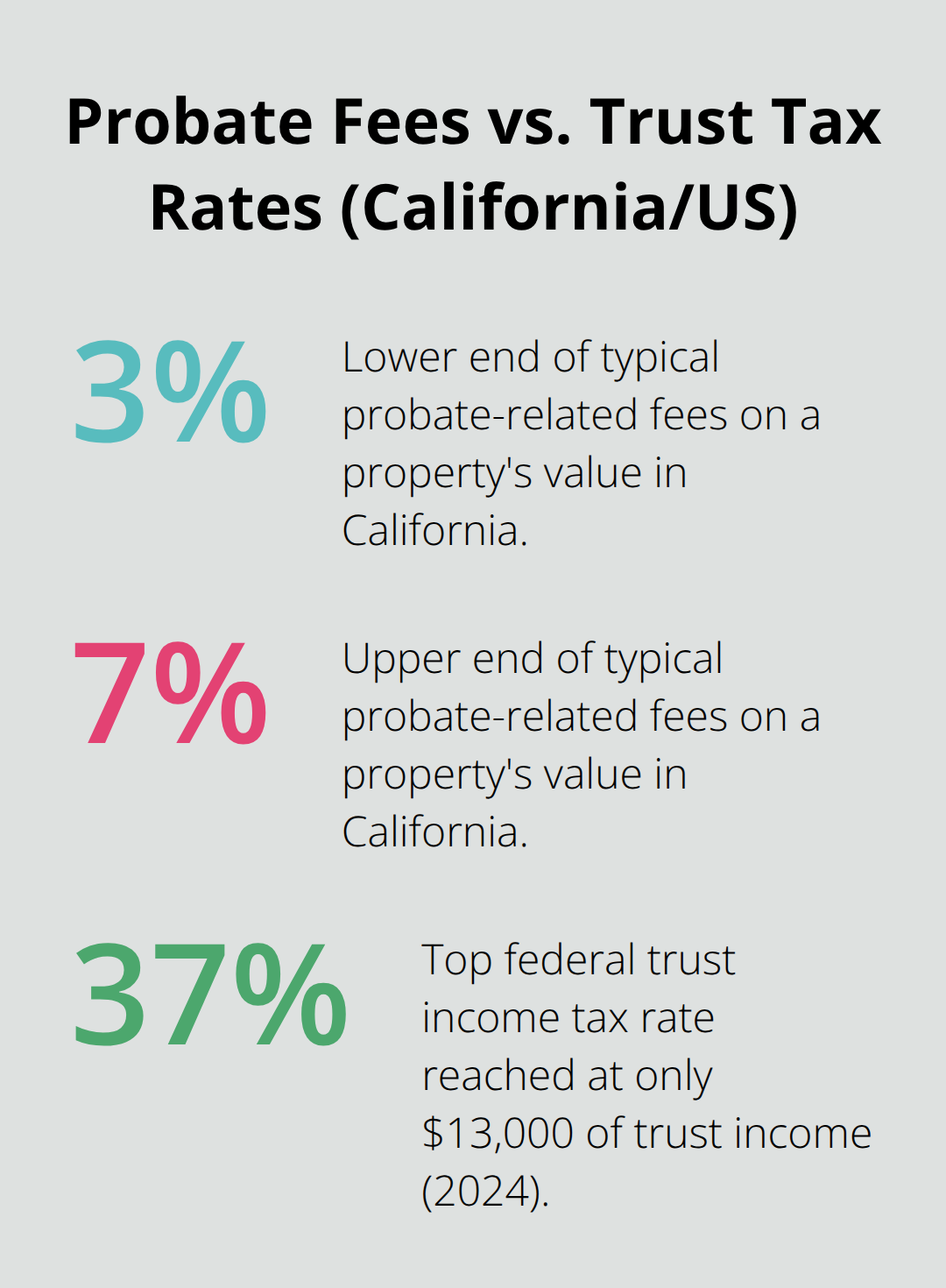
Many families discover problems only after they’ve already listed the property with an agent, wasting time and creating frustration. Properties titled incorrectly before death create severe problems. If real estate wasn’t properly transferred into the trust during the grantor’s lifetime, it must go through probate-a public, expensive process that takes nine months to two years in California. Court fees, attorney fees, and probate administration costs typically consume 3% to 7% of the property’s value. A $500,000 home could cost $15,000 to $35,000 just to transfer through probate. Probate court dates are public record, which invites creditors and distant relatives to make claims against the estate.
Common Mistakes That Delay Property Transfers
Properties with multiple owners or unclear vesting create additional complications. If a home is titled as joint tenancy but the trust should own it, the surviving joint tenant may have conflicting rights with the trust’s beneficiaries. Resolving these conflicts requires court intervention, further delaying distribution to your actual heirs. The biggest mistake families make is hiring separate professionals who don’t communicate with each other. An estate attorney drafts the trust. A probate attorney handles administration. A real estate agent lists the property. A title company processes the sale. When these parties don’t coordinate, information gaps create delays. The title company discovers a problem the attorney didn’t catch. The agent commits to a closing date the trustee can’t meet because probate court hasn’t yet issued the required orders.
Why Coordination Between Legal and Real Estate Professionals Matters
Coordination between legal and real estate professionals eliminates these gaps entirely. When one person understands both the legal requirements and the transaction mechanics, unnecessary delays and communication costs disappear. This approach cuts weeks off the typical timeline and prevents the miscommunications that derail sales or create unexpected expenses for your family. At Law Offices of Roshni T. Desai, Ms. Desai’s dual licensure as both an attorney and real estate professional streamlines estate-related property sales and transactions. This integrated approach reduces costs, delays, and communication hassles for families managing trust property transfers. Understanding how property moves through trust administration sets the foundation for the next critical step: actually selling or transferring that property to your beneficiaries.
Streamlining Property Sales and Transfers Within Trusts
Steps to List and Sell Trust-Owned Property
Listing a trust-owned property requires steps that most real estate agents and title companies handle poorly because they lack legal context. The successor trustee must first obtain a certification of trust from the estate attorney, a document that proves authority to act without revealing the entire trust to third parties. This certificate typically takes three to five business days to prepare and costs between $150 and $500.
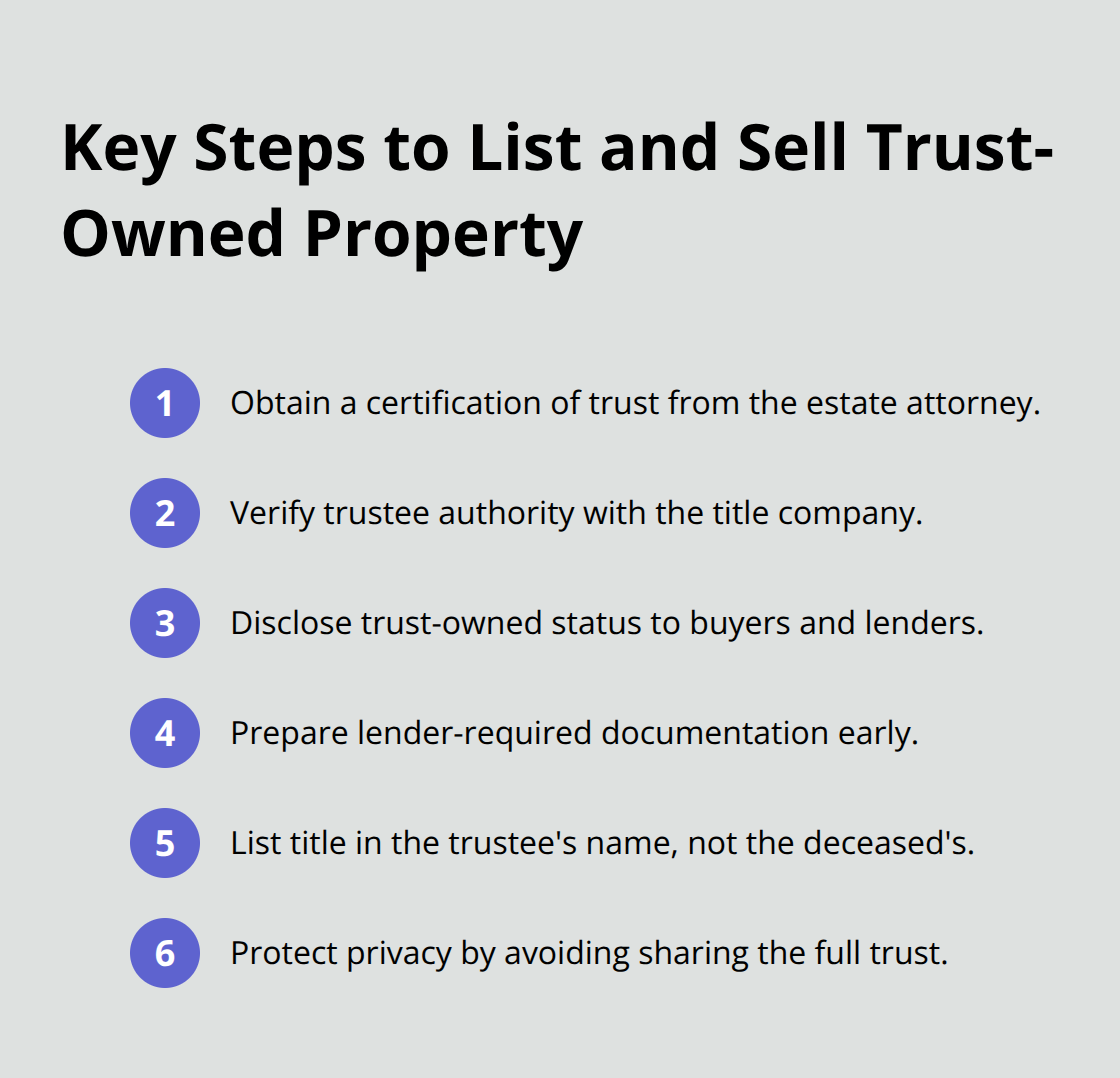
The title company then uses this certificate to verify the trustee’s power before agreeing to process the sale. Without it, the title company will demand to review the entire trust document, which slows underwriting and creates unnecessary exposure of your family’s private information.
Once the certificate is in hand, the trustee can authorize the listing, but the property’s status as trust-owned must be disclosed to all buyers and their lenders. Conventional loans often require additional documentation proving the trustee’s authority, adding two to three weeks to the approval process. VA and FHA loans are even more restrictive, sometimes refusing to finance trust-owned properties without a court order confirming the trustee’s right to sell. The property should be listed with the trustee’s name on title, not the deceased’s name, to avoid confusion with probate properties.
Tax Implications of Trust Property Transfers
Tax consequences of selling trust property depend entirely on when the trust became irrevocable and whether the property receives a step-up in basis at death. If the deceased owned the property and the trust was revocable during their lifetime, the property receives a full step-up in basis at death under federal tax law, meaning the cost basis resets to the fair market value on the date of death. A home purchased for $300,000 in 1995 and worth $1.2 million at death has a new basis of $1.2 million, eliminating all capital gains tax on appreciation during the deceased’s lifetime. If the successor trustee sells immediately after death, there is zero capital gains tax. This step-up benefit stands as one of the strongest reasons to hold real estate in a revocable trust rather than transfer it outright to heirs during life.
However, if the trust is irrevocable and the property was transferred into it before death, the step-up does not apply, and any appreciation after the transfer creates taxable capital gains. Trust income taxes also apply if the property generates rental income or remains unsold for more than a year. The trustee must file a fiduciary income tax return on Form 1041, and income is taxed at trust rates, which reach 37% federal tax at only $13,000 of income as of 2024, making quick sales far more tax-efficient than holding property in the trust long-term.
How Dual Licensure Reduces Costs and Communication Gaps
Communication failures between the trustee, the real estate agent, the title company, and the attorney cause most delays in trust property sales. The agent commits to a closing date without confirming that probate court has issued the necessary orders. The title company discovers a lien the attorney missed during administration. The lender requires documents the trustee hasn’t yet obtained. These gaps multiply costs and extend timelines unnecessarily.
When one professional understands both the legal requirements and the transaction mechanics, information gaps close entirely. That person catches problems before they derail the sale and coordinates all parties toward a single closing date. At Law Offices of Roshni T. Desai, Ms. Desai’s dual licensure as both an attorney and real estate professional streamlines estate-related property sales and transactions. This integrated approach reduces costs, delays, and communication hassles for families managing trust property transfers. With this foundation in place, families can move forward to address more complex scenarios-particularly when trust property spans multiple states or includes rental and commercial assets.
Protecting Your Family’s Real Estate Assets
Trusts stop probate on real property, but only if the deed transfers into the trust before death. This is the single most important step families miss. A revocable trust sitting in a drawer with a home still titled to your individual name accomplishes nothing-that property still goes through probate when you die. The California court system processes roughly 400,000 probate cases annually, and real estate represents the largest asset class in these cases. Transferring the deed into your trust during your lifetime takes 30 minutes and costs $250 to $500 in recording fees. Not doing it costs your family $15,000 to $35,000 in probate expenses on a $500,000 home.
The Step-Up in Basis and Why Timing Matters
The step-up in basis rule makes this timing critical. Property held in a revocable trust at death receives a full step-up in basis to fair market value, which erases all capital gains tax on appreciation during your lifetime. Sell that home six months after death and there is zero capital gains tax on a $400,000 gain. This benefit disappears entirely if the property goes through probate or if you transferred it into an irrevocable trust before death. Transfer all real estate into a revocable trust immediately after the trust is signed, not waiting until retirement or some future date.
Managing Multiple Properties Across Different States
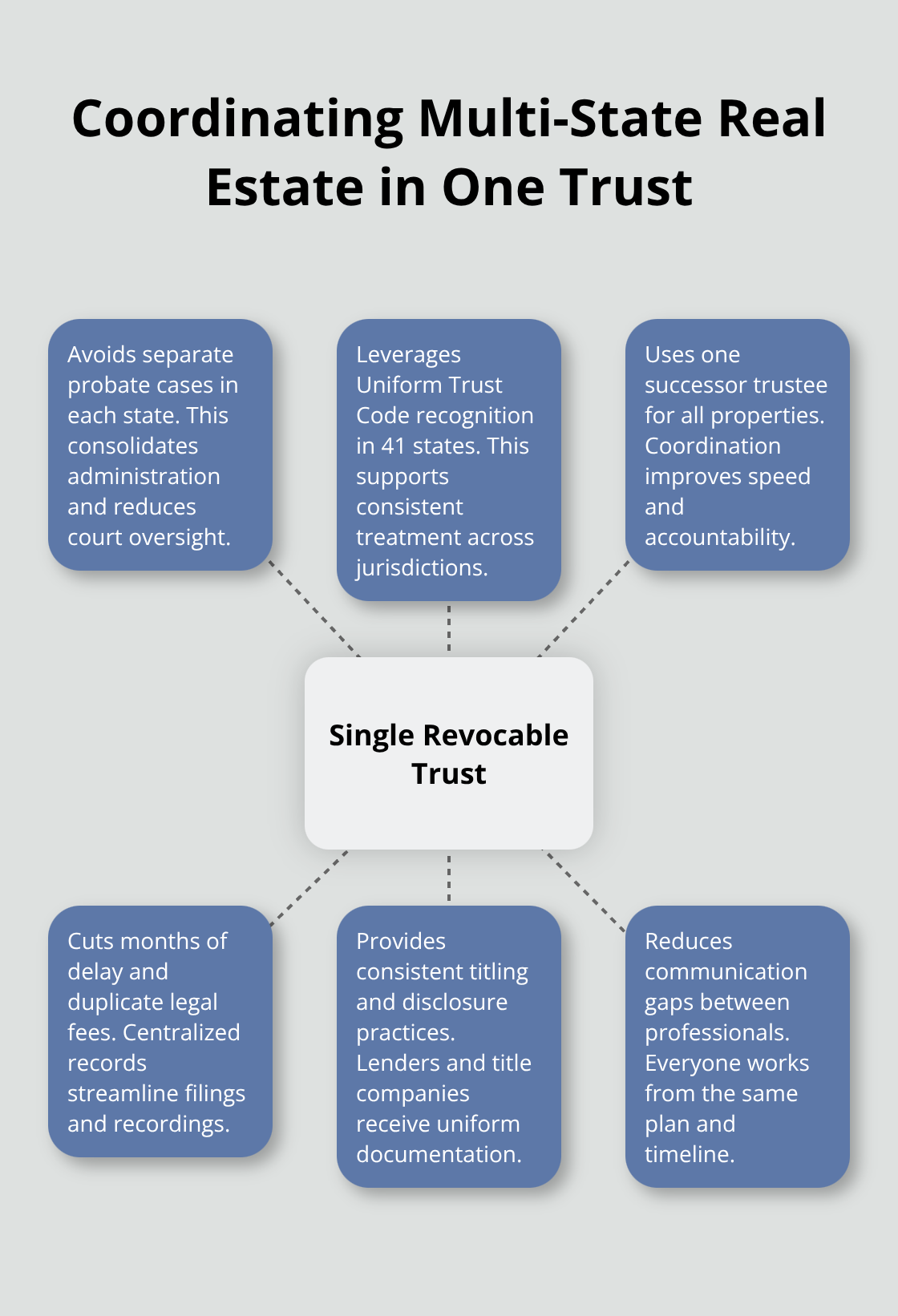
Multiple properties across different states create a second layer of complexity that most families underestimate. If you own a rental property in Nevada and a vacation home in Oregon while living in California, each state has its own probate rules and recording requirements. Nevada and Oregon each require their own probate case if property sits outside the trust, which triples court costs and timelines. The alternative-holding property in a single revocable trust-works across all states because trusts are recognized under the Uniform Trust Code adopted by 41 states. One trust document, one successor trustee, and one coordinated administration handles all properties regardless of location. This approach saves months of delay and thousands in duplicate legal fees.
Income-Producing Property and Tax Planning
Rental properties and commercial real estate demand additional planning because they produce income that triggers trust administration and tax filing requirements. A rental property held in a revocable trust must have the trustee file Form 1041 if income exceeds $600 annually, and trust income tax rates reach 37% federal at only $13,000 of income as of 2024. Holding commercial or rental property in an irrevocable trust created after death can trap income inside the trust permanently, making quick sales far more tax-efficient than long-term holding. The decision between revocable and irrevocable trusts for income-producing property requires coordination between your attorney and a tax professional before death, not months later during administration when options narrow.
Final Thoughts
Real estate held in a trust requires intentional planning before death, not reactive scrambling after. The families who avoid months of delay and thousands in unnecessary costs transfer their deeds into a revocable trust during their lifetime, verify that all properties receive the proper step-up in basis treatment, and coordinate with professionals who understand both the legal and transaction sides of trust real estate coordination. These preventable mistakes-a home titled outside the trust triggering probate, multiple properties across different states creating duplicate court cases, rental income trapped in a trust generating avoidable tax bills-stem from communication gaps between separate professionals who never align on your goals.
Trust real estate coordination works because it treats your property as part of a unified plan, not as isolated assets managed by disconnected professionals. When your attorney, your real estate professional, and your trustee operate from the same understanding of your goals and the legal requirements, property transfers happen on schedule and within budget. We at Law Offices of Roshni T. Desai have spent over 25 years helping Southern California families protect their real estate through proper trust planning and administration.
The next step is straightforward: schedule a free consultation with Law Offices of Roshni T. Desai to review your current property titles and trust alignment. We offer flexible home or office visits across Southern California, and a single conversation can confirm whether your real estate is positioned to transfer smoothly to your family or whether adjustments are needed now to prevent problems later.