




Trust Administration for Couples: Joint Planning for Shared Futures
Many couples assume their assets will automatically transfer smoothly to their spouse after death. Without proper trust administration for couples, this assumption often leads to costly delays, family conflict, and unnecessary taxes.
At Law Offices of Roshni T. Desai, we’ve seen firsthand how joint planning protects both partners’ wishes and simplifies the process for whoever remains behind.
Why Joint Planning Protects Your Assets and Prepares You for Life’s Uncertainties
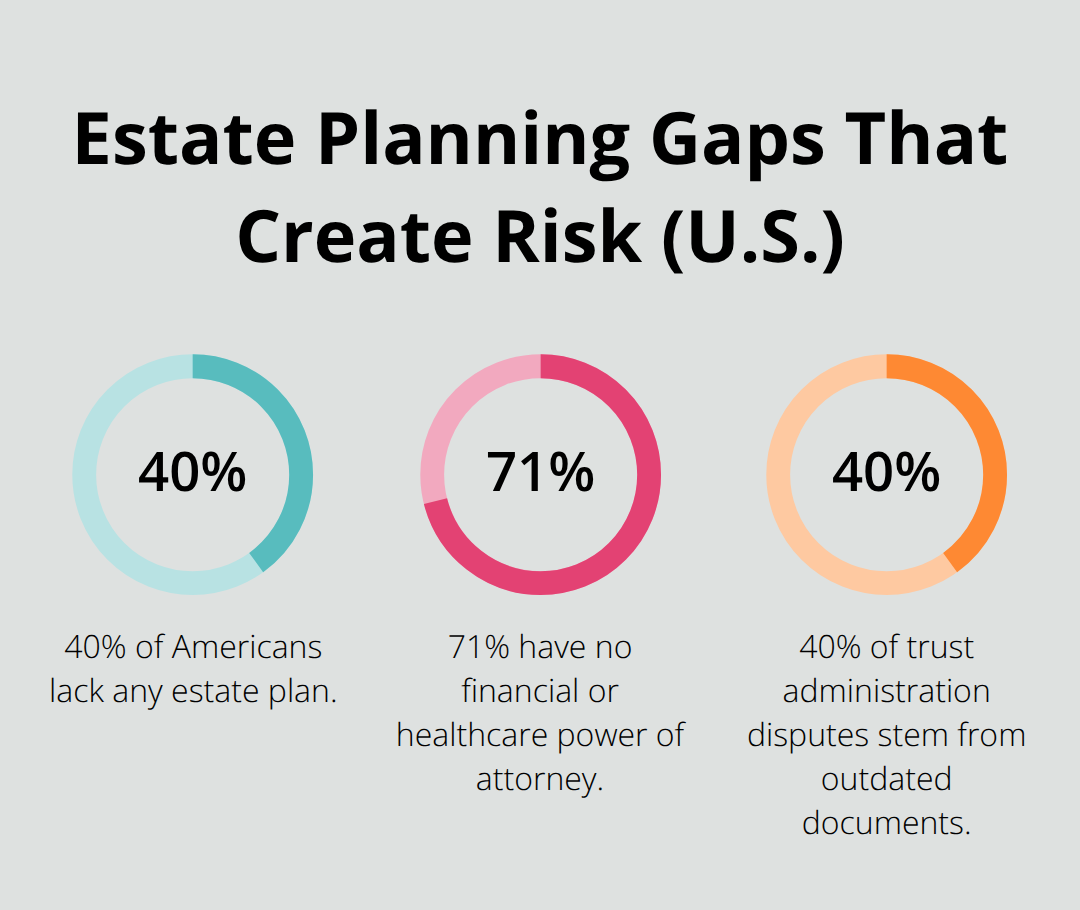
Couples often operate under the assumption that assets titled jointly or with beneficiary designations will pass directly to the surviving spouse without complication. This assumption fails in practice. When one spouse dies without a clear trust structure, the surviving spouse frequently faces frozen accounts, delayed access to funds, and unexpected tax bills. The IRS reports that roughly 40% of Americans lack any estate plan at all, and among those with minimal planning, surviving spouses spend months untangling financial affairs while grieving. A joint trust administration plan prevents this chaos by establishing exactly who controls what assets and when. It means your surviving spouse isn’t stuck waiting for probate court to grant access to your home, investment accounts, or business interests.
More importantly, it means your specific wishes about asset distribution-whether you want certain property to go to children from a prior relationship, charitable causes, or held in trust for grandchildren-actually happen instead of being overridden by default state laws. North Carolina probate court fees alone run $4 per $1,000 of estate value, capped at $6,000, and that’s before attorney fees and the months of court oversight. A properly funded joint trust sidesteps this entirely.
Incapacity Planning Demands Immediate Action
Most couples focus on what happens after death but ignore what happens if one spouse becomes seriously ill or mentally incapacitated. According to research on estate planning gaps, roughly 71% of people have no financial or healthcare power of attorney in place. This creates a nightmare scenario: if your spouse has a stroke or develops dementia, you cannot automatically access joint accounts, pay medical bills, or make healthcare decisions without going through expensive guardianship proceedings. A joint trust administration plan includes durable powers of attorney for property and healthcare directives that let you step in immediately if your spouse cannot act. This means bills get paid, medical treatment decisions happen without court delays, and your household stays stable during a crisis. The alternative is court-ordered guardianship, which costs thousands of dollars, creates public records, and removes your spouse’s autonomy even if recovery is possible.
Your Surviving Spouse Needs Clear Instructions, Not Guesswork
Your surviving spouse also needs to know exactly which assets belong to the trust, how to access them, and what distributions you’ve authorized. Without this clarity, a surviving spouse may hesitate to use funds needed for their own care or may make distributions that trigger unnecessary taxes. A joint trust administration plan documents these decisions upfront so your partner acts with confidence, not guesswork. The surviving spouse continues to manage the trust assets and can access funds for household expenses, medical care, and personal needs without waiting for court approval or seeking permission from other beneficiaries. This control matters most during the first months after your death, when your spouse faces both emotional strain and immediate financial obligations (mortgage payments, insurance premiums, medical bills). A well-structured plan removes the paralysis that often accompanies grief and uncertainty. When you move forward with joint trust planning, you also establish who steps in as successor trustee if your spouse cannot continue managing the trust. This person handles the final wrap-up of your affairs, distributes remaining assets to beneficiaries, and files necessary tax documents. Naming this person in advance and discussing their willingness to serve prevents family conflict and ensures someone you trust takes charge when it matters most.
Building the Right Team and Structure for Your Trust
The difference between a trust that works and one that creates problems often comes down to three practical decisions you make at the start: who will manage your assets, how those assets flow to beneficiaries, and what happens if you cannot make financial or medical decisions yourself. These choices determine whether your surviving spouse can access funds immediately or waits weeks for court intervention, whether your wishes actually happen or state law overrides them, and whether family members understand their roles or fight over authority.
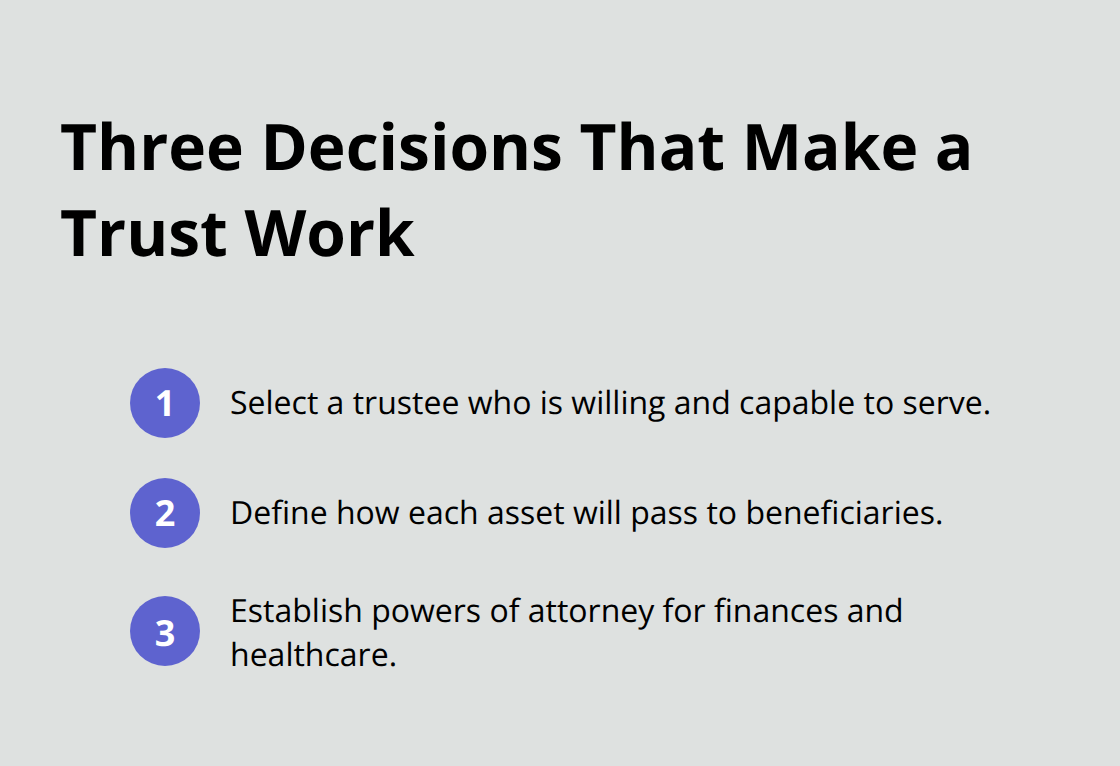
Most couples skip these decisions or make them hastily, then wonder why their trust causes confusion after one spouse dies. The reality is that naming a trustee without confirming they will actually serve, failing to separate joint assets from individual property in your trust instructions, and leaving out powers of attorney create gaps that cost thousands to fix later.
Choose a Trustee Who Will Actually Serve
Start with a concrete conversation about who you trust to manage money and make decisions if you cannot. This person becomes your successor trustee-the one who takes over if your spouse cannot continue or after your spouse passes. Too many couples name an adult child or sibling without ever asking whether they understand trust law, feel comfortable managing assets, or have time to handle the responsibility. A successor trustee who feels blindsided or unprepared often makes costly mistakes, sells assets at the wrong time, or distributes funds incorrectly and triggers unnecessary taxes.
Ask your candidate directly: Would you be willing to serve? Do you understand that you must keep detailed records, file tax returns, and follow the trust terms exactly? Will you have time to handle this within six months to two years? If the answer to any question is uncertain, name someone else or name a corporate trustee like a bank trust department that charges a fee but removes personal conflict.
Separate Assets Clearly or Watch Them Get Tangled
Your trust instructions must spell out which assets stay separate and which are held jointly, because the tax treatment and your beneficiaries’ protection depend on it. Many couples own the family home jointly and assume everything else is joint too, but retirement accounts, investment portfolios, and business interests often have different ownership structures and tax consequences. If you fail to document this in your trust, your surviving spouse or successor trustee must guess which assets belonged to whom, which slows distributions and can trigger disputes among beneficiaries.
The federal estate tax exemption sits at 13.99 million dollars per person in 2025, rising to 15 million dollars per person in 2026 according to the IRS, so most couples do not face federal estate taxes. However, if you have non-marital property-assets you owned before marriage or inherited separately-keeping that property separate in your trust protects it from being mixed with marital assets and treated as a gift. Transferring non-marital property into joint ownership can unintentionally create tax problems or undermine protections you wanted to preserve for children from prior relationships.
Your trust should list each major asset (the primary residence, investment accounts, business interests, retirement accounts) and specify whether it belongs to your trust, remains in your name alone, or stays jointly owned. This clarity means your surviving spouse knows exactly what to access and in what order, and your successor trustee can distribute assets without confusion or delay.
Powers of Attorney and Healthcare Directives Fill Critical Gaps
Your trust governs assets after death, but it does nothing if you become incapacitated while alive. A durable power of attorney for property lets your spouse (or successor) pay bills, access bank accounts, sell real estate, and manage investments immediately if you have a stroke, dementia, or serious illness. Without this document, your spouse must petition a court for guardianship, a process that costs 2,000 to 5,000 dollars and creates public records of your incapacity.
A healthcare directive names who makes medical decisions if you cannot communicate your wishes, which hospital to use, and whether you want life support. These documents work alongside your trust and are not optional extras. Many couples assume joint account ownership or a revocable living trust automatically grants this authority, but it does not. A bank cannot release funds or allow account changes without either your signature or a valid power of attorney. Your healthcare providers cannot discuss treatment options with your spouse without a healthcare directive.
Couples who skip these documents often end up in emergency rooms where doctors ask who can make decisions, and the answer is nobody, forcing a rushed court process. Sign all three documents-the revocable living trust, the durable power of attorney for property, and the healthcare directive-as a matched set, with the same successor agents named in each. This coordination means your spouse knows exactly what role they play in each document and can step in smoothly if needed.
With your trustee named, assets separated, and powers of attorney in place, you have built the structural foundation for joint trust administration. The next step involves the actual mechanics of funding your trust and ensuring that every asset you intend to protect actually transfers into it.
Where Couples Go Wrong With Trust Planning
Most couples sign a trust document and believe their planning is complete. They file it away and never think about it again until one spouse dies. This approach fails spectacularly because life changes-remarriage, inheritance, business sale, major asset purchase, birth of grandchildren-and a trust drafted five or ten years ago no longer reflects your actual wishes or current assets.
Courts and probate attorneys report that roughly 40% of trust administration disputes stem from outdated documents that don’t match the client’s current life.
Outdated Trusts Create Costly Confusion
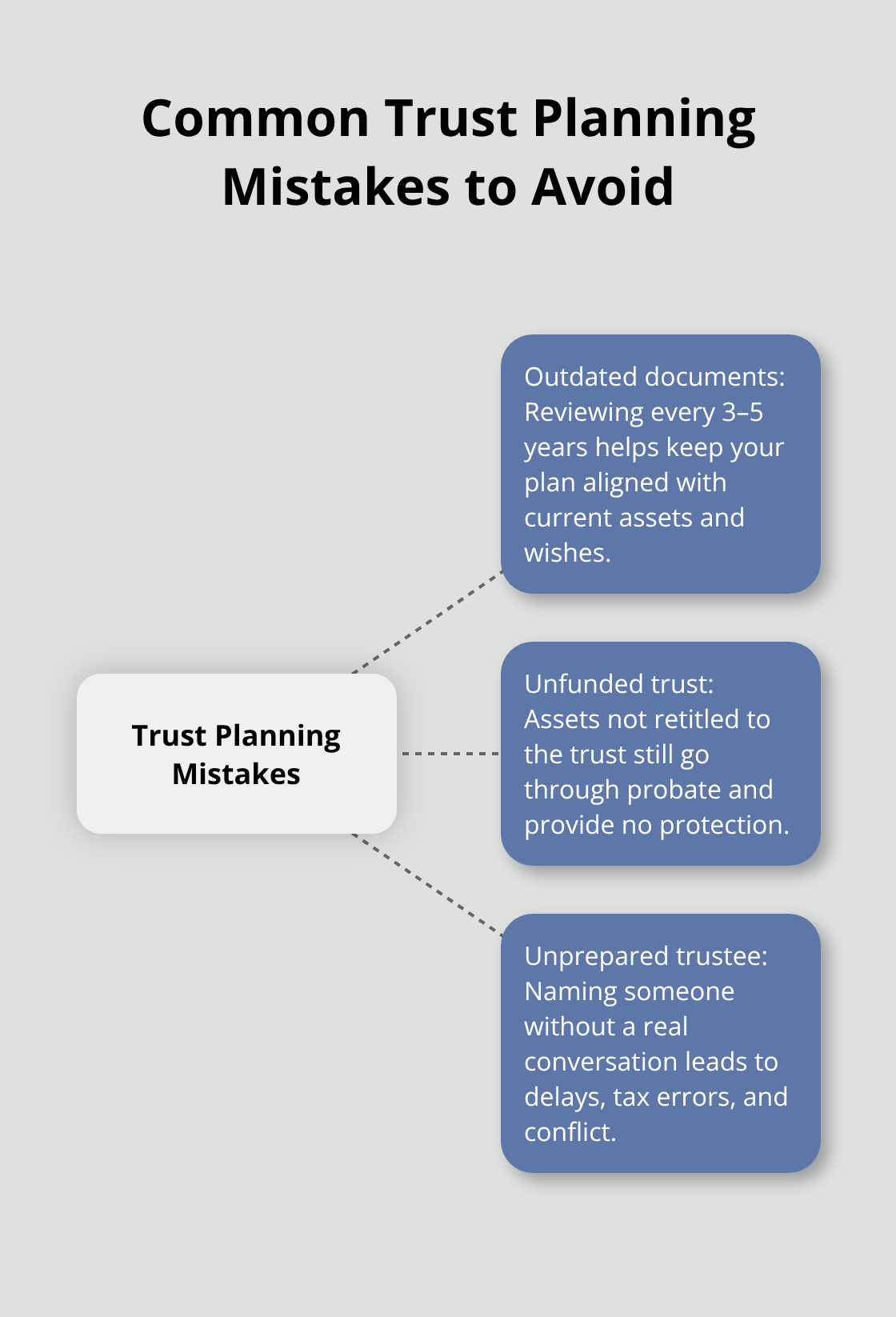
A trust that names a successor trustee who died years ago, fails to account for a second home purchased after the trust was created, or contains distribution instructions that no longer make sense because family circumstances shifted will cause serious problems. Your surviving spouse and successor trustee must interpret vague or contradictory language, and beneficiaries may challenge distributions they believe violate your original intent. The fix is straightforward: review your trust every three to five years or immediately after major events like inheritance, business sale, divorce, remarriage, or significant wealth change. Schedule a consultation with an attorney to identify which provisions need updating and which assets need to be retitled into the trust. This costs far less than untangling a mess after one spouse dies.
Unfunded Trusts Offer No Protection
The second and most costly mistake couples make is signing a beautiful trust document and then never transferring actual asset ownership into the trust’s name. Transferring ownership means retitling the deed to your home, changing bank account titles, updating investment account registrations, and naming the trust as beneficiary on retirement accounts and life insurance policies. Without this step, your assets sit in your individual names or in joint accounts outside the trust, and when you die, they still go through probate court exactly as if no trust existed.
The probate process in most states requires filing inventories, publishing creditor notices, paying court fees, and waiting months for a judge’s approval before your surviving spouse can access funds. Many couples assume the trust automatically protects everything they own, but it protects only assets actually titled in the trust’s name. A funded trust avoids probate for real estate, bank accounts, and investment portfolios. An unfunded trust is just an expensive piece of paper.
Naming a Trustee Without Real Conversation
The third mistake is naming a trustee or successor trustee without ever having a real conversation about whether that person will actually serve. Couples frequently name an adult child as successor trustee because it feels natural or because they assume their child will figure it out after they die. Then the child receives a call from an attorney explaining they must file tax returns, track all distributions, maintain detailed records, and manage potentially complex assets-and the child either declines the role or attempts it while making costly errors.
Successor trustees who feel unprepared often miss tax deadlines, distribute assets incorrectly, or sell real estate at unfavorable times. Ask your proposed trustee or successor trustee whether they understand the role, have time to manage it, feel comfortable with financial matters, and genuinely want to serve. If the answer to any question is hesitant or no, name someone else or hire a corporate trustee through a bank or trust company. This conversation takes thirty minutes and prevents months of conflict and mistakes later.
Final Thoughts
Joint trust planning protects your relationship by removing guesswork from the moments when your family needs clarity most. When one spouse faces serious illness or death, a well-structured trust means the surviving partner knows exactly which assets to access, how to pay bills, and what distributions you intended. This clarity prevents the paralysis that grief and uncertainty create, and your family avoids months of probate delays, unexpected tax bills, and disputes over who controls what.
Trust administration for couples works because it forces you to have difficult conversations now, while you can discuss them together. Naming a trustee, separating assets, and establishing powers of attorney means both partners understand their roles and your intentions. This shared understanding protects children from prior relationships, preserves inheritances for grandchildren, and ensures your surviving spouse can live with dignity and security after you die.
We at Law Offices of Roshni T. Desai provide personalized estate planning and trust administration services across Southern California, and we offer free consultations with flexible home or office visits so you can discuss your specific situation without pressure or expense. Contact us to start your joint trust planning and protect your family’s future.