




Trust Administration Asset Management: Safeguarding and Growing Your Estate
Trust administration asset management requires careful planning and execution to protect what you’ve built for your family. Many families lose thousands because they don’t understand their trustee’s responsibilities or miss critical deadlines.
We at Law Offices of Roshni T. Desai help families navigate these complex decisions. This guide walks you through the strategies and legal requirements that keep your estate secure and growing.
What Trust Administration Really Means and Why It Fails
Trust administration involves managing trust assets after the grantor dies or becomes incapacitated. It sounds straightforward, but it’s where most families encounter serious financial losses. A trustee secures assets, obtains valuations, files tax returns, manages investments, makes distributions to beneficiaries, and maintains detailed records of every transaction. The trustee acts as a fiduciary, meaning they’re legally bound to prioritize beneficiaries’ interests above their own and follow the trust document precisely.
How Trustees Create Personal Liability
Many trustees don’t realize that commingling trust funds with personal accounts creates personal liability. Failing to document investment decisions invites disputes years later. The trustee must also communicate regularly with beneficiaries-not just at the end.
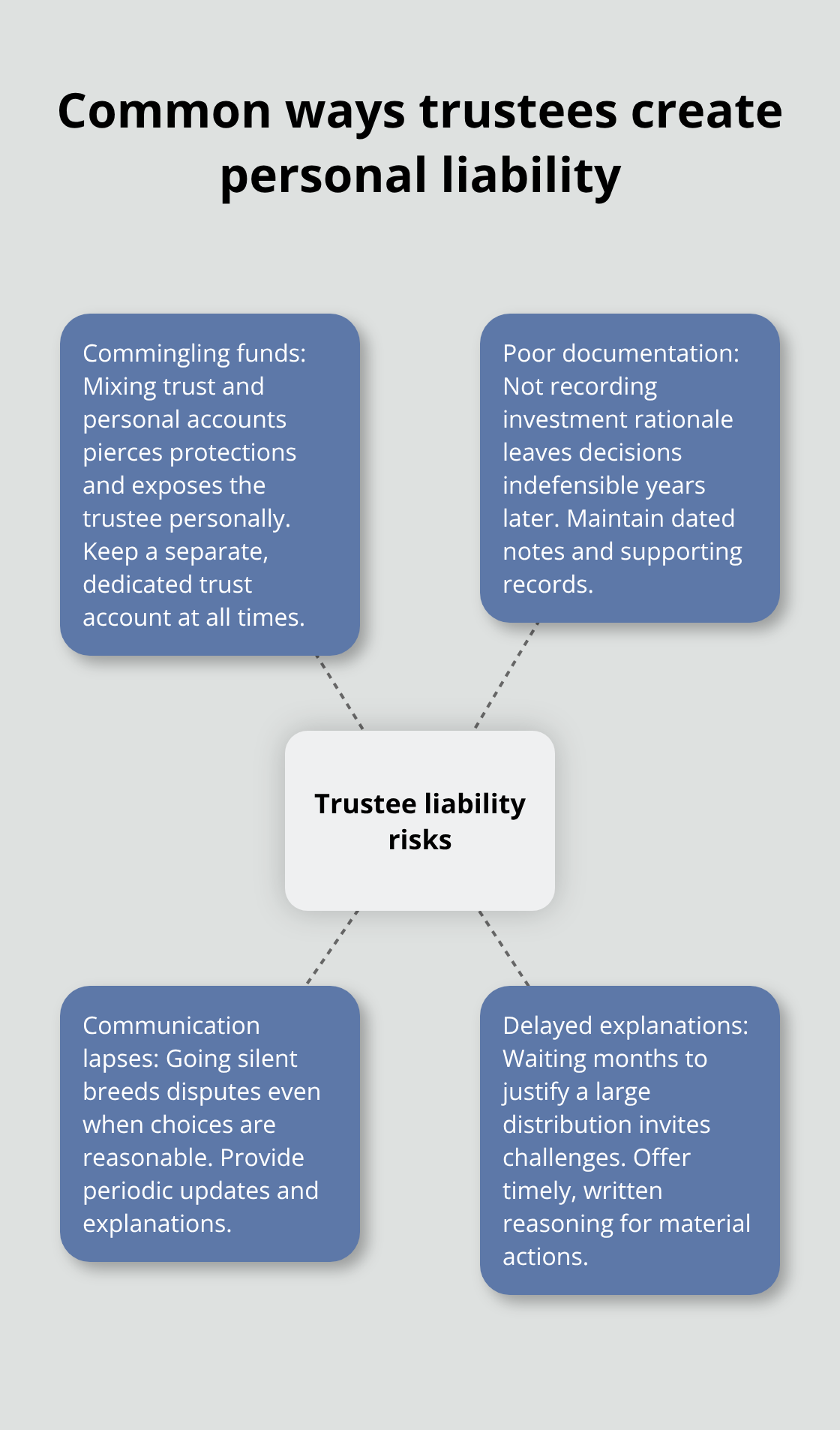
Beneficiary disputes spike when trustees go silent, even if they’re making sound decisions. A trustee who waits months to explain why a large distribution was made or delayed will face questions and potential legal challenges that a single email explaining the reasoning could have prevented.
The Cost of Poor Administration
Families lose money through preventable mistakes that compound over time. A trustee who delays filing the trust’s tax return faces penalties and interest that reduce the estate by thousands. Another common error involves failing to diversify investments, which leaves the trust exposed to market downturns or concentration risk. If a trust holds a single real estate property or an outdated stock position, the Prudent Investor Rule requires the trustee to rebalance and manage risk across asset classes.
Delayed asset valuations also create problems. Beneficiaries may challenge distributions if they suspect the trustee undervalued holdings to justify keeping more in reserve. The trustee bears the burden of proof to show that valuations were reasonable and decisions were sound. Trustees who avoid hiring professionals when they should-such as a CPA for complex tax situations or an appraiser for real estate-often face higher costs later when errors must be corrected or disputes resolved.
Building a Foundation That Works
Start with a practical checklist: read the trust document thoroughly, identify all powers and duties, open a dedicated trust bank account, inventory assets with supporting documents, decide which professionals are needed, and set clear timelines for beneficiaries. This foundation prevents most common mistakes and protects both the trustee and the beneficiaries from unnecessary conflict and financial loss. With these steps in place, you’re ready to move into the specific strategies that keep your estate secure and growing.
How to Build a Trust Asset Strategy That Actually Works
Create a Complete Asset Inventory
The first step toward protecting your estate is knowing exactly what you own. Many trustees inherit a trust without a complete picture of the assets involved, leading to missed opportunities and hidden liabilities. Start by creating a detailed inventory that lists every asset, its current location, supporting documents, and estimated value. Real estate requires professional appraisals, not guesses based on old tax assessments or online estimates.
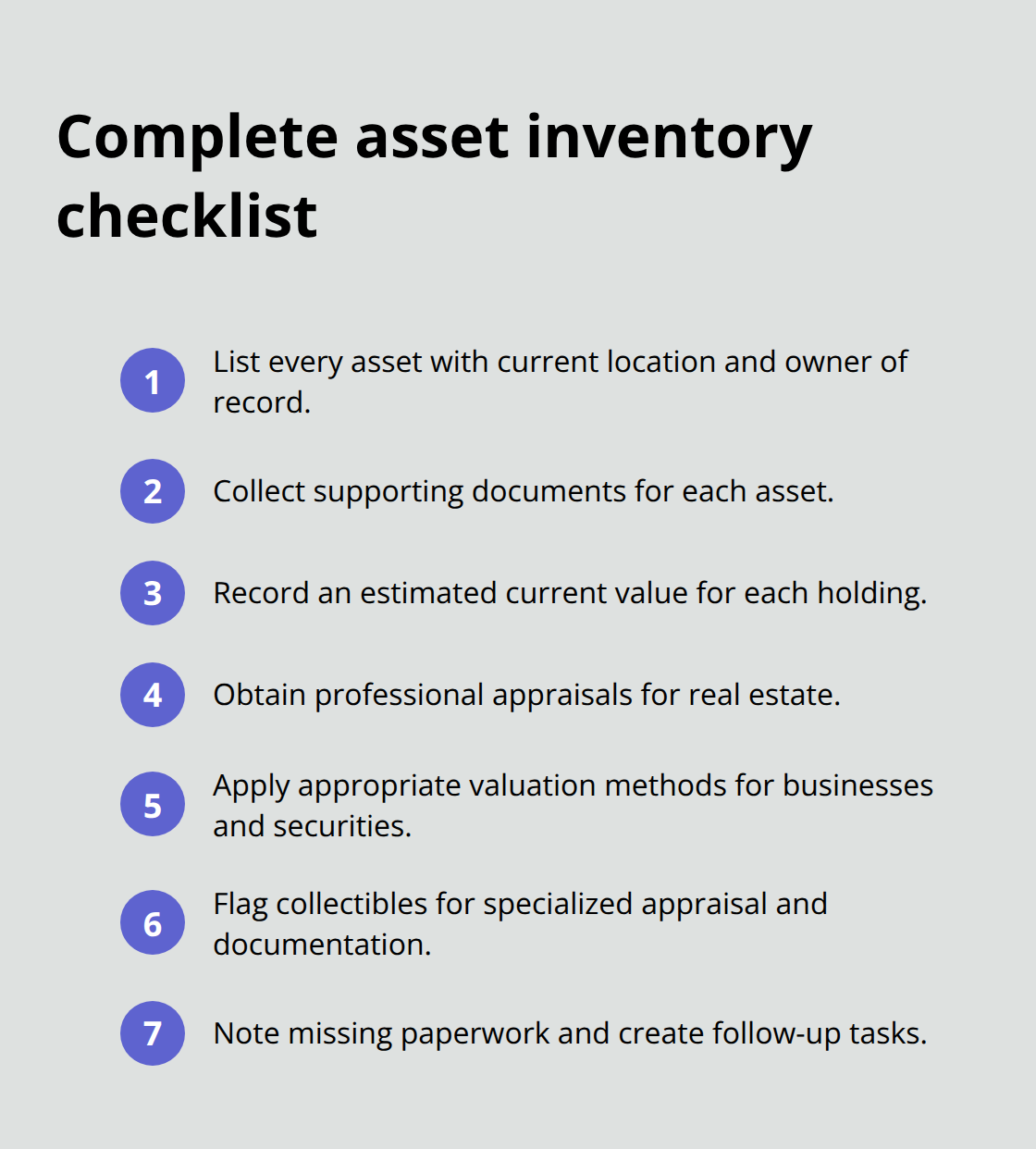
Business interests, collectibles, and securities each demand their own valuation approach. A trustee who skips this step often discovers months later that a valuable asset was overlooked or that beneficiaries dispute the valuations used for distributions.
Open a dedicated trust bank account immediately and move all trust funds into it-never mix personal money with trust assets. This separation is non-negotiable under the Prudent Investor Rule and protects you from personal liability if beneficiaries challenge how funds were managed. Document the date, source, and condition of each asset as you inventory it. Take photos of real property and collectibles. Gather appraisals, title documents, and account statements. This foundation prevents disputes and gives you concrete evidence that you acted with care and reasonable diligence.
Align Investments With the Trust’s True Purpose
Investment strategy should match the trust’s actual purpose, not generic growth targets. If the trust is designed to provide income for a surviving spouse, aggressive growth stocks may violate the trustee’s duty of impartiality between current income beneficiaries and remainder beneficiaries who inherit later. The Uniform Prudent Investor Act, adopted across most states, requires diversification across asset classes and regular rebalancing to manage risk. A trustee holding 80 percent of trust assets in a single real estate property or outdated stock position faces significant exposure if that asset declines.
Diversify across cash, bonds, equities, and alternative investments based on the trust’s time horizon and distribution needs. Try to structure the portfolio so that it generates the income or growth the trust document requires. This alignment prevents conflicts between beneficiaries and demonstrates that you understand your fiduciary obligations.
Optimize for Tax Efficiency and Document Your Decisions
Tax efficiency matters enormously because distributions to beneficiaries often trigger income tax consequences that reduce their net benefit. Coordinate with a CPA or tax professional to understand which investments generate ordinary income, capital gains, or tax-exempt returns. Some trusts benefit from holding municipal bonds or qualified dividend stocks that produce lower-taxed income. Others should prioritize long-term growth with minimal distributions to defer tax liability until beneficiaries actually receive funds.
Document your investment rationale in writing and review performance quarterly. Show that you monitor asset allocation and make intentional decisions rather than leaving the portfolio on autopilot. This documentation protects you if a beneficiary later questions whether you managed funds prudently and demonstrates that you understood the trust’s objectives and acted accordingly. With your assets inventoried, strategy aligned, and decisions documented, you’re positioned to handle the legal requirements and compliance obligations that keep trust administration on track.
What Trustees Must Do to Stay Compliant
As a trustee, your legal obligations extend far beyond good intentions. The law imposes specific duties that, when ignored or mishandled, expose you to personal liability and invite beneficiary disputes that drain the estate’s resources. Your fiduciary duty to act in good faith and loyalty means you cannot prioritize your own interests or those of one beneficiary over another without clear authority in the trust document. Most states require trustees to act with the care, skill, and caution of a reasonably prudent person managing their own affairs. This standard translates into concrete actions like obtaining professional appraisals for real estate, consulting a CPA on tax matters when the situation warrants it, and avoiding self-dealing transactions unless the trust explicitly permits them and you disclose the conflict to beneficiaries.
Document Every Decision You Make
Courts and beneficiaries judge trustee conduct based on what the record shows, not what you intended. If you sold an asset, invested in a particular security, or delayed a distribution, write down the reasoning and keep those notes with your trust records. This documentation creates the evidence that protects you later when questions arise.
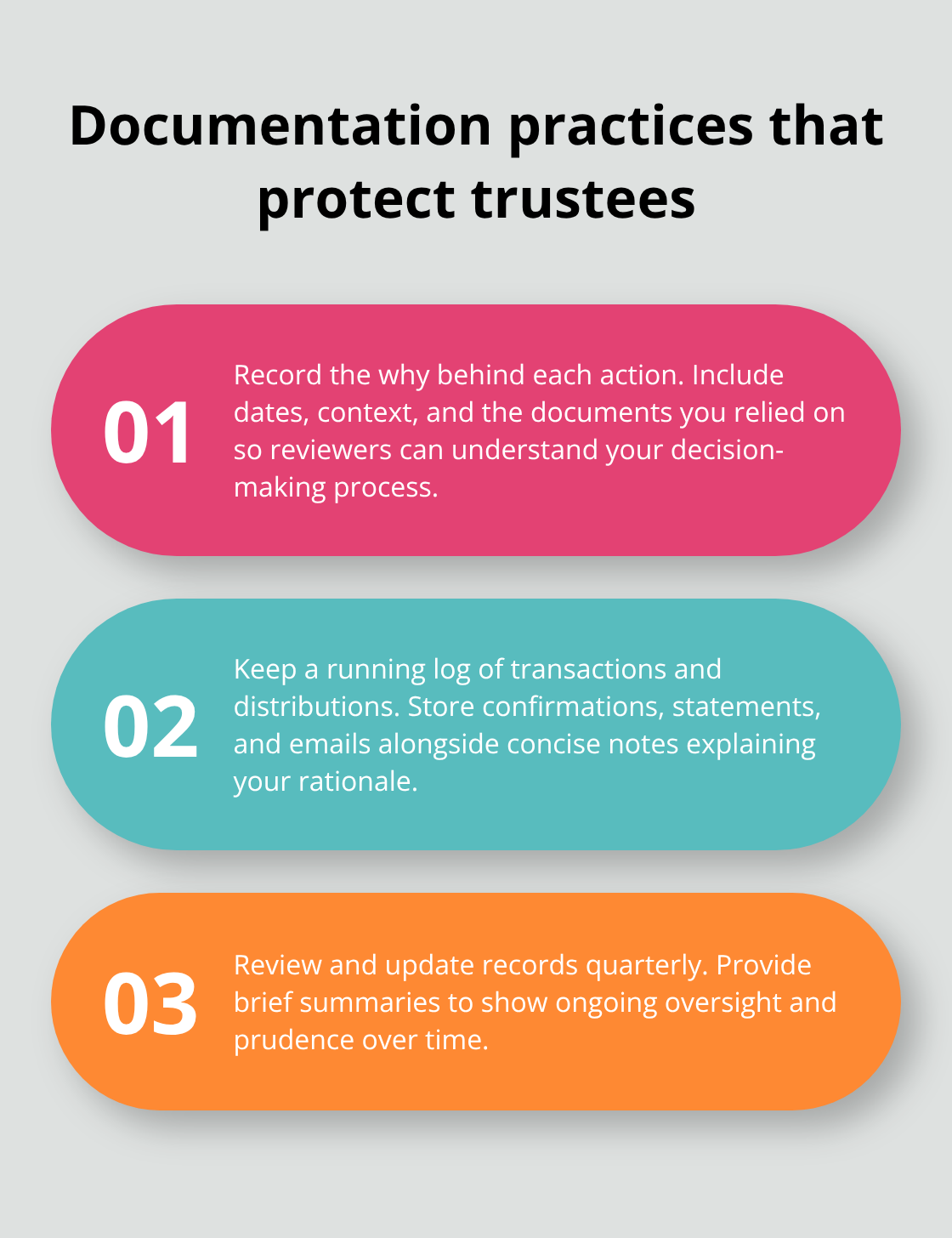
A trustee who maintains clear written records of investment decisions, asset sales, and distribution rationales demonstrates that you acted with care and sound judgment. Without this paper trail, even sound decisions look suspicious to beneficiaries who lack visibility into your thinking.
Maintain Records That Prove Compliance
Maintain a dedicated file containing the original trust document, a complete asset inventory with valuations and acquisition dates, bank statements and investment account statements for every account you control, receipts for all expenses paid from trust funds, a log of every distribution with dates and amounts, and copies of communications with beneficiaries. File the trust’s income tax return with the IRS each year-even if no tax is owed, the return creates an official record and prevents penalties and interest from accumulating. Beneficiaries have a legal right to request an accounting, and providing one proactively demonstrates transparency and reduces suspicion.
Communicate Regularly With Beneficiaries
An accounting should show beginning balances, all income received, all expenses paid, all distributions made, and ending balances for each asset category. Send this accounting to beneficiaries at least annually or whenever a significant event occurs, such as the sale of a major asset or a large distribution. Disputes arise most often when beneficiaries feel left in the dark, not when they disagree with your actual decisions. A trustee who communicates clearly and regularly faces far fewer challenges than one who stays silent and then surprises beneficiaries with an accounting months later.
Seek Professional Guidance for Complex Situations
If you face a situation you’re uncertain about-whether distributing funds for a beneficiary’s medical bills fits the trust’s “health and welfare” language, or how to handle a beneficiary who demands access to confidential investment information-seek guidance from an attorney rather than guessing. These gray areas require careful interpretation of the trust document and state law. An attorney can help you navigate conflicts between beneficiaries, resolve questions about distribution standards, and protect yourself from liability when you make difficult decisions. We at Law Offices of Roshni T. Desai help trustees navigate these situations with practical advice that keeps you compliant and protects the estate from unnecessary conflict and cost.
Final Thoughts
Trust administration asset management succeeds when you combine clear documentation, regular communication, and professional guidance. The trustees who protect their families’ wealth understand that sound decisions mean nothing without a paper trail proving you acted with care and loyalty. Your fiduciary duty isn’t abstract-it’s a legal obligation to keep beneficiaries informed, maintain separate accounts, file tax returns on time, and make investment decisions that align with the trust’s actual purpose.
The most common costly mistakes happen when trustees postpone action or avoid seeking help. A trustee who waits six months to file a tax return faces penalties that reduce the estate by thousands, while one who avoids hiring a CPA for complex situations often discovers later that distributions triggered unexpected tax consequences that could have been minimized. Another who fails to diversify investments leaves the trust exposed to concentration risk that a simple rebalancing could have prevented.
You need professional guidance when the trust document’s language is unclear, when beneficiaries disagree about distributions, or when you face complex tax situations. We at Law Offices of Roshni T. Desai provide personalized guidance for trust administration across Southern California and help trustees navigate complex situations while keeping estates secure. Contact us for a free consultation to discuss your trust administration questions.